


Laos – Luang Prabang to Vientiane
Cycle Laos from Luang Prabang to Vientiane, riding rolling roads, jungle valleys and quiet Mekong backroads


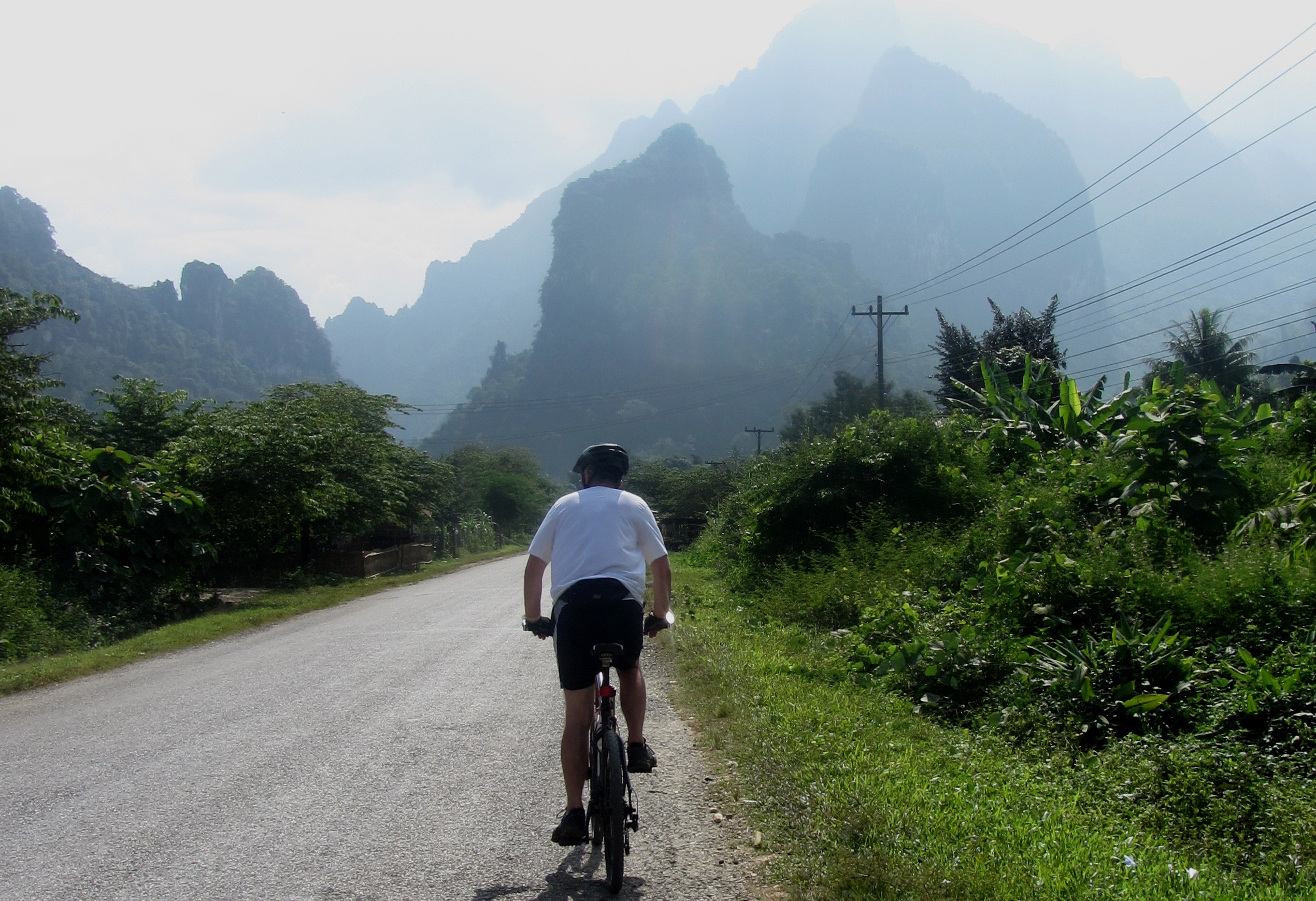
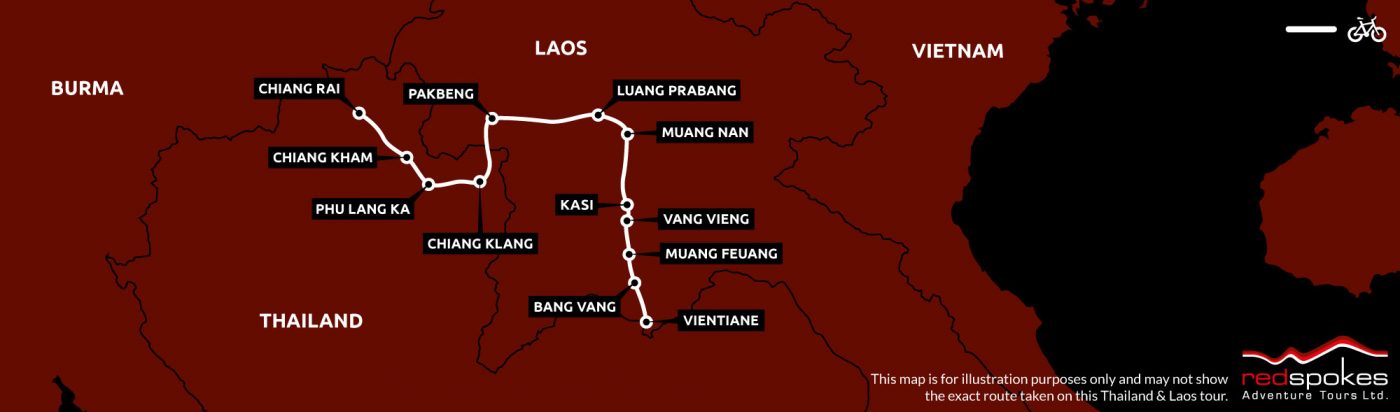
This unforgettable cycling journey links northern Thailand with the serene landscapes of Laos, combining rewarding mountain climbs with rich cultural encounters. Beginning in Chiang Rai, the route winds through remote Thai highlands of rice fields, teak villages and mist-covered karst scenery before crossing the Mekong into Laos and reaching the UNESCO-listed town of Luang Prabang.
From there, the adventure continues south along rugged backroads, limestone valleys and peaceful riverside communities toward Vang Vieng and the Lao capital, Vientiane. With varied riding, welcoming guesthouses and ever-changing scenery, this tour offers a deeply immersive way to experience Southeast Asia at the pace of a bicycle.
Nestled at the confluence of the Mekong and Nam Khan rivers, Luang Prabang is one of Southeast Asia’s most atmospheric towns and a highlight of any cycling journey through Laos. A UNESCO World Heritage Site, it blends golden Buddhist temples, saffron-robed monks and serene river views with elegant French colonial architecture. The town’s compact old quarter is perfect for exploring on foot, with quiet lanes, ornate monasteries and vibrant night markets creating a relaxed and welcoming atmosphere.
For cyclists, Luang Prabang offers both cultural depth and natural beauty. Witness the early morning alms-giving ceremony, visit sacred temples such as Wat Xieng Thong, or take a ride out to the turquoise pools of Kuang Si Waterfalls. Riverside cafés and sunset views over the Mekong provide the perfect setting to unwind before continuing south. Combining spirituality, history and laid-back charm, Luang Prabang captures the very essence of Laos.
Phu Lang Ka is a remote village in the mountains of Phong District, Phayao Province in Northern Thailand. In this tiny hillside destination early risers can witness one of the most spectacular sunrises you are likely to find anywhere on earth. An other-worldly vision of karst rock out crops and the Doi Hua Ling, Doi Phu Lang Ka and Doi Phu Nom mountains all cloaked in rolling mists set the scene for daybreak. The area is equally gifted with beautiful sunsets. Rolling hills, rice paddies, temples and limestone mountains and fields laden with pink Dok Khlongkhleng flowers make this area a unique and special destination.
High in the mountains Sa Pa is the frontier town of the Sa Pa district in Northwest Vietnam, 400 km north-west of Hanoi. Located at 1550 m above sea level, and frequently covered by cloud the town is cool all year round. The area is known as “the Tonkinese Alps” You will see hill tribe people, their villages, rice terraces, lush vegetation, and Fan Si Pan, the highest peak in Vietnam. Many ethnic minority groups such as H’mong, Dao and Tay live here, each with unique cultures, lifestyles and languages, all wearing their traditional attire, working on the evergreen terraces.
About 1 km from Sa Pa town, at the bottom of the Muong Hoa Valley is the stunning Cat Cat Waterfall. Cat Cat Village is home to the Black H’Mong who account for over 50% of the Sa Pa population. Near to the border with China, Sapa was under French colonial administration for the first part of the 20th Century, and served as a hill station retreat from the stifling summer heat of Hanoi. Many of the town’s colonial buildings were destroyed during conflicts at the end of the Second World War, by Việt Minh supporters in the late 1940s, and by French air raids in the early 1950s. The majority of the local communities fled, and the town entered a lull until migration from the lowlands began again with economic incentives in the 1960s. Since the 1990s Sa Pa has been a tourist destination.
Dien Biên Phu is located in the Muong Thanh valley in north west Vietnam near to the Laos border and is the capital of Biên Province. The journey here is a dramatic one along narrow mountain roads leading to the Nam Rom River at the core of the heart shaped valley. Dien Biên Phu is best known for the battle that occurred here in 1954 marking a turning point in French influence in Indochina and the beginning of the end of colonial rule. The French-held garrison fell after a four-month siege led by Vietnamese nationalist Ho Chi Minh. After the fall of Dien Bien Phu, the French pulled out of the region. The city was formerly called Thaeng. There are a number of sites of interest relating to the battle including a museum containing military and other artifacts including a bicycle that was used to carry supplies through the jungles and reputedly could carry up to 330kg of ordinance.
Ban Faen village, home to Nam Kat waterfall, is a remote village where most of the villagers are farmers who work in the surrounding rice fields, it has no running water or electricity, a generator provides 2 hours electricity a night. When redspokes started tours in the area in 2001, we talked to the village headman and elders to determine what support the village needed and where our support would have the greatest effect. After some discussion, it was agreed that the 2 main issues facing the village were access to clean drinking water and the school. We decided to start by helping the school. Within the village this decision was not unanimous, as there were mixed opinions about the value of education, particularly for girls. Nonetheless, our first donation went towards concreting the school floor.
In 2003 redspokes and supporters started a charity LVCF. Shortly after, we ran our first project building a school in Ban Faen. This school is now complete. We went on to build a second (basic) school in Ban Nalay, one of the rural H’mong villages, home to a Tai Lue community and where redspokes cyclists are hosted by the villagers for the night in home stays.

On arrival in Chiang Rai you will be transferred to our tour hotel. After checking in you can explore the city. Chiang Rai retains much of its original character and charm. One of its more striking landmarks is the Golden Clock; designed and donated to Chiang Rai by the artist Chalermchai Kositpipat; creator of The White Temple. At the strike of 7pm, a flamboyant light show ensues, accompanied by music. Other more traditional attractions include the Hill Tribe Museum and Education Centre, several beautiful Wats, Mae Nam Kok River and a night market with Northern Thai music and dance performances.
This evening there will be a meeting for group introductions and a tour briefing.
Accommodation: Hotel
We have an early breakfast and transfer 22km out of Chiang Rai by vehicle. Setting off on the bikes, we cycle through rural countryside passing rice fields and other crops, observing local people go about their life. Starting as we mean to go on, our cycling tour begins with a big climb of 230m to stretch our legs. Over the peak we ride downhill and on flatter road for the rest of today. We are surrounded by beautiful scenery and we are treated to a wonderful hotel tonight; a just reward for our first day in the saddle.
Cycling Distance: 56.6 km (35 miles)
Total Climb: 420m (1,377ft)
Total Descent: 418m (1,370ft)
Accommodation: Hotel (B,L,D)

The day begins with gentle incline as our tour continues on the road south east through the Thai countryside. The area is home to many Tai Lue people. The Tai Lue originated from Yunnan province in Southern China and migrated to Northern Thailand, (particularly to Nan and Phayao) around 200 years ago. There are a number of traditional temples and teak house villages in the area. After 33km, at Pha Chang Noi, we turn towards the mountains, cycling a snaking, uphill road to reach Phu Lang Ka. This is a small remote area in the hills of Phong district, Phayao, overlooking a beautiful landscape of rice paddies, temples, limestone karsts and mountains.
Cycling Distance: 45.7km (29 miles)
Total Climb: 804m (2,552ft)
Total Descent: 399m (1,220ft)
Accommodation: Guest House (B,L,D)

It is worth rising early this morning to catch the breathtaking sunrise. Often shrouded in morning mists, the stunning landscape of karst rocks, mountains and valley emerges with a quite magical aura. On a clear day you will glimpse Laos in the distance. Setting off on the bikes, we cycle eastwards tackling some challenging hills in a remote rugged scenery, on quiet forested road. We are about 50km from the Laos border with views in the distance of Doi Phu Kha and Chiang Rai mountain ranges. Chiang Klang is a small friendly town amid fields of rubber, tobacco and corn.
Cycling Distance: 77.8km (42 miles)
Total Climb: 1,556m (4,980ft)
Total Descent: 2,028m (6,640ft)
Accommodation: Guest House (B,L,D)

Today we continue cycling through Nan Province towards the Laos border, riding through beautiful jungle scenery and gently rolling terrain. We pass close to Doi Phu Kha National Park, an area where around 70% of the province remains remote, mountainous, and wonderfully unspoilt. The landscape is rich in natural beauty and home to a diverse mix of Lanna, Lan Xang, and Sukhothai hill-tribe communities, offering a fascinating cultural backdrop to the ride.
Once we reach the Thailand–Laos border, we will complete exit formalities from Thailand and be met by our Lao team, who will assist with immigration procedures and arrange a short transfer to Pakbeng. From here we officially enter Laos, the second country of our South Asian journey, and settle in for the night in the relaxed riverside town of Pakbeng, overlooking the Mekong River.
Cycling Distance: 58km (39 miles)
Total Climb: 1,277m (4,190ft)
Total Descent: 1,013m (3,323ft)
Accommodation: Guest House (B,L,D)

Today we have a riverboat journey down the Mekong River. The pace slows as we drift past remote fishing villages, jungle-clad mountains, and limestone cliffs that plunge straight into the water. The Mekong is the lifeline of Laos, and traveling it offers a glimpse of daily life along its banks—children wave from the shore, fishermen cast their nets, and water buffalo cool off at the edges.
Along the way, we pause at the Pak Ou Caves, a revered Buddhist site filled with thousands of Buddha images left by pilgrims over centuries. By late afternoon, we arrive in Luang Prabang, the cultural heart of Laos and a UNESCO World Heritage town known for its saffron-robed monks, golden temples, and French colonial charm. After checking into our hotel, you’ll have the evening free to wander the night market or relax by the river.
Accommodation: Guest House (B,L)
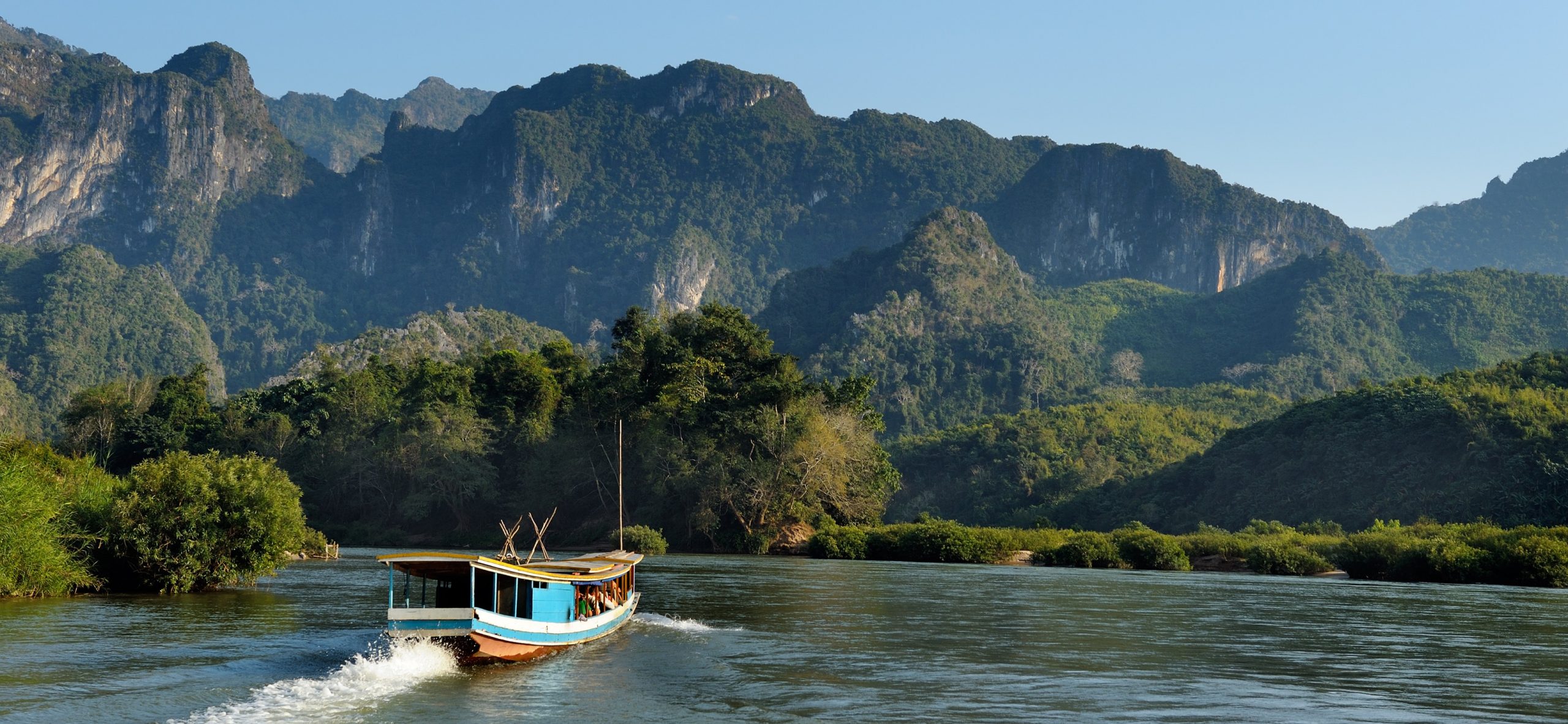
After our river journey, we enjoy a well-deserved rest day in Luang Prabang, a UNESCO World Heritage town where golden temples and French colonial architecture blend seamlessly with everyday Laotian life.
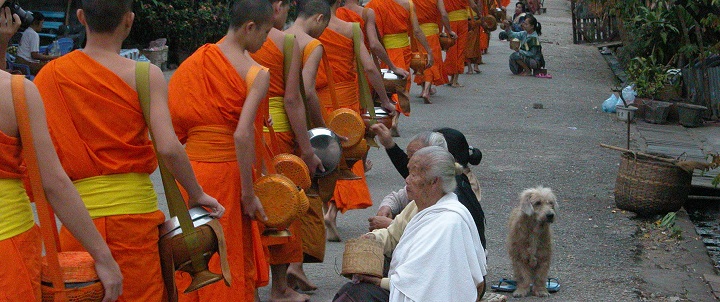
You may choose to rise early to witness the monks’ almsgiving ritual, wander through ornate temples such as Wat Xieng Thong, or explore quiet lanes shaded by frangipani trees and lined with cafés. Adventurous spirits might take an excursion to the Kuang Si Waterfalls, where turquoise pools invite a refreshing swim.
Whether you prefer to explore the sights, shop for local crafts at the night market, or simply relax by the riverside with a coffee or Beerlao, today is about slowing down, recharging, and savoring the atmosphere of Laos’s most captivating town.
Accommodation: Hotel (B)
Well-rested, we return to the bikes for a rural adventure. We start with a short transfer out of Luang Prabang before returning to the bikes for a rural adventure.
Todays route leads us along quiet backroads, much of it unpaved, winding through shaded woodland, open valleys, and small farming villages. Along the way, we’re greeted by locals, children waving as we pass, and the occasional water buffalo meandering across the track. The scenery blends charm and serenity, with stilted houses and rice fields set against sweeping mountain backdrops.
By afternoon, we roll into Muang Nan, a peaceful town where life moves slowly and authentically. Tonight, we enjoy simple comforts and warm local hospitality — the perfect welcome back to the saddle.
Cycling Distance: 48km (30 miles)
Total Climb: 840m (2,755ft)
Total Descent: 920m (3,018ft)
Accommodation: Guest House (B,L,D)
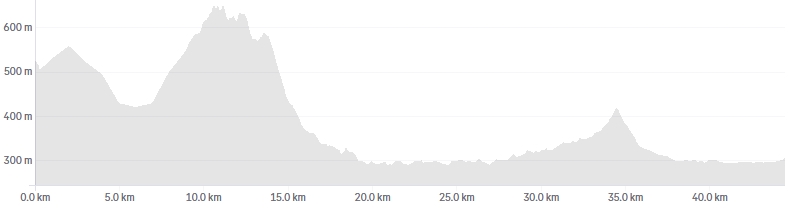
We begin the day with a short transfer up the Phoukaolak Pass, sparing ourselves the toughest climb and starting high in the mountains. From here, the riding feels truly rewarding: a day of long, flowing downhills balanced with a few rolling climbs.
The route covers 650 meters of ascent but rewards us with an exhilarating 1,950 meters of descent, winding through remote valleys and limestone peaks. Villages appear along the roadside, where children wave and farmers pause from their work to greet us. The scenery shifts constantly—from jungle-clad slopes to open farmland and dramatic karst cliffs.
By afternoon we roll into Kasi, a quiet market town set in a fertile valley surrounded by mountains. It’s the perfect place to relax after a day of thrilling descents and to prepare for the next stage of our Laotian adventure.
Cycling Distance: 46.5km (29 miles)
Total Climb: 650m (2,132ft)
Total Descent: 1,950m (6,397ft)
Accommodation: Guest House (B,L,D)

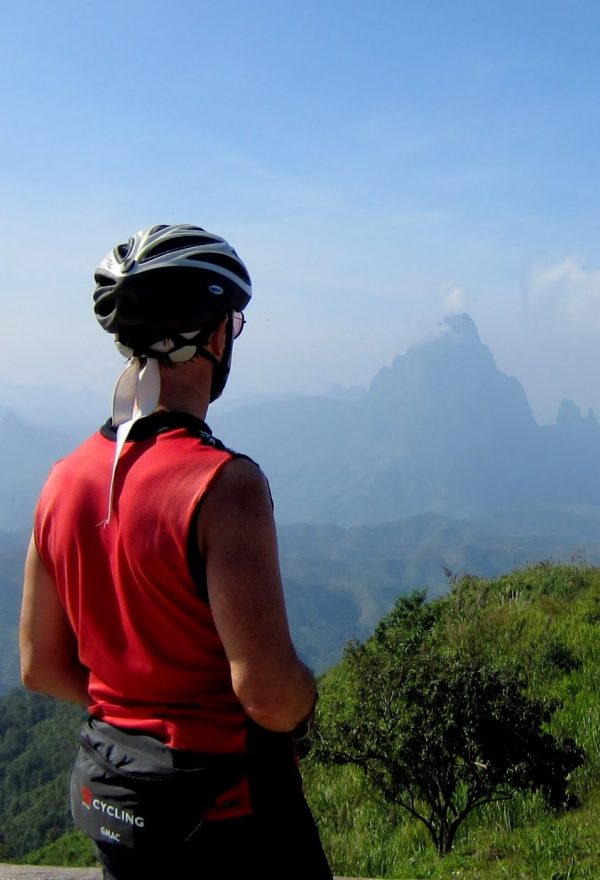
Today’s ride takes us through some of the most iconic landscapes in Laos. Leaving Kasi, the road follows a series of valleys framed by towering limestone mountains and lush green rice fields. The riding is varied but not overly demanding, with a balance of gentle climbs and rolling terrain that keeps the legs moving without the punishing gradients of previous days.
As we approach Vang Vieng, the scenery becomes truly spectacular: jagged karst cliffs rise dramatically from the plain, and the Nam Song River winds its way through the valley. This stretch is one of the most photographed in Laos, and it’s easy to see why—it feels like cycling straight into a postcard.
By afternoon, we arrive in Vang Vieng, a lively riverside town known for its natural beauty and relaxed atmosphere. Once a backpacker hub, it has transformed into a destination for outdoor adventure and serene landscapes. After checking into our hotel, you’ll have time to unwind, perhaps with a drink overlooking the river as the sun sets behind the limestone peaks.
Cycling Distance: 58.3km (36 miles)
Total Climb: 490m (1,607ft)
Total Descent: 660m (2,165ft)
Accommodation: Guest House (B,L,D)

Today is yours to enjoy the natural beauty and relaxed atmosphere of Vang Vieng at your own pace. You may wish to take a leisurely stroll along the Nam Song River, enjoy the view of the dramatic limestone peaks, or relax in one of the riverside cafés.
For those seeking adventure, Vang Vieng offers plenty: you might kayak on the river, explore caves hidden among the karsts, or take a short hike for sweeping views of the surrounding valley. Alternatively, simply rest and recharge—wander the small town, browse local shops, or enjoy a traditional Lao massage.
This pause in Vang Vieng is the perfect opportunity to relax after several days of riding and to prepare for the next stage of our journey south.
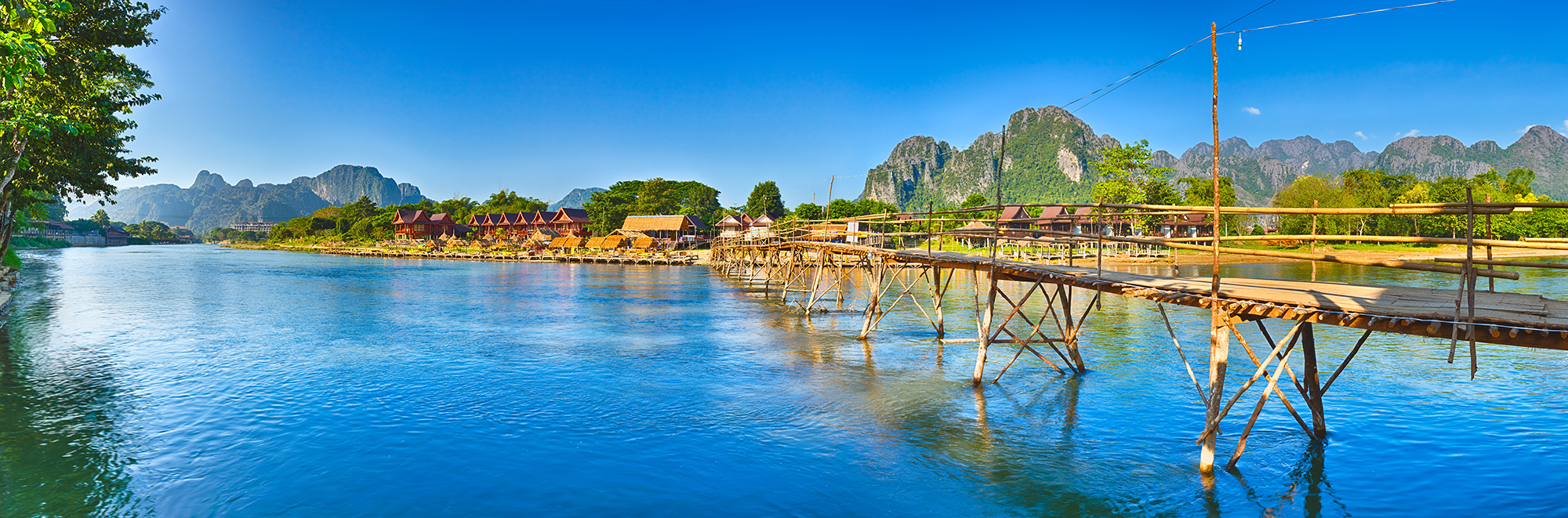
After soaking in the beauty of Vang Vieng, we set out on a quieter stage that follows the Nam Song River before heading deeper into rural Laos. The ride begins with dramatic views of Vang Vieng’s famous limestone karsts fading into the distance as we follow a more peaceful road south.
The terrain today is undulating but never extreme—rolling hills, river crossings, and stretches of open farmland framed by jungle-covered mountains. With less traffic, the pace feels relaxed, and the scenery shifts between rice paddies, bamboo groves, and small stilted villages where life moves at a gentle rhythm.
By afternoon, we arrive in Muang Feuang, a small riverside town set against a backdrop of mountains and winding waterways. Far removed from the bustle of Vang Vieng, it’s a place where sunsets linger over the river and evenings are spent in simple, laid-back surroundings.
This stage offers a balance of rewarding riding and cultural immersion, setting us up perfectly for the next part of the journey.
Cycling Distance: 91km (56 miles)
Total Climb: 720m (2,362ft)
Total Descent: 740m (2,427ft)
Accommodation: Guest House (B,L,D)

We continue south today, cycling deeper into rural Laos on a stage that blends quiet roads, rolling hills, and authentic village life. Leaving Muang Feuang, the morning ride follows gentle terrain along the river before climbing gradually into low hills covered with jungle and farmland.
This is a day where the beauty is found in the details: wooden stilt houses shaded by banana trees, farmers working in rice paddies, and children running out to greet passing cyclists. The pace is steady, with undulating climbs and descents that keep the ride varied but never extreme.
By afternoon, we arrive in Ban Vang, a small community surrounded by farmland and dramatic limestone ridges. Removed from the bustle of larger towns, Ban Vang offers a glimpse into everyday rural life, where the rhythm is set by the river and the fields. It’s a tranquil stopover, giving us a chance to rest and prepare for the final stages of our journey.
Cycling Distance: 89km (55 miles)
Total Climb: 590m (1,935ft)
Total Descent: 610m (2,001ft)
Accommodation: Guest House (B,L,D)

After breakfast, we set off on our final day of cycling, following the main road that gently winds alongside the Mekong River. This peaceful stretch offers panoramic views across the water to Thailand on the opposite bank, with glimpses of riverside villages, fishing boats, and lush vegetation along the river’s edge. The route is mostly flat with a few gentle undulations, allowing us to enjoy the scenery at a relaxed pace.
By midday, we arrive in Ban Pak Ton, where we enjoy a celebratory lunch beside the river. From here, we transfer the last 45 km into Vientiane, the laid-back Lao capital. With its blend of golden temples, French colonial villas, and bustling riverside cafés, Vientiane provides the perfect place to conclude our journey.
Cycling Distance: 76km (47 miles)
Total Climb: 590m (1,607ft)
Total Descent: 610m (1,673ft)
Accommodation: Guest House (B,L,D)

Enjoy your final morning at leisure in Vientiane before your airport transfer. If time allows, take the opportunity to explore the laid-back charm of Laos’ capital city. You might visit Pha That Luang, the country’s most important national monument, or admire the colonial architecture and riverside views along Fa Ngum Road.
Over two unforgettable weeks, you will cycle from the remote mountains of northern Thailand, across the Mekong into Laos, and through some of Southeast Asia’s most breathtaking landscapes. Each day will bring a new challenge and reward—jungle-clad passes, quiet backroads, shimmering rice paddies, and riverside villages where life moves at a timeless pace.
You will discover the cultural treasures of Luang Prabang, ride beneath the towering limestone peaks of Vang Vieng, and finish in the relaxed riverside capital of Vientiane. Along the way, you will connect with the people and traditions of the region, gaining a perspective that few travelers ever experience.
This journey will not just be about cycling—it will be an immersion into landscapes, cultures, and moments that will stay with you long after the ride is over. From the highlands of Nan to the banks of the Mekong, this is Southeast Asia at its most captivating.


Each tour requires a minimum number of participants to run
Tour status updates automatically as bookings are received
Do not book flights until the tour status is marked Guaranteed
Tour Status Definitions
Booking & Payments
Small Group Note
For groups of fewer than four participants, the guide may lead from the support vehicle rather than cycling with the group, ensuring full logistical and guiding support.
Fully supported cycling holiday
Meal Key (used in the itinerary)
Tour Start
Tour End
Flights
Meals on Tour
Most meals are included in your tour price, except on rest days and a few other occasions.
Please check the itinerary for all meals provided.
Dietary Requirements
If you have any special dietary needs, please let us know at the time of booking.
We can cater for most diets, but advance notice is essential to ensure the best experience.
Northern Thai cuisine (Lanna style) is distinct from central and southern Thai food — generally less sweet, slightly milder in chilli heat, and rich in herbs and fragrant spices.
Typical dishes you may Encounter:
Lao cuisine shares similarities with Thai food but has its own distinctive flavours. It is generally fresh, herb-based and aromatic, with sticky rice forming the foundation of most meals.
Typical dishes you may encounter:
Drinks you may encounter:
Things to know
Support Vehicle
On-Ride Support
Helmet Policy
For this tour we have Trek Marlin 5, 6 and 7 bikes and Kaze e-bikes, all in a range of sizes.
What’s Included with Bike Hire
Customising Your Bike

Yes, the tour is suitable for most type of bikes.
We strongly recommend that you have your bike fully serviced before going on the tour. Ensure that wheel spokes are adjusted, greasing all bearings, check gear and brake cables, tighten all nuts and bolts, check chain, quick release clamp and tyres. Put in a new inner tubes and check wheel rims aren’t worn.
We recommend that you take the following items with you.
Your bike must be carried as part of your luggage allowance. The weight of a bike in cardboard box is about 15-20kg, so please bear this in mind when packing for the trip and you may have to pay for excess luggage.
What to Bring
Where to Exchange
Spending Money
Staff Tipping
Laos – Entry Requirements (Important)
Travel Insurance
Mandatory for all participants and must cover:
Health & Vaccinations
Staying Hydrated on Hot Rides – 6 Tips for Cyclists
As a cycling company, we know how important proper hydration is—especially when you’re out riding in hot conditions. Below are some general hydration tips that riders find helpful for staying fuelled and feeling strong on the bike.
Please note: We are not medical professionals and this information should not replace advice from a qualified healthcare provider. Each cyclist is different, so if you have specific health concerns or conditions, it is always best to consult your doctor and adhere to their advice.
1. Prioritize Gut Health
2. Time Your Hydration
3. Hydrate Beyond Water
4. Don’t Forget the Minerals
5. Absorb Water Better
6. Keep Your Electrolytes in Check
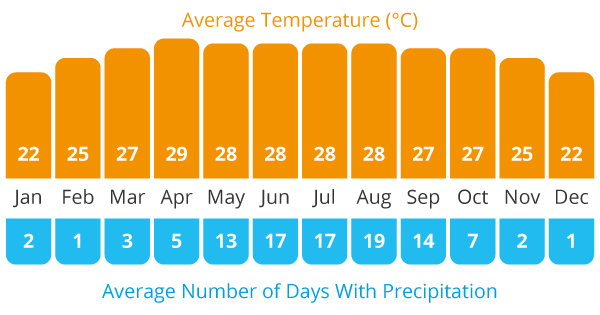
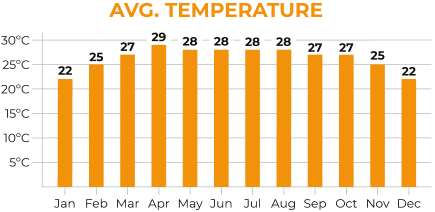
This is a flexible guide — please tailor it to your own needs. The weather is typically warm and humid, so lightweight cotton clothing is ideal.
Cycling Essentials
Clothing
Personal Gear
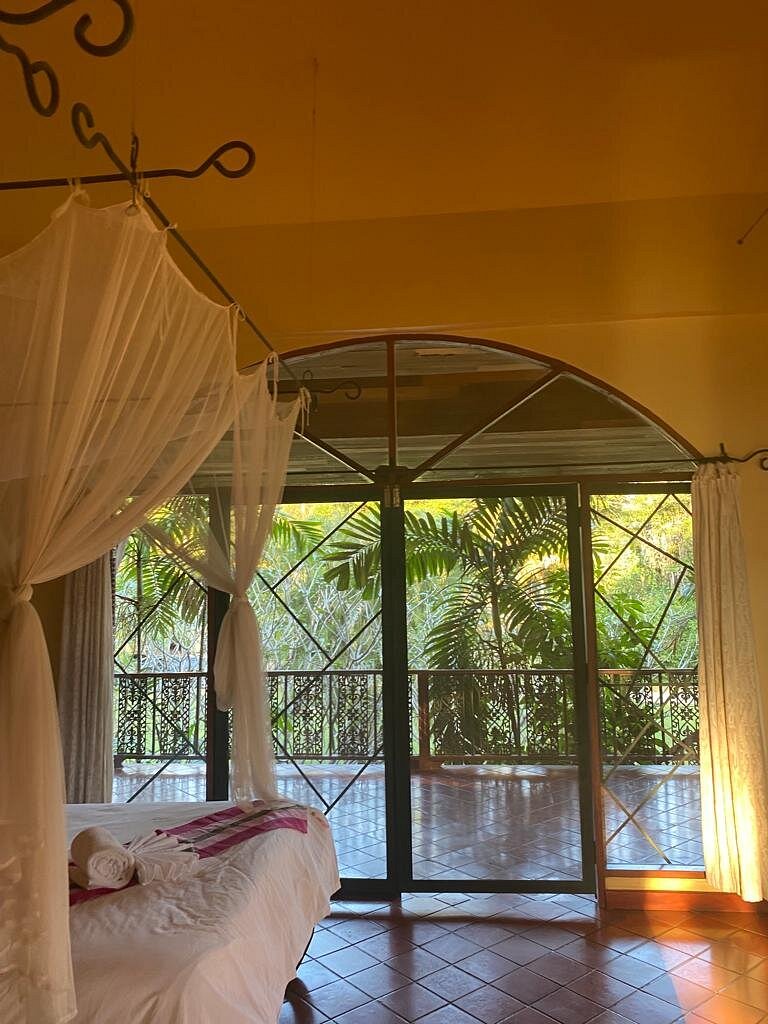
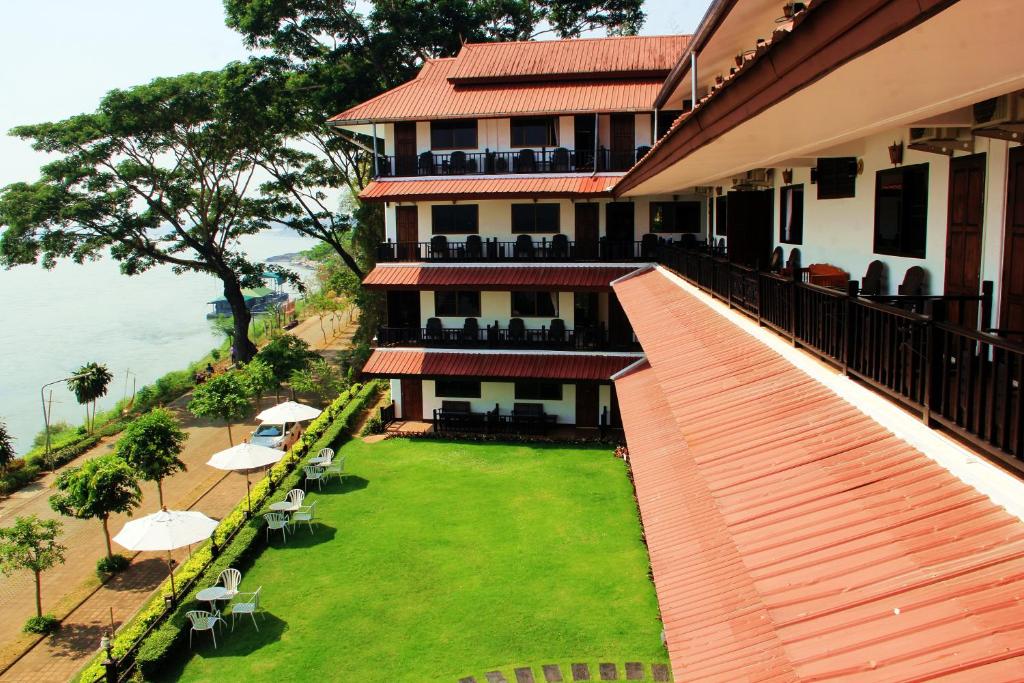
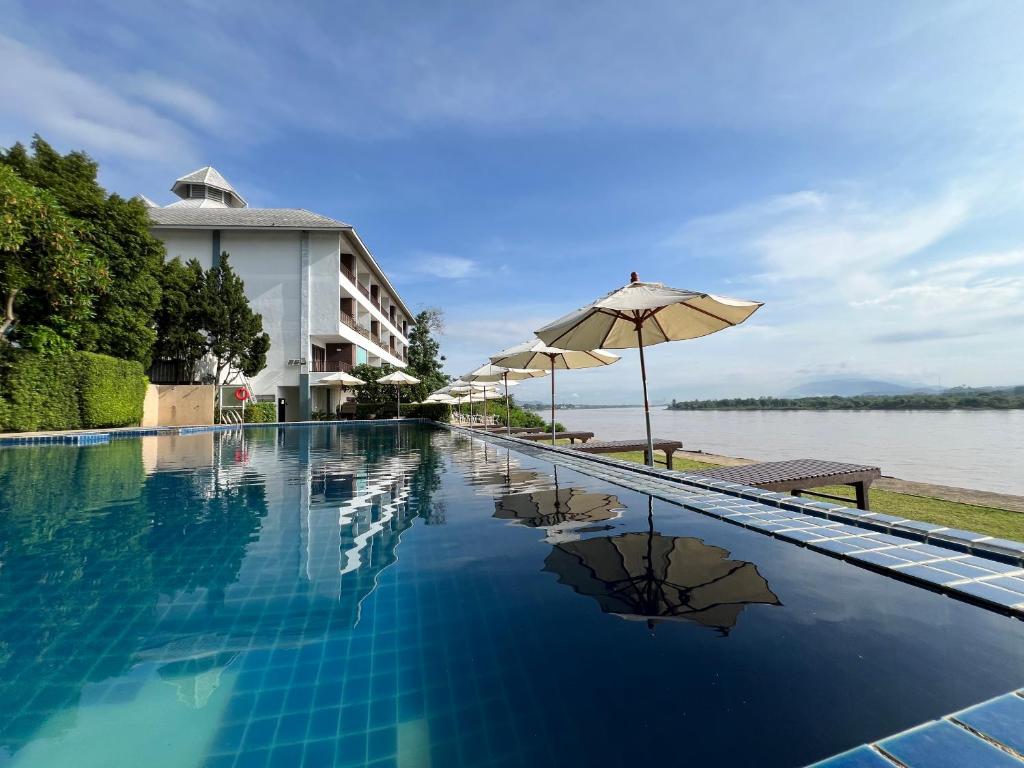
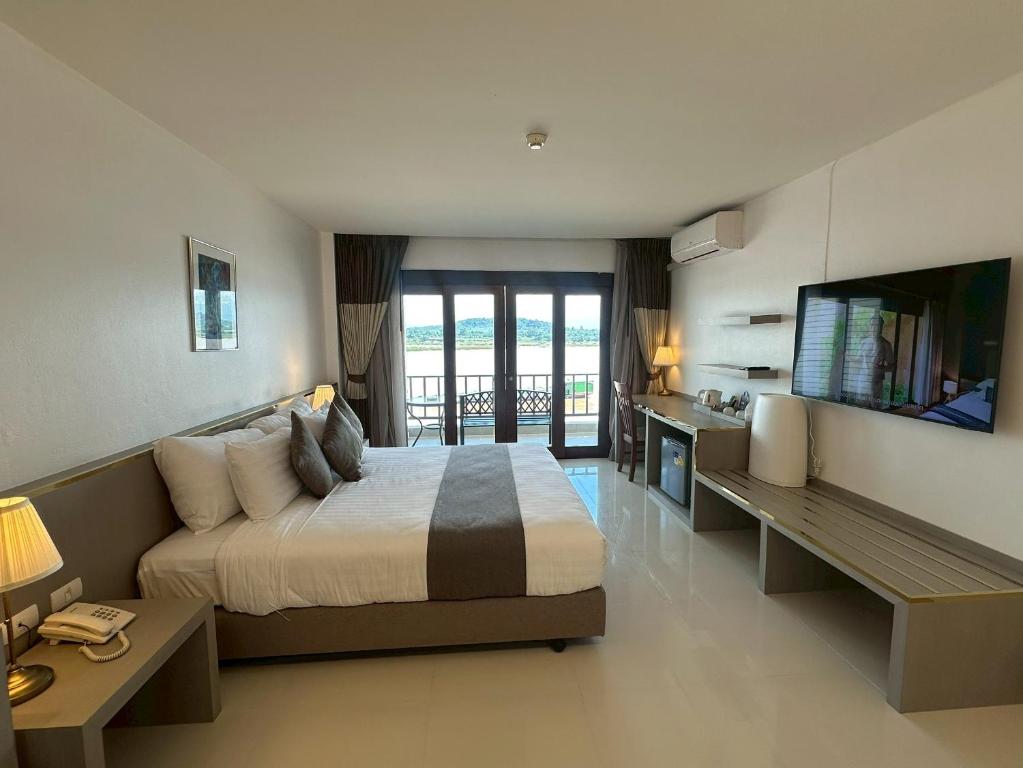
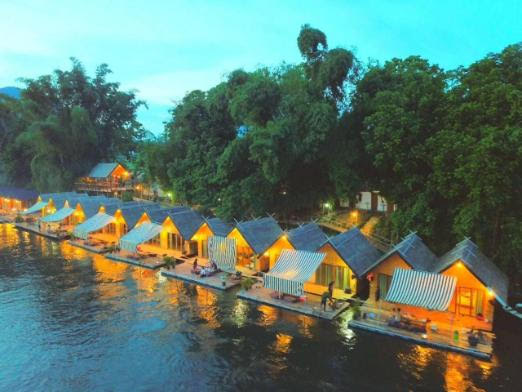
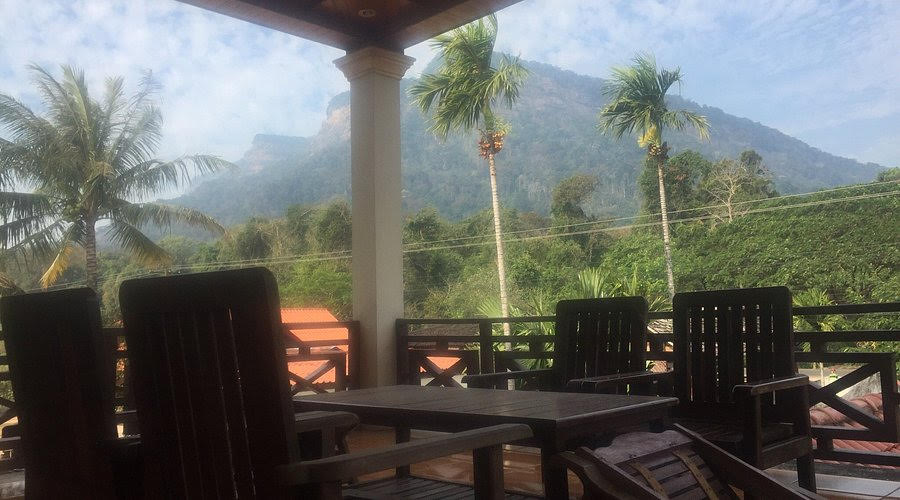
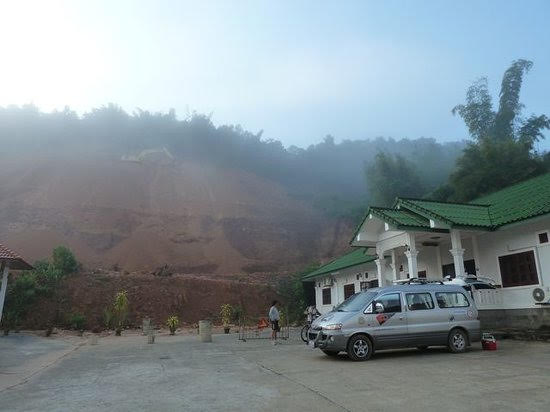
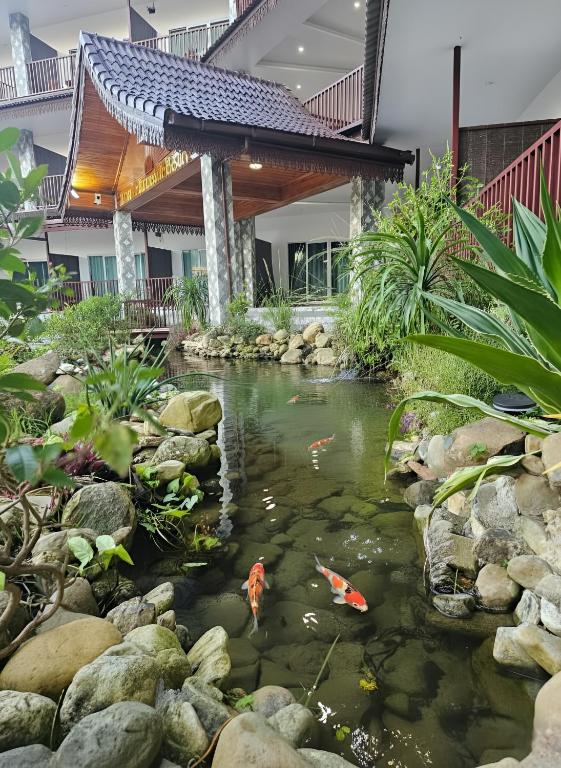
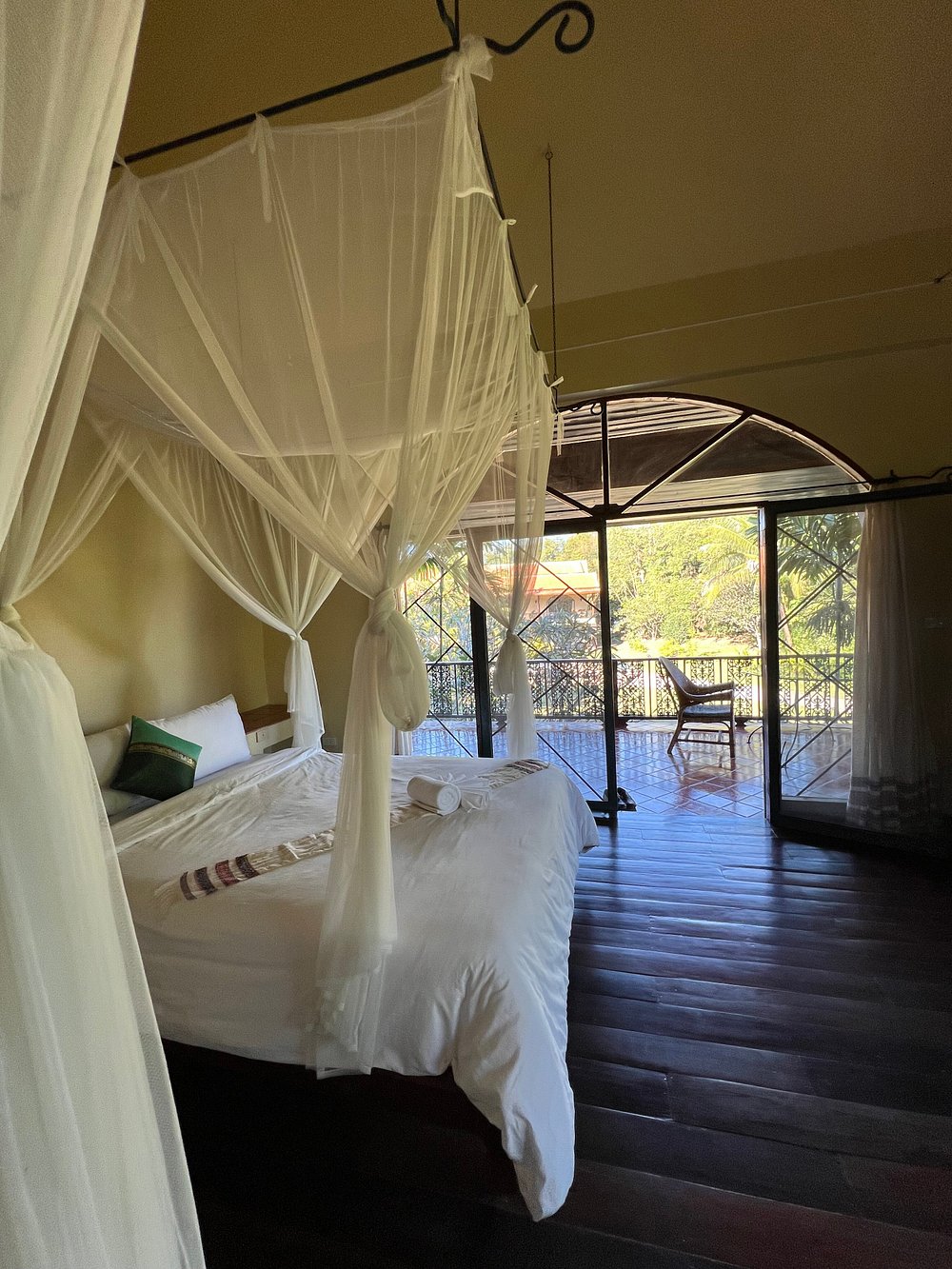
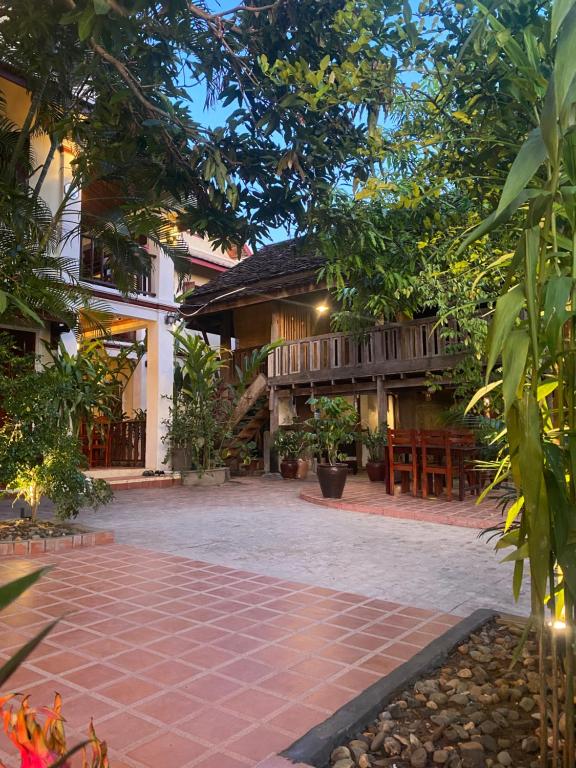
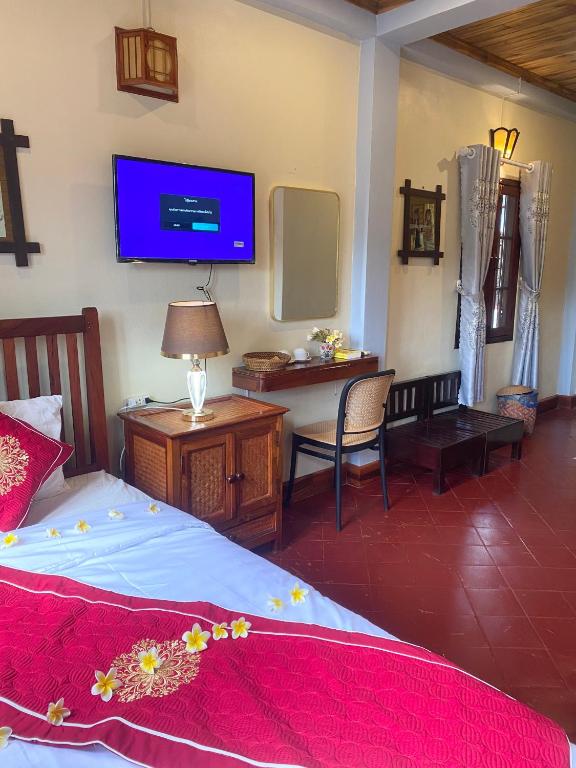
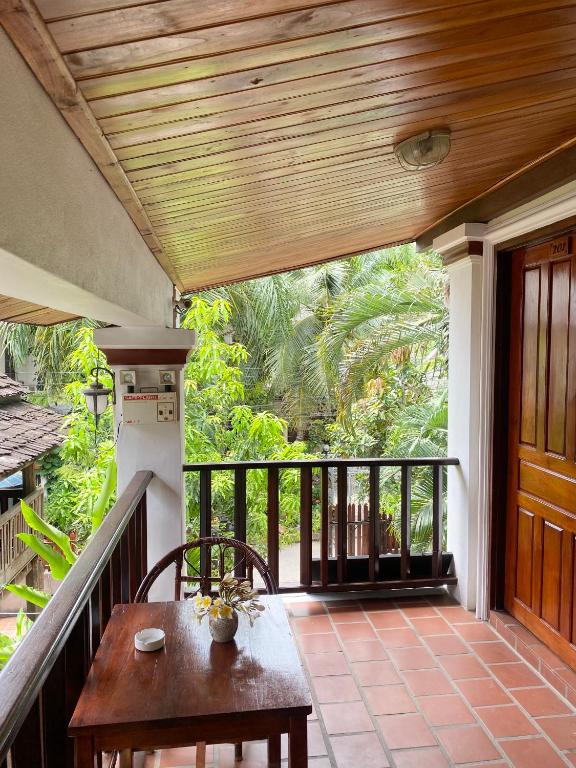
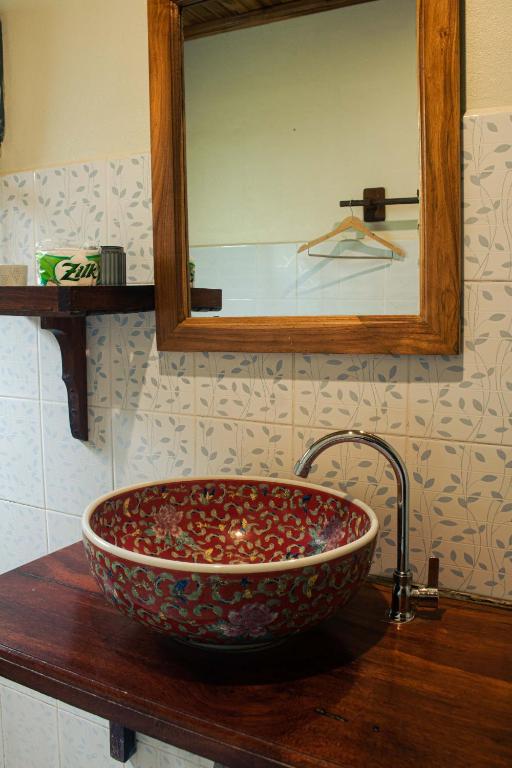
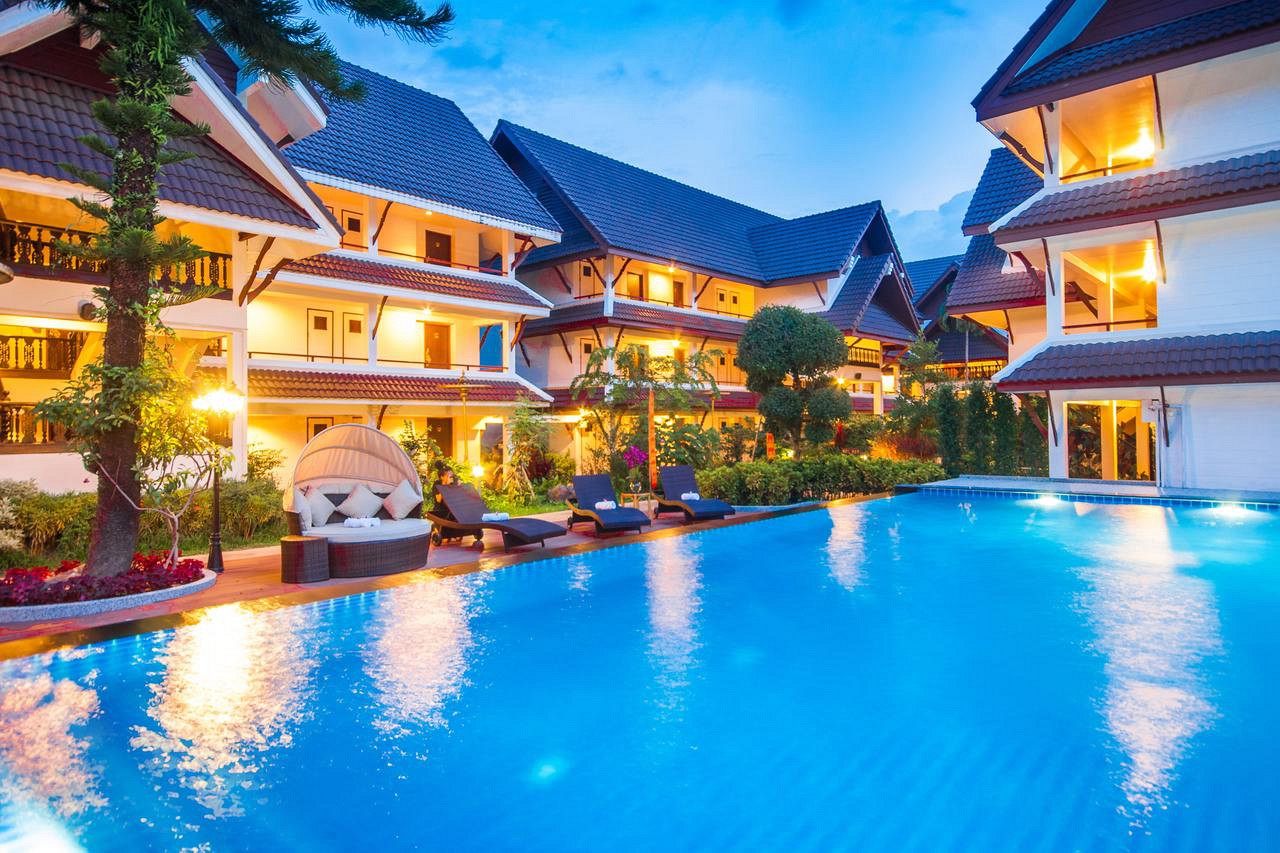
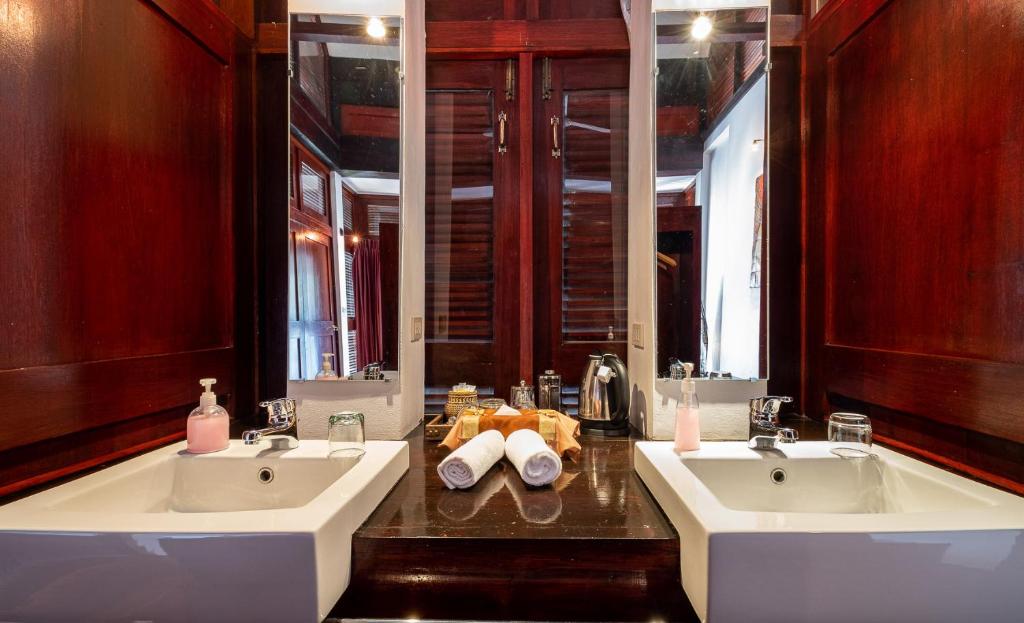
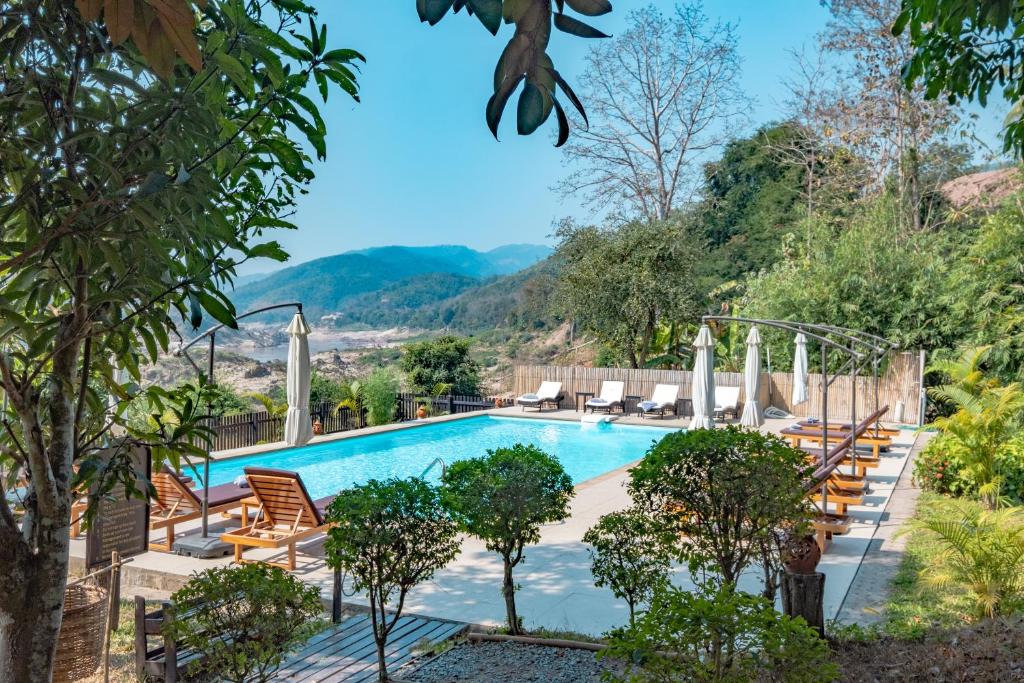
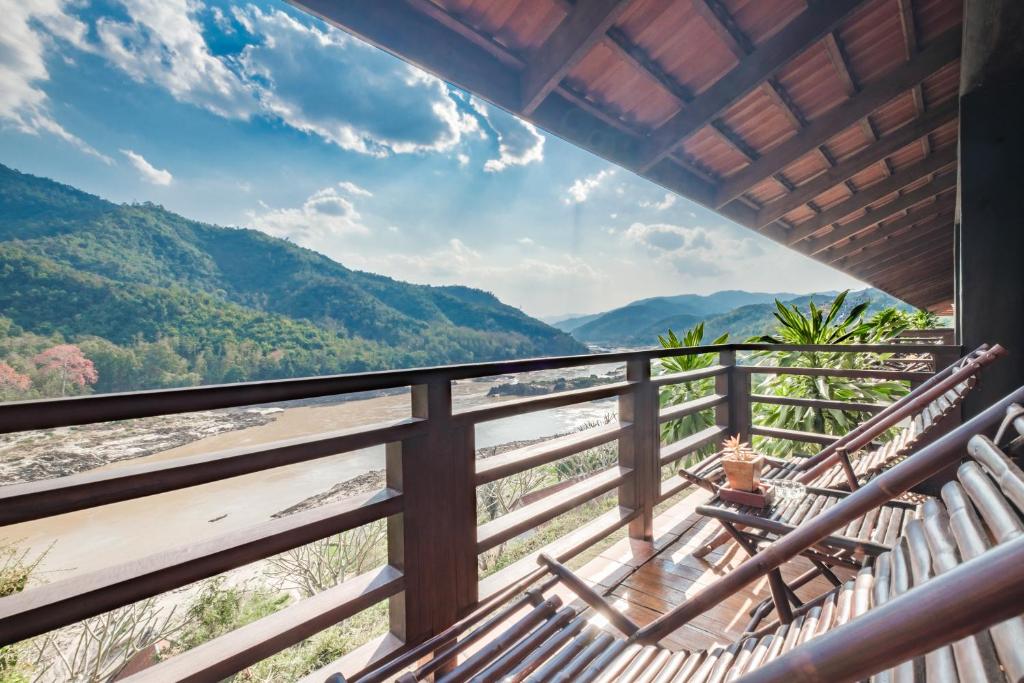
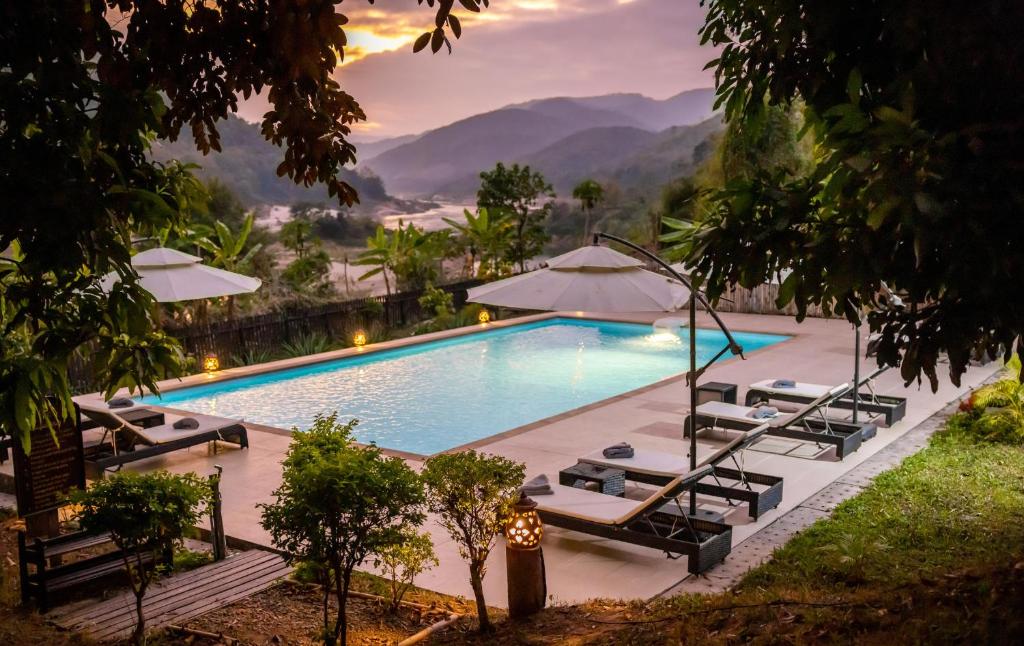
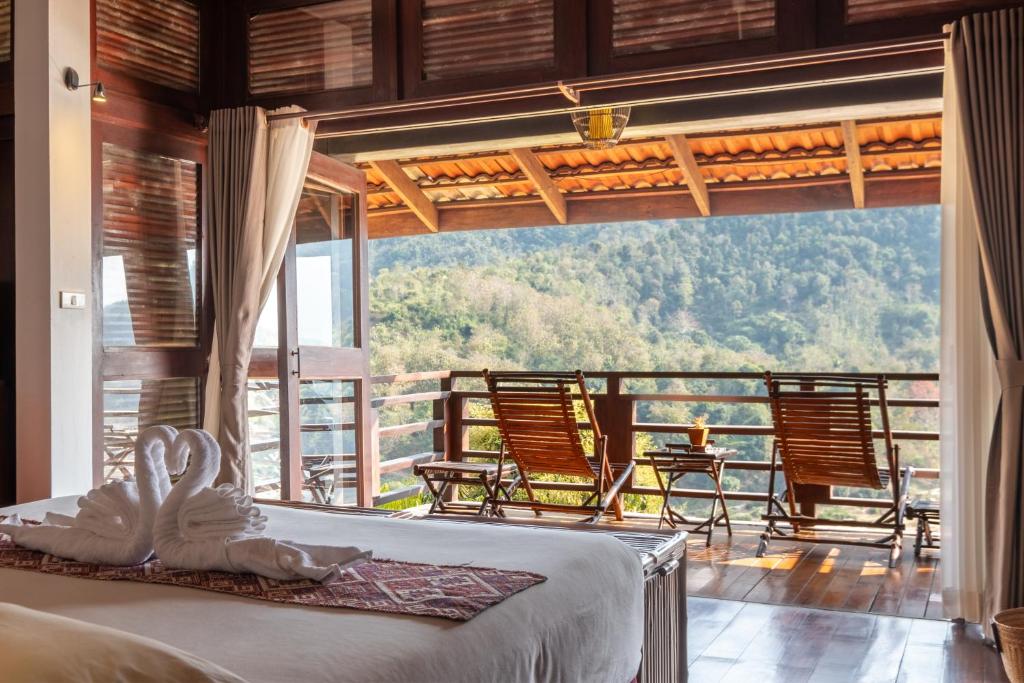
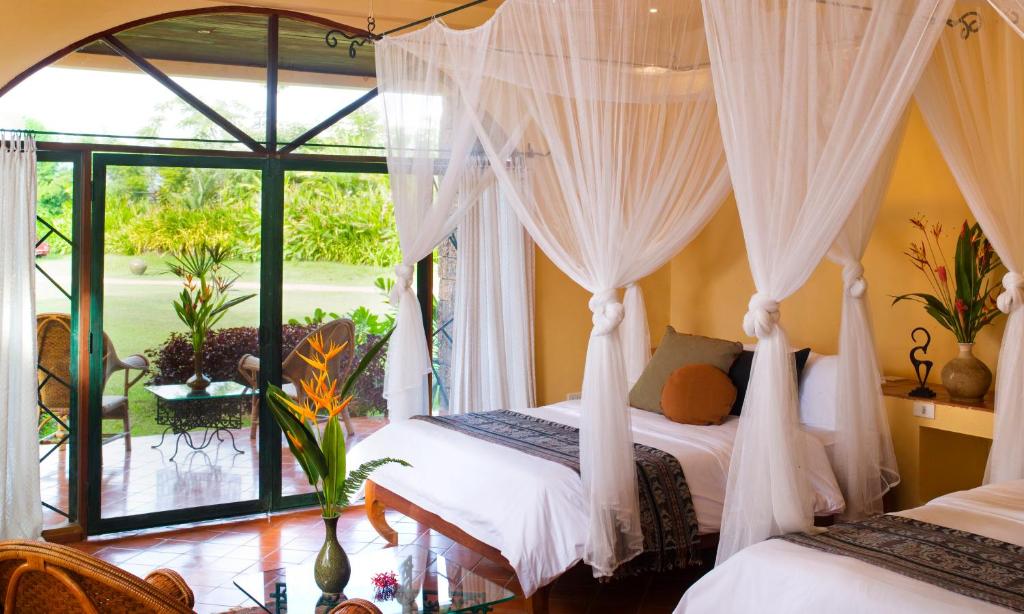
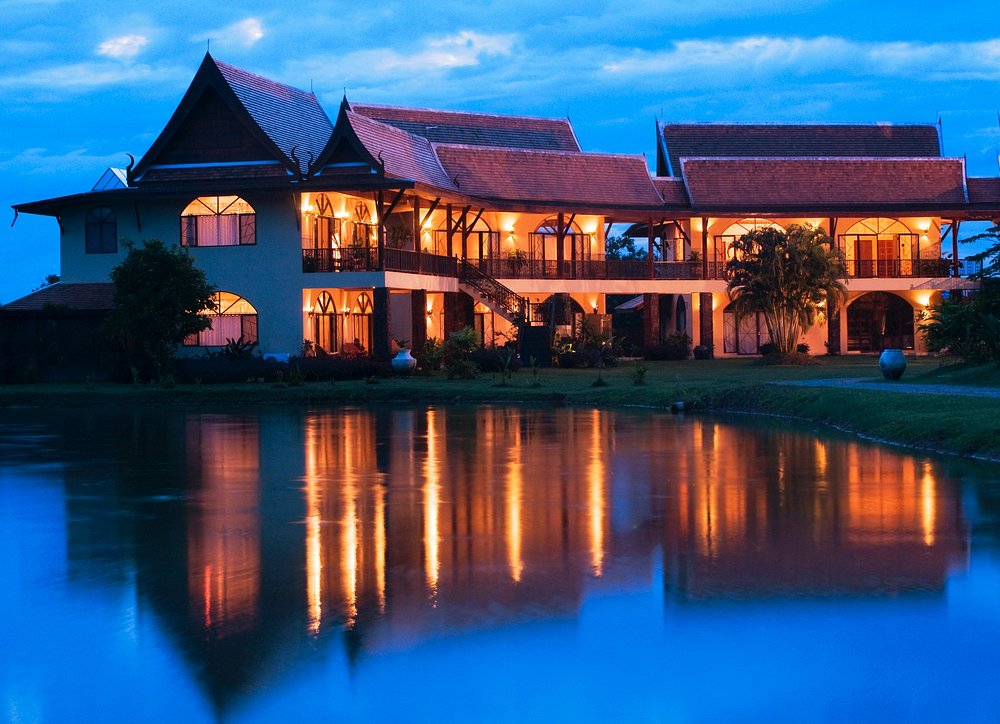
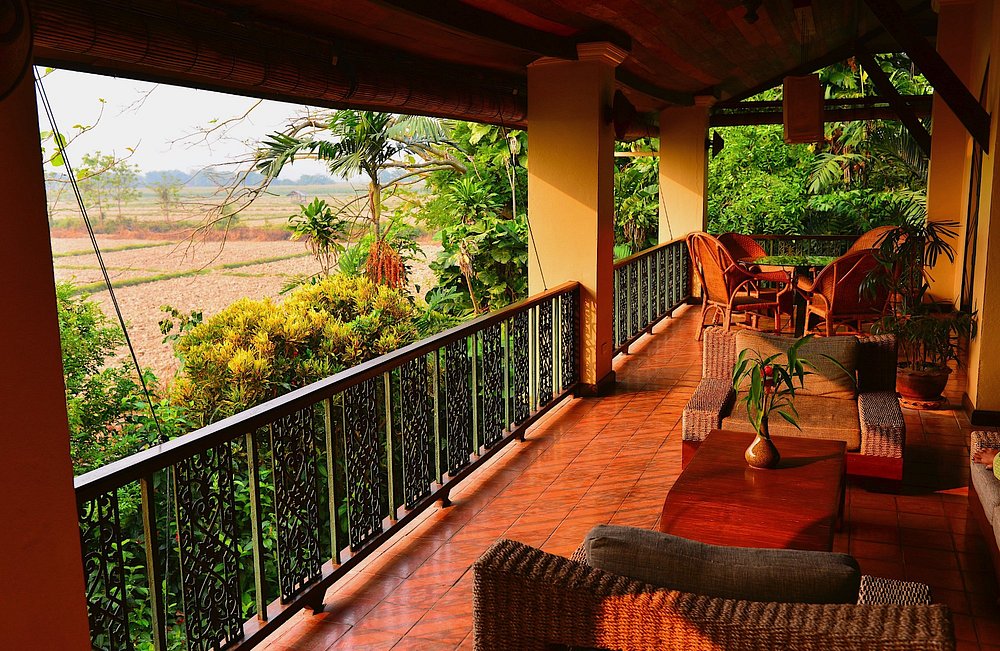
This tour offers a consistently comfortable standard of accommodation, combining boutique hotels, small resorts and friendly local guesthouses across northern Thailand and northern Laos.
We begin in Chiang Rai at the well-appointed Nak Nakara Hotel, then continue through rural northern Thailand with stays at Rico’s Resort (Chiang Kham), Phu Lanka Home 360, and Rai Juthamas Resort in Chiang Klang — all offering clean rooms, scenic settings and warm hospitality.
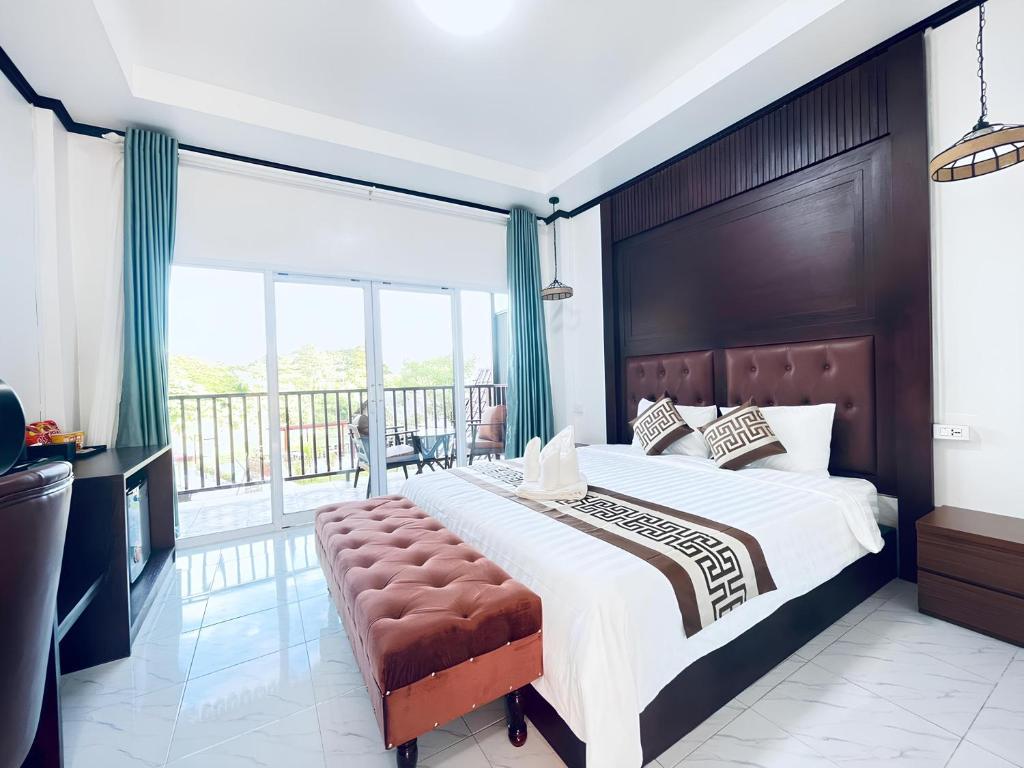
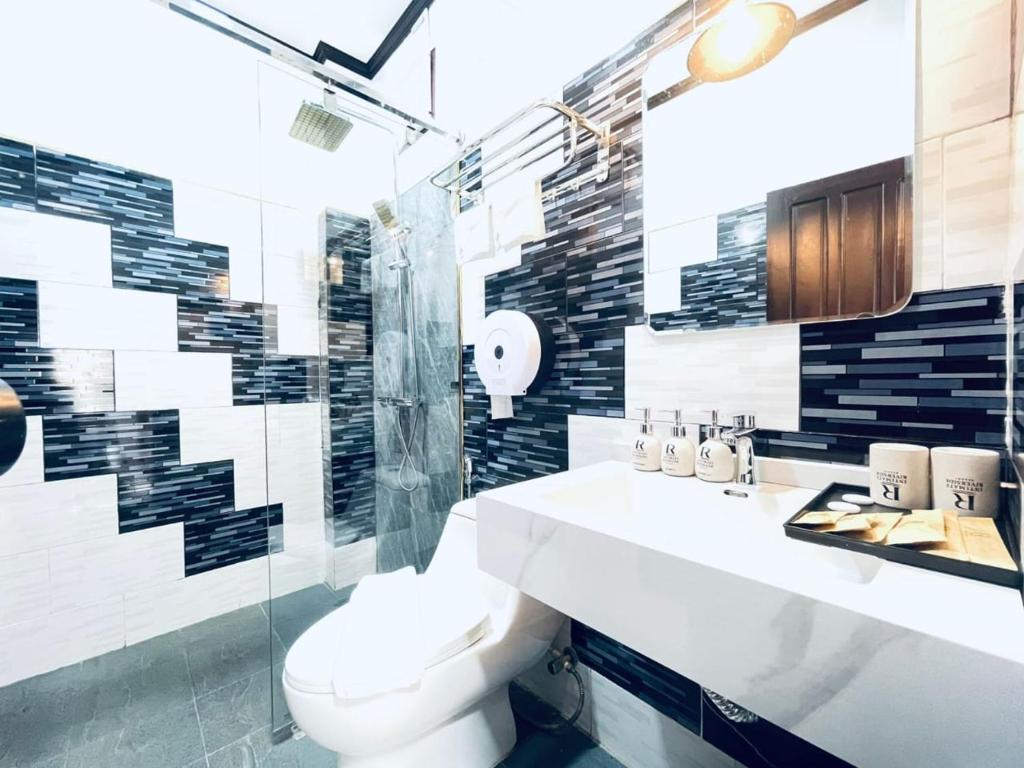
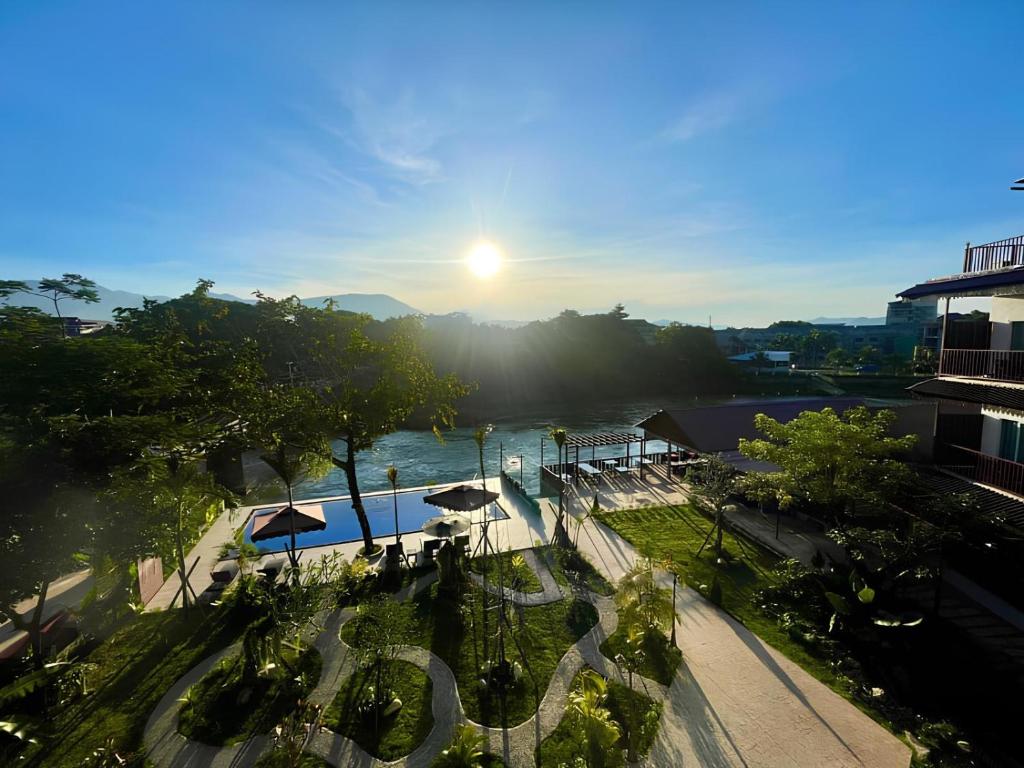
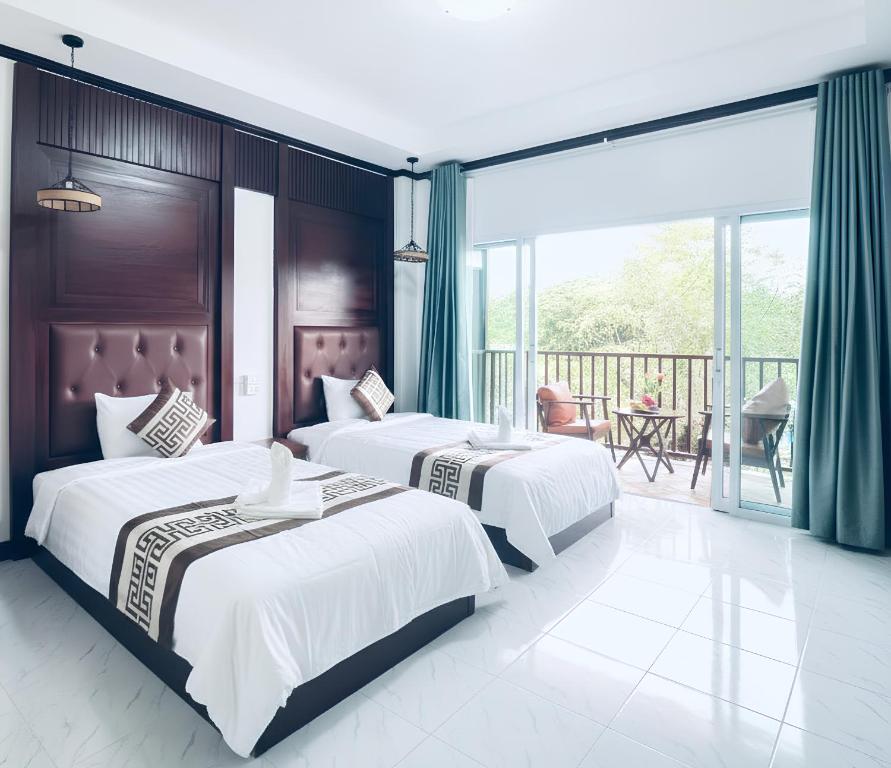
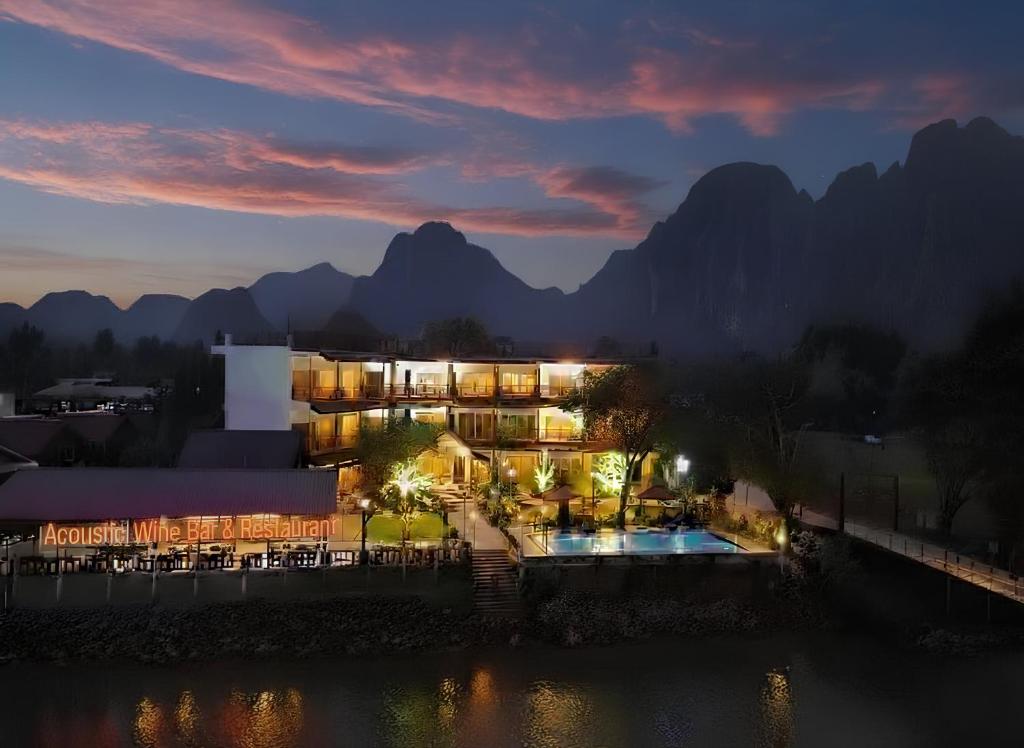
Entering Laos, nights are spent in well-located riverside and town-centre hotels such as Sanctuary in Pakbeng and Golden Sun Boutique in Luang Prabang, along with simple but welcoming local guesthouses including Sokphaikham Guesthouse, Somchit Guesthouse and Sinsoda Guesthouse. In Vang Vieng, we stay at the comfortable Intimate Riverside Resort, a peaceful property overlooking the Nam Khan River. The tour concludes with a night at the Holiday Inn in Vientiane for an upmarket end to the tour.
Expect:
Cycle Laos from Luang Prabang to Vientiane, riding rolling roads, jungle valleys and quiet Mekong backroads
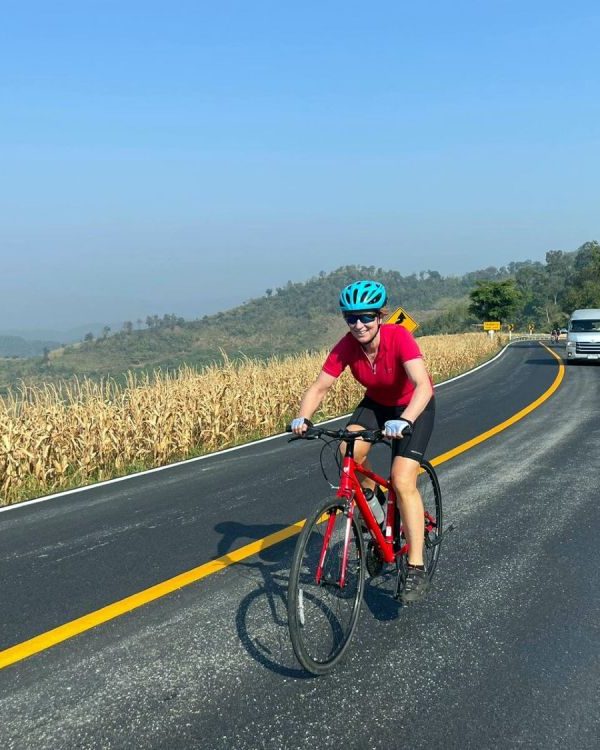
Cycle Northern Thailand from Chiang Rai through the Golden Triangle and misty mountain passes.
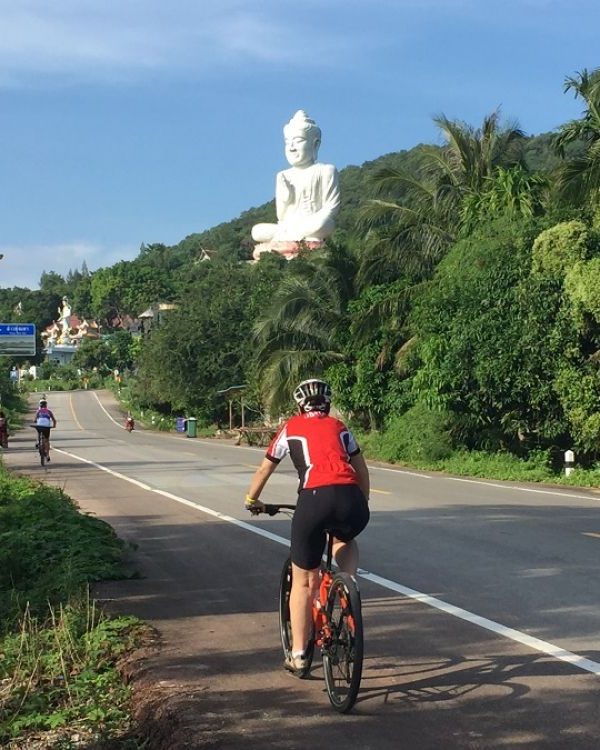
Cycle Southern Thailand from Bangkok to Phuket, riding quiet coastal roads, islands and tropical beaches.