
China – Yunnan
Cycle mystical Yunnan from Shangri-La to Dali, conquering high passes, deep gorges and ancient trading towns in southwest China.

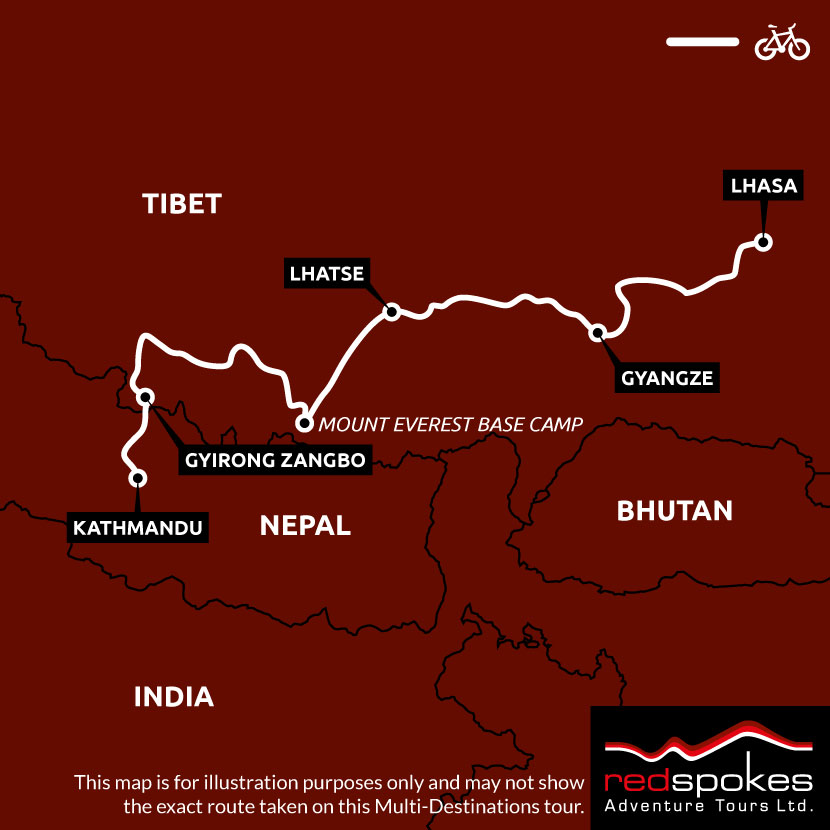
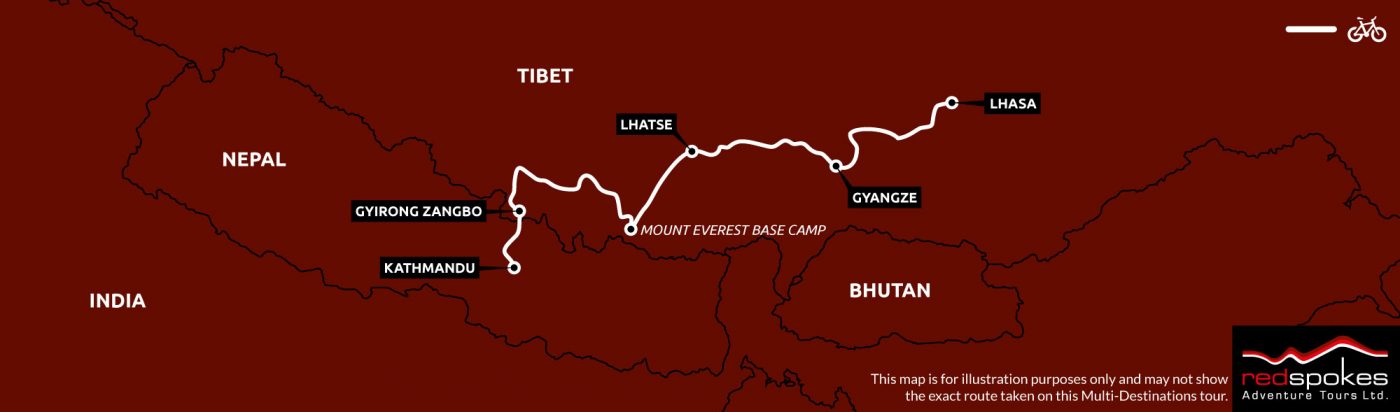
Cycling the Tibetan Plateau from Lhasa to Kathmandu is one of the world’s great high-altitude adventures. This extraordinary journey crosses four major Himalayan passes above 5,000 metres and traverses more than 1,000 kilometres along the backbone of the Himalayas. From the spiritual heart of Lhasa to the vibrant streets of Kathmandu, the route combines dramatic mountain scenery with deep cultural and religious heritage.
After acclimatising in Lhasa, the cycling begins across vast plateau landscapes framed by snow-capped summits and fluttering prayer flags. A major highlight is the climb over Pang La Pass to Everest Base Camp, where breathtaking views of Mount Everest await. The journey concludes with an unforgettable descent back into Nepal, delivering both intense physical challenge and unmatched Himalayan panoramas.
At 5,545 metres (18,192 ft) North Base Camp is an unforgettable experience. Your journey, the history of Everest and the spiritual aura of the mountain will all impress upon you. Strewn with prayer flags and with dramatic views of the surrounding peaks Everest Base Camp is an undeniably awe-inspiring location. Following rules introduced in 2004 you can’t actually approach the Mount Everest Base Camp by bike, and the final 1000m is covered on foot. This will add to the experience as you are fully able to concentrate on taking in the magnificence of your surroundings
The Rongbuk Monastery is the highest religious building ever to be constructed and occupied. At the foot of the Rongbuk glacier at an altitude of 5000m and just 200 metres beneath the North side Everest base camp, it is only accessible via a dirt road. With panoramic views of the Shishapangma, Mount Everest, Cho Oyu, and Gyachung Kang peaks it has arguably one the finest viewpoints on the world.
The Monastery itself was founded in 1902 by a Nyingmapa Lama in amongst the meditation huts of monks and hermits that had been in use for over 400 years. Hermitage meditation caves still dot the cliff walls all around the complex and along the valley. At one time there were about 500 monks and nuns living here; but locals say only about 20 nuns and 10 monks remain today.
Kathmandu When you arrive in Nepal, you will have a day to collect your bike if you are hiring one for the trip, meet the group, and take in the atmosphere of Nepal’s primary city.
The capital, Kathmandu, is a key destination for trekkers and independent travellers, with an established tourist district, Thamel. This is a great starting point from which to explore the city, with an array of souvenirs for sale on colourful stalls in narrow cobbled streets. If you search a little further you will see the real Nepal; a place of contrasts, marigold strewn temples, winding back streets where traders sell their wares and artisan workshops of a bygone era.
Head from Thamel towards the world heritage site, Durbar Square; you will pass markets, courtyards and stupa decked with colourful prayer flags. Durbar Square comprises 3 areas featuring traditional Nepali architecture. A key attraction in the square is the Maju Deval. A Shiva temple that dates from 1690. Built by the mother of Bhaktapur’s King Bhupatindra Malla. The temple is famed for its Shiva lingam (phallic symbol) inside. The roof is decorated with ornate erotic carvings on the struts and from here you will have a wonderful view of the square and across the roofs of the city. The nine-stage ochre platform of the Maju Deval is a popular meeting place where you can watch the lively coming and goings of the city; flower sellers and fruit and vegetable hawkers, taxis and rickshaws, and other traders offering their wares to visitors. To the east side of the Maju Deval is a smaller temple to Kam Dev, a ‘companion’ of Shiva.
The Kumari Bahal on the east side of Basantpur Square is the home of the Royal Kumari; living goddess of Nepal. Built in 1757, it is a red brick building, several stories high with ornately carved windows. Stone Lions guard the courtyard. The Kumari is a young girl selected to be goddess until she reaches puberty when it is believed that she resumes life as a mortal. Although it is believed to be bad luck to marry an ex-Kumari. Tradition says that the goddess answers the question you are thinking by the look of her face. When the Kumari is present it is forbidden to take pictures.
Make sure you visit the Sagarmatha Bazaar on Mandala St. This is the only pedestrianised street in Kathmandu. The other face of this bustling city is the emerging modern development of concrete constructions and heavy pollution from traffic.
Other key attractions in Kathmandu include:
Swayambhu A large stupa, of cultural significance, and one of the most highly revered Buddhist sites in Nepal, with great views over the city. It’s a 20-30 minute walk from Thamel, or take a taxi or rickshaw. Another sacred site for Tibetan Buddhism, is the Baudha Stupa in Baudha.
Narayanhiti Palace Museum. In 2009 the the Royal Palace became part museum and part foreign ministry. The grand halls of the main building are open to visitors. At sunset as you approach or leave the palace you will be aware of giant fruit bats hanging from the trees and huge bamboo around the building. .
Garden of Dreams – a beautiful, tranquil walled garden close to the former Royal Palace.
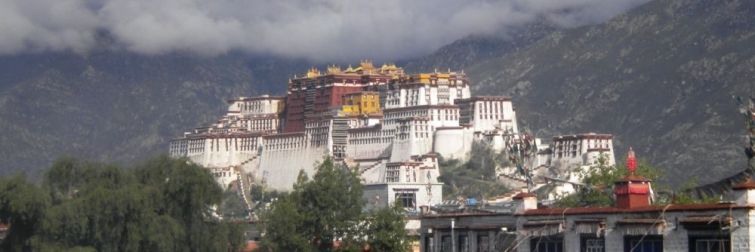
In the Tibetan language, Lhasa means ‘the Holy Land’ or ‘the Buddha Land’. The city is said to have a unique allure and has been appointed as one of the 24 historical and cultural cities of China. It is unique not only for its remote location but also its cultural and spiritual history that has helped to create the romantic and mysterious Tibetan religion. Lhasa is the administrative capital of Tibet and the second most populated city on the Tibetan Plateau. At an altitude of 3,490 metres (11,450 ft), it is also one of the highest cities in the world. There are many Tibetan Buddhist sites such as the Jokhang, Potala and Norbulingka palaces.
The imposing structure of the Potala Palace towers above Lhasa, covering an area 400 metres east-west and 350 metres north-south. The construction of the Potrang Karpo, or White Palace, as it stands today, commenced in 1645 during the reign of the fifth Dalai Lama and was completed in 1648. The Potrang Marpo, or Red Palace, was added between 1690 and 1694; its construction involved more than 7000 workers and 1500 artists and craftsman. In 1922 the 13th Dalai Lama renovated many chapels and assembly halls in the White Palace and added two stories to the Red Palace. The Potala was home to the Dalai Lama and his large staff. It was also the seat of Tibetan government, where all ceremonies of state were held; and served as a school for religious instruction of monks and administrators. It was an important destination for pilgrims because of the tombs of past Dalai Lamas. In the White Palace there are two chapels, the Phakpa Lhakhang and the Chogyal Drubphuk; built in the seventh century, these chapels are the oldest and most sacred sites within the complex. The Palace remained almost unscathed during the Tibetan uprising against the invading Chinese in 1959. Where most other Tibetan religious structures were sacked by the Red Guards during the 1960s and 1970s, the Potala was spared, all the chapels and their artefacts are very well preserved. It is said that this was through the personal intervention of Chou En Lai.
Located on Barkhor Square, the Jokhang Temple is part of the UNESCO World heritage site “Historic Ensemble of the Potala Palace,” and a spiritual centre of Lhasa, widely regarded as the most sacred building in Tibet. It was built in the 7th C AD, in honour of the Nepalese princess Bhrikuti who married the ruling king Songsten Gampo. Songsten Gampo is credited with both the founding of Lhasa and the effective introduction of Buddhism into Tibet. Over the centuries the temple has undergone a number of changes. Notably during the 17th C reign of the fifth Dalai Lama. The majority of the murals within the temple date from the 18th and 19th C few of the statues date back earlier than the 1980’s. The temple has endured attack and sacking a number of times.
Sera means wild rose in the Tibetan language. When the monastery was under construction the hill behind it was covered with wild roses in bloom, inspiring its name. Conceived on a grand scale, the monastery is an outstanding and imposing building. The main buildings are the Coqen Hall, Zhacang (college) and the Kamcun (dormitory). The Sera monastery is one of the most significant sights of Lhasa; as we progress around the grounds you will see scriptures written in gold powder, fine statues, scent cloth and extraordinary murals. Lively debates about Buddhism are held here in a style that is unique to this monastery. During the 1959 Cultural Revolution the monastery suffered significant damage and a number of monks were killed. It is now a respected seat of learning, training hundreds of scholars, many of whom have risen to a high profile in the Buddhist nations.
www.braillewithoutborders.org is an international organisation for the blind in developing countries. It was founded in Lhasa in 1998 by Sabriye Tenberken (who is blind herself) and her partner, Paul Kronenberg. BWB’s mission is to give hope and practical skills to the visually impaired and in particular to teach Braille in developing countries. If no Braille script exists for a particular language in a developing country BWB must first develop it. BWB has altered traditional perceptions of blindness in Tibet, were for centuries the condition had been regarded as a curse, the project has provided education and training to enable the visually impaired in Tibet to enter regular schools and professions.
Shigatse or Xigatse, meaning ‘the fertile land’ is the second largest in Tibet. It sits in the plain at the confluence of the Yarlong Tsangpo and Nyangchu Rivers. With around thirteen ethnic groups including Tibetan, Hui and Man, Shigatse is a typical living area for minority nationalities. The city’s population is 98,700 about 97% of which are Tibetan. Shigatse has a history going back more than 600 years and it is this ancient holy city that is the traditional seat of the Panchen Lama, one of the spiritual leaders in Tibet.
The city is also the cultural, economic and political centre of Tibet. Shigatse is home to the huge Tahsilhunpo Monastery, founded in 1447 by Gendun Drup, the First Dalai Lama. There is also an imposing castle, Samdrubtse Dzong or “Shigatse Dzong” thought to have been built in the 15th century. It could be described as a smaller version of the Potala Palace. It used to be the seat of the kings of Ü-Tsang and the capital of the province of Ü-Tsang or Tsang. The castle was totally dismantled, rock by rock, by hundreds of Tibetans on the orders of the Chinese in 1961. Between 2005 and 2007, the building was reconstructed, financed by donations from Shanghai.
Tahsilhunpo Monastery Located on a hill in the centre of the city, in Tibetan the full name of the monastery means: “all fortune and happiness gathered here” or “heap of glory”. The temple was founded 1447 by Gendun Drup, the First Dalai Lama. It is a historic and culturally important monastery near to Shigatse, the second-largest city in Tibet and one of the four great monasteries of the Gelugpa School of Tibetan Buddhism. The monastery is the seat of to the Panchen Lama, the second most important spiritual leader of Tibet.
During the lifetime of the 4th Panchen Lama, Lobsang Choekyi Gyaltsen, there were more than 3,000 monks in the Monastery and by 1959 there were 5,000, with another 2,000 monks affiliated to the monastery living outside Tibet. Today the Tashi Lhunpo is a not for profit charitable organization which imparts various aspects of the Buddhist religion while maintaining a school of modern education.

Although it is our intention to operate the itinerary as detailed below, it may be necessary to make some changes as a result of climatic conditions, alterations to flight schedules or other operational factors.
respokes Lhasa to Kathmandu cyling tour begins in Kathmandu. On arrival, you will be met from your flight and transferred to the joining hotel. This evening there will be group introductions and a trip briefing, followed by a meal together.
Sleeping Altitude: 1,314 m (4,311 ft)
Accommodation: Hotel
After breakfast we will take a tour of the main sights in Kathmandu: Monkey Temple, Durbar Square and Kumari Bahal. In the afternoon you are free to explore this charming city.
Sleeping Altitude: 1,314 m (4,311 ft)
Accommodation: Hotel (B)
Our cycling begins with a ride to Kakani. Most of the towns around Kathmandu sit at the bottom of the valley – Kakani at the northern edge is set above a ridge. Just off the road to Trisuli Bazaar there are magnificent views stretching from Annapurna to Everest, via Manaslu, Ganesh Himal, Gauri Shankar, Dorje Lekpa and Shishapangma. Some damage was caused here by the earthquake in 2015 but the village is open for business as usual.
We follow well surfaced road for 6km towards the Shivapur conservation area then continue for around 5km on jeep track, which brings us to a typical local village Sawana Gaon. From here we cycle on with a gentle downhill to Chilaune and then climb for 5km to join main road to Nuwakot. We ride a further 13km on paved road with a gentle climb until the last 3km; a steep uphill stretch to reach Kakani. We will have awe-inspiring views of majestic Annapurna Mountain, Dhaulagiri Mountain, Ganesh Mountain and other mountains. Kakani is famous for its colourful strawberry farm and Japanese rainbow trout.
Cycling Distance: 34 km (21 miles)
Sleeping Altitude: 2,030 m (6,660 ft)
Accommodation: Guest House (B,L,D)
After breakfast at around 9am we cycle back to Kathmandu, via a different route. The ride begins with a 3km climb to reach the Sivapuri conservation entrance gate. Once our permits are issued we cycle on into jungle. After riding for around 45min we will have beautiful views of the Kathmandu valley. We continue through a country side of rice fields and a few villages. After 3hrs of cycling we reach Kathmandu. There is time this afternoon to see more of the city and get ready to travel on to Lhasa tomorrow.
Cycling Distance: 33 km (20.5 miles)
Sleeping Altitude: 1,314 m (4,311 ft)
Accommodation: Hotel (B,L,D)
This morning we fly to Lhasa. On arrival you will be met by our local Tibetan guide. You will be presented with a Hada (a white scarf which is a symbol of good luck and happiness in Tibetan culture). We will be transferred to our hotel in Lhasa. Later this afternoon you have time to explore the local area and acclimatise to this high altitude city: ‘the place of the Gods’.
Sleeping Altitude: 3,514 m (11,529 ft)
Accommodation: Hotel (B)
A free day with the option to go to the Sera monastery. One of Tibet’s ‘great three’ university monasteries, the Sera was built in 1419 during the Ming Dynasty. It was named Sera, meaning rose, because the hill behind it was covered in wild roses in bloom when it was undergoing construction. This afternoon we see Lhasa’s principal landmark: The Potala Palace, a structure of immense proportions. First built in 641, since them it has been expanded many times. Nothing can compare to your first sight of this ‘wonder of the world’. It was the winter palace of the Dalai Lamas from 1649 to 1959.
Sleeping Altitude: 3,514 m (11,529 ft)
Accommodation: Hotel (B)
In the morning you have the option to visit the Jokhang Temple, the spiritual centre of Tibet. Pilgrims from all over Tibet trek here to worship. To Tibetans the Jokhang is the most important and most sacred temple in Tibet. Along with the Potala Palace it is part of a UNESCO world heritage site and a popular tourist destination in Lhasa. This afternoon we build our bikes in preparation for tomorrow when our epic cycle ride across the back bone of the Himalayas begins.
Sleeping Altitude: 3,514 m (11,529 ft)
Accommodation: Hotel (B)
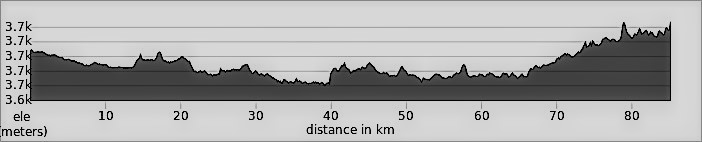
We leave our hotel cycling in convoy out of Lhasa, stopping outside the Potala Palace for a group photograph to mark the start our journey. Once we leave Lhasa behind us, the flat roads allow everyone go at their own pace as we stretch our legs and get warmed up for the climbs to come! The route follows the deep green water of the Kyi Chu (Lhasa River), with hills forming a picturesque backdrop as we head towards Chusul. The road pulls away from the river as we pass the recently constructed bridge and tunnel to Lhasa airport and gain our first views of snow-capped mountains ahead.
We stop for some lunch and then it’s on towards Daga where we cross onto the south bank of the Yarlung Tsangpo River; the highest major river in the world, with an average elevation of about 4000 meters. The route continues on the south bank some 10 km to our camp at the base of the Khamba La pass. We have a short walk to the river to freshen up before dinner is served by our Nepalese cooks.
Cycle Distance: 84 km (52 miles)
Total Ascent: 153 m (502 ft)
Total Descent: 202 m (662 ft)
Sleeping Altitude: 3,608 m (11,837 ft)
Accommodation: Camping (B,L,D)
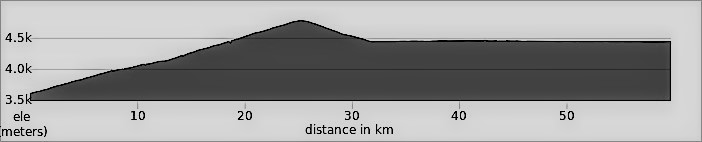
Today marks the first of our major climbs as we ride 23 km to the Khamba La pass at 4,807m. The smooth surfaced road eases our path but it will still be a tough day’s cycling as our bodies continue to adapt to the high altitudes. You will be rewarded for your exertions on this morning’s challenging climb by the sight of the stunning, turquoise waters of the Yamdrok Tso (lake), this is a sacred lake to Buddhists. You will also be treated to views of the snow-capped Nazin Kang Sa (7,252m) in the distance. We now make a fast descent (500 m) to the lake below and onto the Tibetan plateau. We will stop for lunch after about 5km. This afternoon we complete the last 38 km into camp along flat but tough terrain.
Cycle Distance: 61 km (38 miles)
Total Ascent: 1,276 m (4,186 ft)
Total Descent: 419 m (1,374 ft)
Sleeping Altitude: 4,461 m (14,635 ft)
Accommodation: Camping (B,L,D)
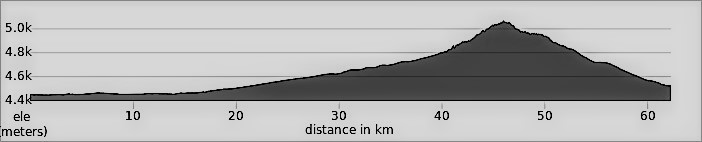
As we leave our camp today cycling on tarmac road we head west. Our first 20km are on fairly flat road, we then climb for the next 25km to cross the Karo La (5032m). This is the first of our passes above 5000m, and a challenging but enjoyable ride to the top of the pass, from where you will see an imposing glacier. Karo La is where Francis Young husband fought a battle with Tibetans in 1903 to reach Lhasa. For our final 17km of the day we’ll be riding downhill into Lungmar.
Cycle Distance: 62 km (38 miles)
Total Ascent: 781 m (2,562 ft)
Total Descent: 708 m (2,322 ft)
Sleeping Altitude: 4,456 m (14,620 ft)
Accommodation: Camping (B,L,D)
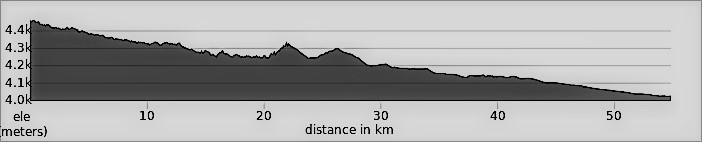
Today begins with a gentle climb of 15km to the top of the Simi La followed by an easy ride of 35km, mostly downhill to Gyantse as we are desending to lower levels we’ll see a bit of greenery aroudn us. We will pass settelments every few km along the way, some just a few houses others upto to around 20. Our stop for lunch today is in a traditional Tibetan home. Gyantse is home to some magnificent military and religious sights dating back to the 15th C. The most famous of its monasteries is the Kumbum, a gold-topped pyramid barely touched by the passage of time and one of the most spectacular buildings in Tibet. You will be free this afternoon to enjoy looking around Gyantse.
Cycle Distance: 55 km (34 miles)
Total Ascent: 370 m (1,214 ft)
Total Descent: 801 m (2,627 ft)
Sleeping Altitude: 4,025 m (13,205 ft)
Accommodation: Hotel (B & L)
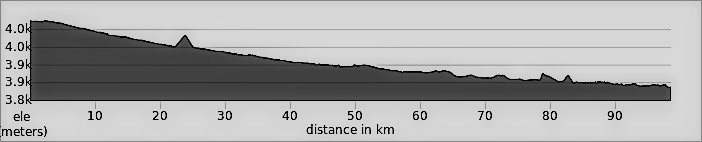
Today we will enjoy a comfortable ride on a nice tarmac road to Shigatse we will encounter more vehicles along this stretch of our journey. Around us we’ll see traditional agricultural scenes as locals labour in the fields. We follow the Nyang Chu River, turning one corner after another along a series of bends in the road. We’ll be cycling mainly downhill during all of today’s ride.
Cycle Distance: 97 km (60 miles)
Total Ascent: 208 m (682 ft)
Total Descent: 395 m (1,296 ft)
Sleeping Altitude: 3,838 m (12,591 ft)
Accommodation: Hotel (B & L)
Today is a rest day, with the option of a tour of the Tashi Lhunpo monastery led by our Tibetan guide. The Tashi Lhunpo Monastery is seat to the Panchen Lama, the second most important spiritual leader of Tibet and was founded by the 1st Dalai Lama in 1447. It is one of the four great monasteries of Central Tibet and was supervised and looked after by the Dalai Lamas and Panchen Lamas of the Gelugpa, or Yellow Hat tradition.
Maximum Altitude: 3,838 m (12,591 ft)
Accommodation: Hotel (B)
We leave Shigatse in convoy, climbing steadily up 125m in the first 8km at the start of a long day’s cycling. After some 35 km we cross the barely discernible Tso La pass (4050m). The undulating terrain takes us through a landscape of fields where children will shout “Hello!” and run to greet you if you stop to take a break. The surrounding mountains close in on us as we enter into a river valley before reaching our camp a short distance before the Tso La pass.
Cycle Distance: 96 km (59 miles)
Total Ascent: 705 m (2,312ft)
Total Descent: 376 m (1,233 ft)
Sleeping Altitude: 4,166 m (13,667 ft)
Accommodation: Camping (B,L,D)
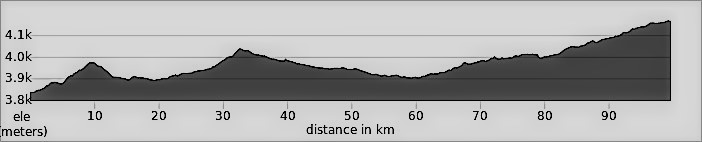
This morning we begin with a fairly flat 10km to the bass of today’s pass. A steady 8km climb takes us to the peak of Tso La (4,580m). This is followed by a fast downhill descent of 425m over 29 km, and a flat stretch into Lhatse. Lhatse is reminiscent of a Wild West frontier town; children here are both friendly and inquisitive and not afraid to interact with us strangely dressed cyclists! We head out of Lhatse and into the Chusar Chu valley, where we camp at a very picturesque spot along the riverside.
Cycle Distance: 64 km (40 miles)
Total Ascent: 526 m (1,725 ft)
Total Descent: 604 m (1,981 ft)
Sleeping Altitude: 4,088 m (13,412 ft)
Accommodation: Camping (B,L,D)
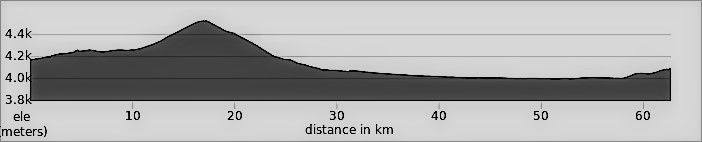
The day starts with a 24km climb on sealed roads to the highest pass – the Gyatso La (5,253m). You will be rewarded with stunning views of the snow-capped mountains either side of the pass and the offer of a cup of Yak tea from the solitary tent alongside the fluttering prayer flags. We drop down 10km, out of the wind, to our lunch stop. The gradual descent takes through small villages and past Stupas down to the Lolo River. You may well be greeted by excited children from a roadside school at the foot of the descent, before we end our day in Shegar.
Cycle Distance: 68 km (42 miles)
Total Ascent: 1,212 m (3,976 ft)
Total Descent: 892 m (2,926 ft)
Sleeping Altitude: 4,408 m (14,461 ft)
Accommodation: Guest House (B,L,D)
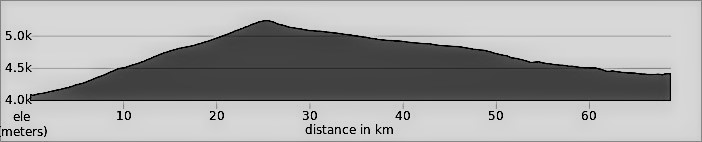
We begin today riding to a checkpoint and to the turn-off for the highlight of the tour: Everest! The early morning sun softens the rugged appearance of the landscape bathing the snow-dusted mountains around us in light. The terrain changes abruptly as we leave the main road towards Everest and the switchback-climb to the top of the Pang La (5205m) is slow going. ahead of us we will be able to see all 48 of the loops on the ride ahead! On a clear day you will enjoy stunning views of the Himalayas at the top of the pass, with Everest directly in front of you. Another fast descent of endless hairpin bends takes us through settlements where we may see local people grouped together in the fields drinking Yak tea and making bricks. We drop further onto an almost desert-like valley floor surrounded by rugged mountains cycling on to our campsite for the night.
Cycle Distance: 69 km (43 miles)
Total Ascent: 1,109 m (3,638 ft)
Total Descent: 1,364 m (4,475 ft)
Sleeping Altitude: 4,153 m (13,625 ft)
Accommodation: Camping (B,L,D)
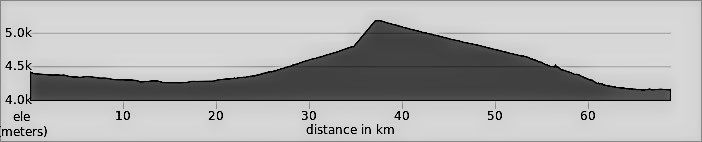
We climb gradually through villages where children rush to greet us, eager for any photo opportunity. They may even be keen to take a test-ride on your bike! Jagged snow-capped peaks confront us as we start our climb to Rongbuk. Your anticipation will increase at the turn of every corner as prospect of seeing Everest draws ever closer. Just beyond the monastery at Rongbuk, the awe-inspiring backdrop of Everest is a just reward for the challenges of the last few days. We have a steady 8km ride taking us to the base of the North Face, a truly spiritual experience – simply unforgettable! We return to our campsite just before Rongbuk.
Cycle Distance: 63 km (39 miles)
Total Ascent: 925 m (3,034 ft)
Total Descent: 567 m (1,860 ft)
Sleeping Altitude: 4,511 m (14,800 ft)
Accommodation: Camping (B,L,D)
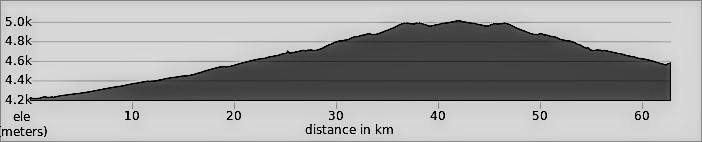
This morning we cycle back down the valley, retracing our tracks from the previous day. For the more technically minded riders there are some excellent sections of stone single track, with Everest in the background! We continue with a superb but challenging off-road ride on mountain tracks, interspersed with some very rocky rough sections that will prove to be tough even to our hardy support vehicles. We cross the Lama La Pass, at 5101m before descending on a mixture of rough sections of road, mixed with free-flowing dirt tracks and stream crossings on into the barren plains ahead of Tingri. Here, after 44km of rough riding, we re-join the Friendship Highway cycling to our camp just outside the town.
Cycle Distance: 65 km (40 miles)
Total Ascent: 711 m (2,332 ft)
Total Descent: 948 m (3,110 ft)
Sleeping Altitude: 4,348 m (14,265 ft)
Accommodation: Camping (B,L,D)
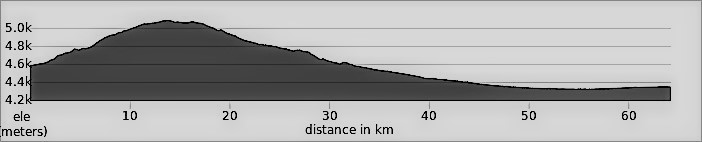
Today’s cycling is on undulating, fairly flat road, although headwinds may hamper an otherwise comfortable day! If the weather is clear we will have views of 3 great mountain peaks: Shishapagma ahead, Everest behind and Cho Oyu (the turqoise goddess). The ride will take us through a landscape of monasteries, fortresses and clear mountain rivers.
Cycle Distance: 68 km (42 miles)
Total Ascent: 412 m (1,351 ft)
Total Descent: 146 m (479 ft)
Sleeping Altitude: 4,613 m (15,134 ft)
Accommodation: Camping (B,L,D)
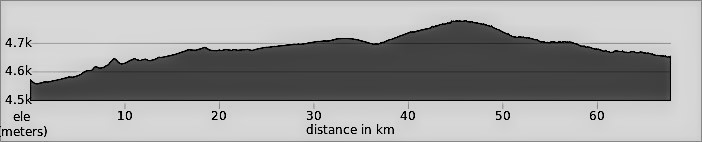
We continue on the highway for the first 8km then turn off heading west, we begin cycling through a wide valley and we’re on undulating terrain for the rest of the day riding with a gentle climg and one or two descents for the next 37km, then its a downhill ride that brings us all the way to our camp at the beautiful Paiku Tso Lake. Paiku Tso Lake is surrounded by towering mountains on three sides, numerous small streams drain into the lake. There are wild birds and horses in the surrounding area. This area is one of Tibet’s magical spots with stunning views of the snow-capped Shiishapangma (8,012m) the only 8,000m peak situated wholly within Tibet and the Langtang range bordering Nepal to the south.
Cycle Distance: 68 km (42 miles)
Total Ascent: 278 m (912 ft)
Total Descent: 296 m (971 ft)
Sleeping Altitude: 4,595 m (15,075 ft)
Accommodation: Camping (B,L,D)
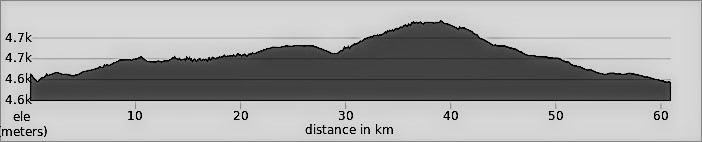
Heading away from the lake, today is the biggest challenge of the tour so far! We cycle 2 more high passes. The first at 5,000m is a long climb, the second at 5,253m is a long series of switchbacks and we see the whole climb ahead of us as we are cycling. We reach the second pass after cycling 40km The rest of the ride is downhill over 29km with some rougher stretches to reach Gyirong. This region of Tibet is known as the back garden of the Himalayas.
Cycle Distance: 71 km (44 miles)
Total Ascent: 814 m (2,670 ft)
Total Descent: 1,250 m (5,216 ft)
Sleeping Altitude: 4,065 m (13,336 ft)
Accommodation: Camping (B,L,D)
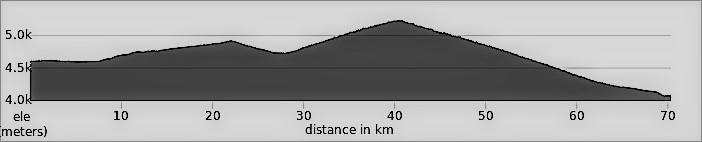
Today’s route begins with 42km on undulating road; we then drop over 200m for the next 50km as we follow the fast flowing Girong Zangbo River, to reach Mangmu. We ride through rocky canyon with mountains in the background. We continue on for 8km to the border to cross the Friendship Bridge bidding Tibet farewell. The border point between the two countries sits in a valley of approximately 300m. On the Nepalese side is the Rasuwa Fort, the site of a three-day battle during the second campaign of Sino-Nepalese War in 1792. The fort was constructed on the site in 1855 when Nepal invaded Qing-ruled Tibet in the Nepalese-Tibetan War. We stay tonight at Rasuwa Ghadhi.
Cycle Distance: 97 km (60 miles)
Total Ascent: 315 m (1,033 ft)
Total Descent: 2,445 m (10,718 ft)
Sleeping Altitude: 1,774 m (5,820 ft)
Accommodation: Guest House (B,L,D)
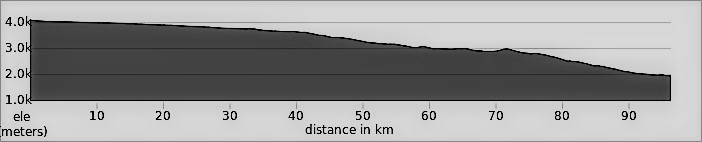
From Rasuwa Garhi we cycle the Pasang Lhamu Highway alongside the along the Trishuli River beginning on narrow road bordering the Langtang National Park. We enjoy a scenery of waterfalls, river, gorges and forest; small houses cling to the steep mountain sides. We begin our ride with a pleasant 14km gentle descent to the foot of Syapru Besi village a popular start point for people trekking in the Langtang valley. From here we climb on winding road to Dhunche village 2/3 of the way up where we stop for lunch. Look out for views through the clouds of Langtang Lirung peak (7,246m).
Cycle Distance: 56 km (35 miles)
Total Ascent: 1,215 m (3,986 ft)
Total Descent: 1,592 m (5,223 ft)
Sleeping Altitude: 1,418 m (4,652 ft)
Accommodation: Guest House (B,L,D)
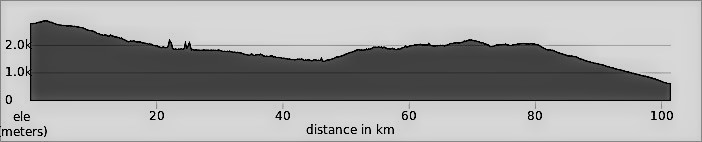
Today begins with a steep descent of just under 1,000m over a distance of 15km. We continue to follow the Trishuli River downhill for a further 17 km before challenging a final monster climb of over 1,000m 34km, then its downhill for the final 22km into Kathmandu. Tonight, we will gather together to celebrate the end of our epic journey. In the evening we get together for that all important and well-deserved celebratory meal!
Cycle Distance: 76 km (47 miles)
Total Ascent: 1,573 m (5,160 ft)
Total Descent: 1,612 m (5,288 ft)
Sleeping Altitude: 1,395 m (4,576 ft)
Accommodation: Hotel (B & L)
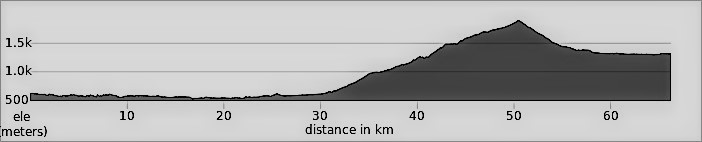
redspokes Lhasa to Kathmandu cycling tour officially ends this morning. Hotel check out time is midday. We will arrange a free transfer from the hotel to the airport for your international flight home.
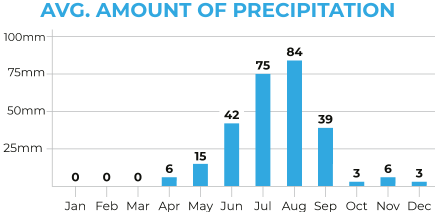
The Essential Information for this tour is currently unavailable.
See our Accommodation Grading page for more details.
Here are a selection of photos for our ‘Lhasa to Kathmandu’ Cycling holiday.
Here are a selection of videos for our ‘Lhasa to Kathmandu’ Cycling holiday.
Cycle mystical Yunnan from Shangri-La to Dali, conquering high passes, deep gorges and ancient trading towns in southwest China.

Cycle the legendary Karakoram Highway from Pakistan to Kyrgyzstan, crossing high passes and vast mountain landscapes in three epic countries.