Find a cycling tour by searching for your favourite location or key words

Nepal

  • Overview
  • Itinerary
  • Key Places
  • Essential Info
  • Accommodation
  • Book Now
14 Day Tour
From: £2295

Nepal Cycling Holiday

The redspokes Nepal cycling holiday is one of the most culturally and geographically diverse adventures in the Himalayas. Beginning in the Kathmandu Valley, the…

Nepal Cycling Holiday

The redspokes Nepal cycling holiday is one of the most culturally and geographically diverse adventures in the Himalayas. Beginning in the Kathmandu Valley, the journey winds through medieval cities, hillside villages and mountain passes before reaching Pokhara and continuing along the Annapurna region toward Muktinath. From subtropical plains to high alpine terrain, Nepal offers extraordinary variety within a relatively small country.

Highlights include exploring Chitwan National Park, flying between the towering peaks of Annapurna and Dhaulagiri to Jomsom, and cycling the dramatic Kali Gandaki Gorge beneath snow-capped giants. Encounters with ancient monasteries, suspension bridges and traditional communities create a deeply immersive experience, blending physical challenge with rich cultural heritage in the heart of the Himalayas.

Cycling Difficulty

7/10 – Difficult

No. of Cycling Days

10 days of cycling

Avg. Daily Distance

55 kilometers
/ 34.2 miles

Avg. Daily Ascent

816 meters
/ 2,677 feet

Accommodation Grade

Comfortable

Included Meals

Most Meals

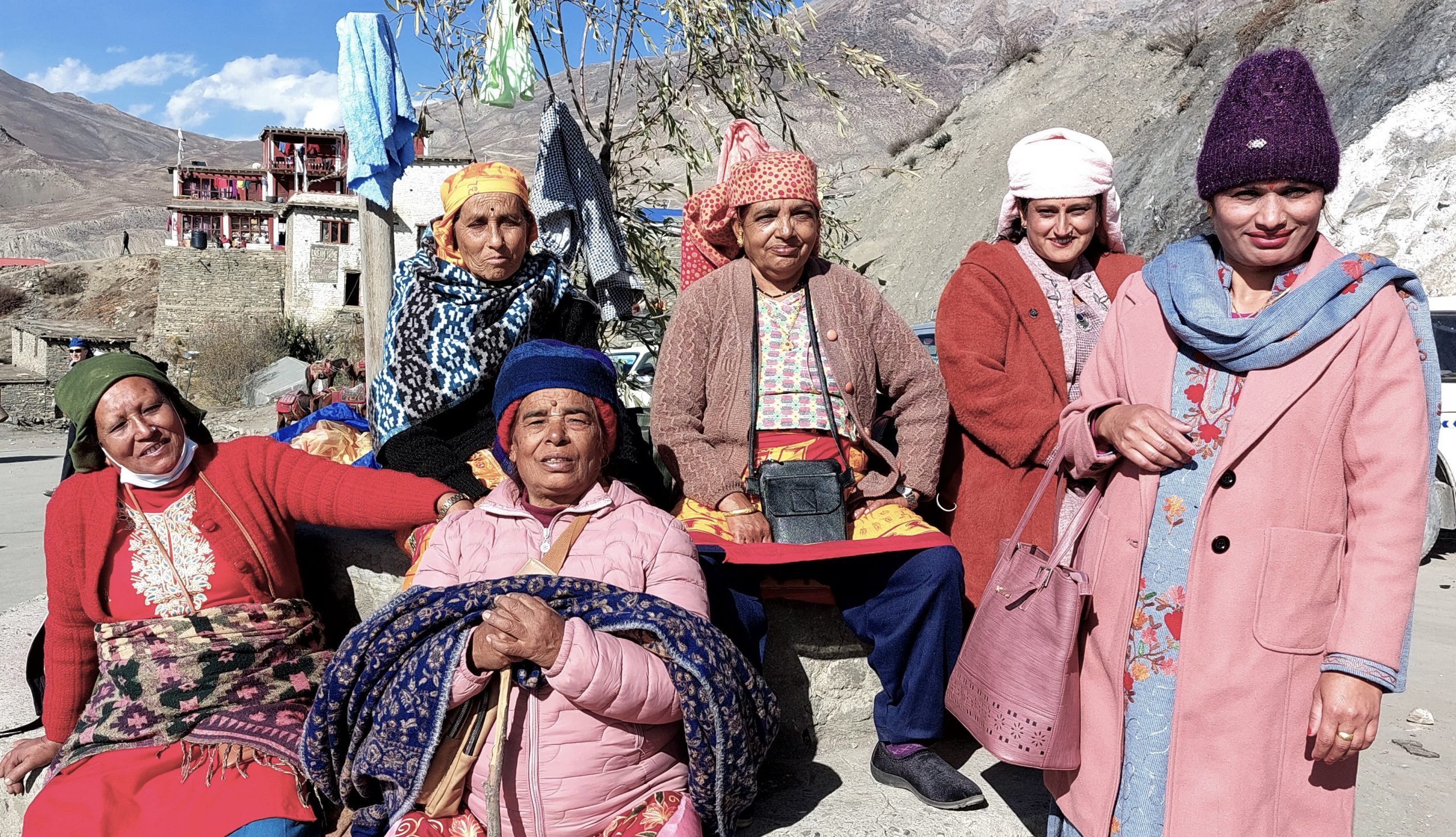
redspokes Nepal bicycle holiday is one of redspokes most culturally and geographically diverse cycling itineraries. Nepal is a magical place to cycle, rich in heritage, dotted with temples, medieval cities and tiny hillside village communities. Nestled along the spine of the Himalayas between the snow-capped peaks of Tibet and the Ganges plains of India you wind find a great variety of landscapes within Nepal, with high icy mountains, deep valleys and subtropical jungle. The Nepalese people with give you a courteous welcome on your cycling tour from the Kathmandu Valley to Pokhara and following the Annapurna circuit to Muktinath. The defiantly proud, resilient and unique identity manifests in heritage and culture with flamboyant festivals and traditional pageantry. You will hear as many as fifty different languages spoken by twelve different ethnic groups. Buddhism and Hinduism are both practised in Nepal as well as older Nepalese religions. From densely populated towns to rural mountain wilderness, cycling Nepal with redspokes is the perfect way to explore.

Nepal is home to eight of the world’s ten highest peaks including Mount Everest on the border with Tibet. With no less than ten natural and cultural UNESCO World Heritage Sites Nepal is as historically interesting as it is scenically breath taking.

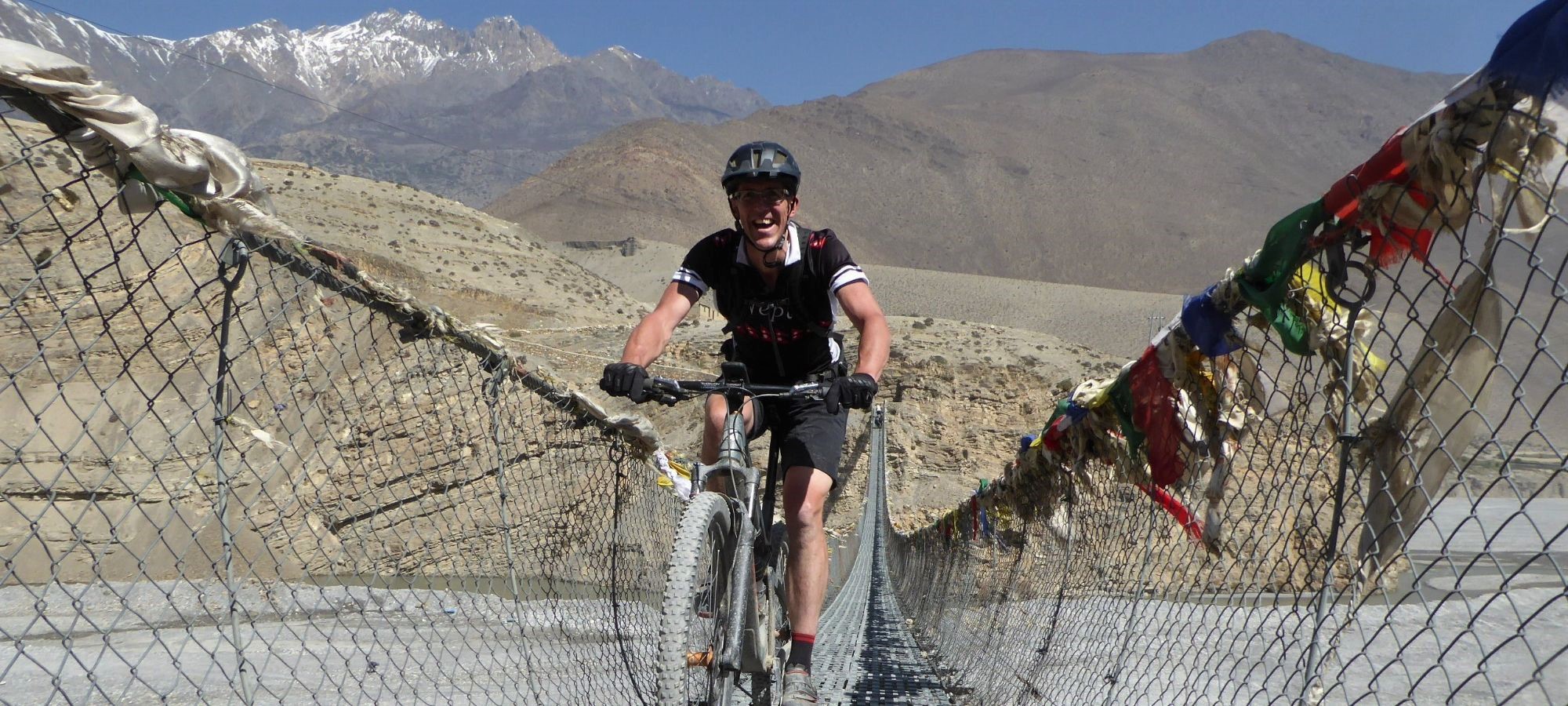
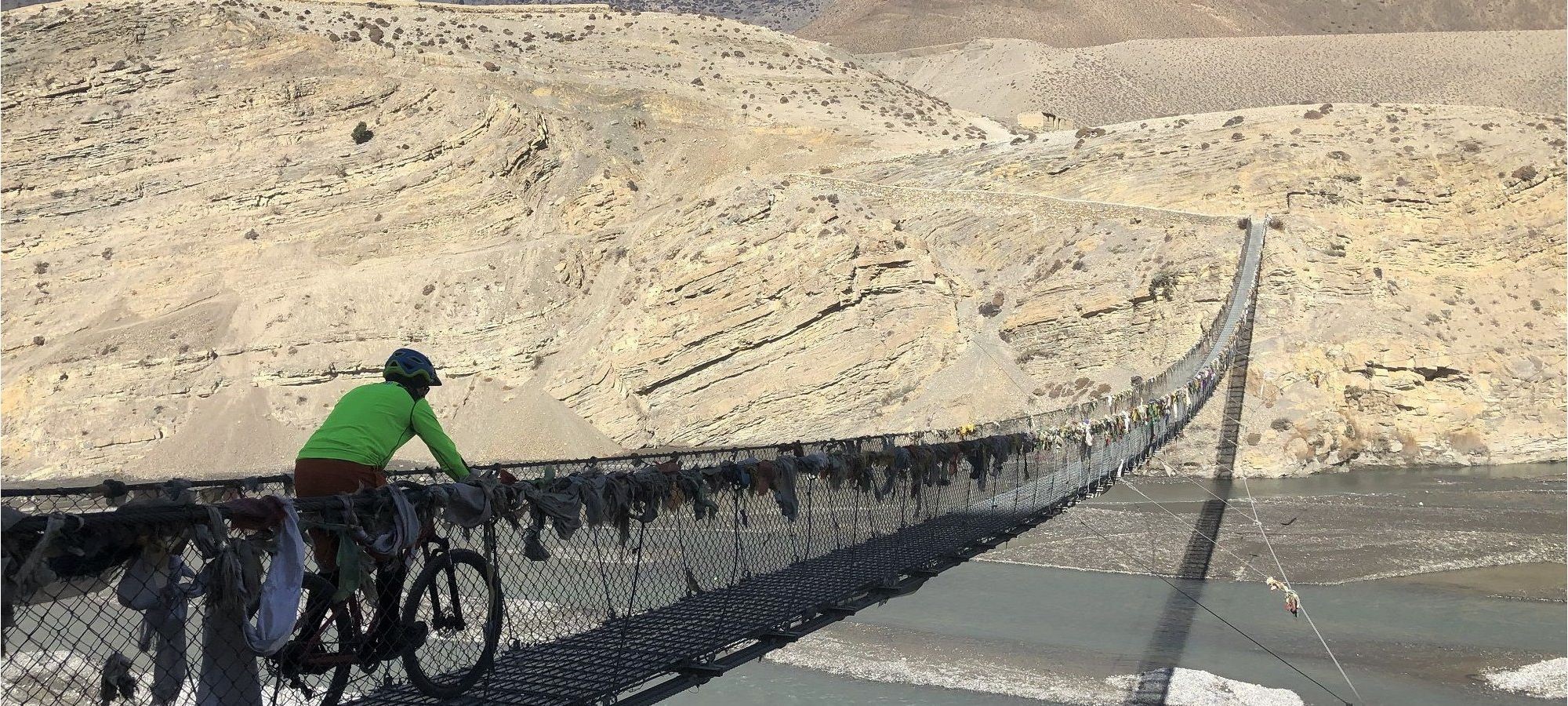
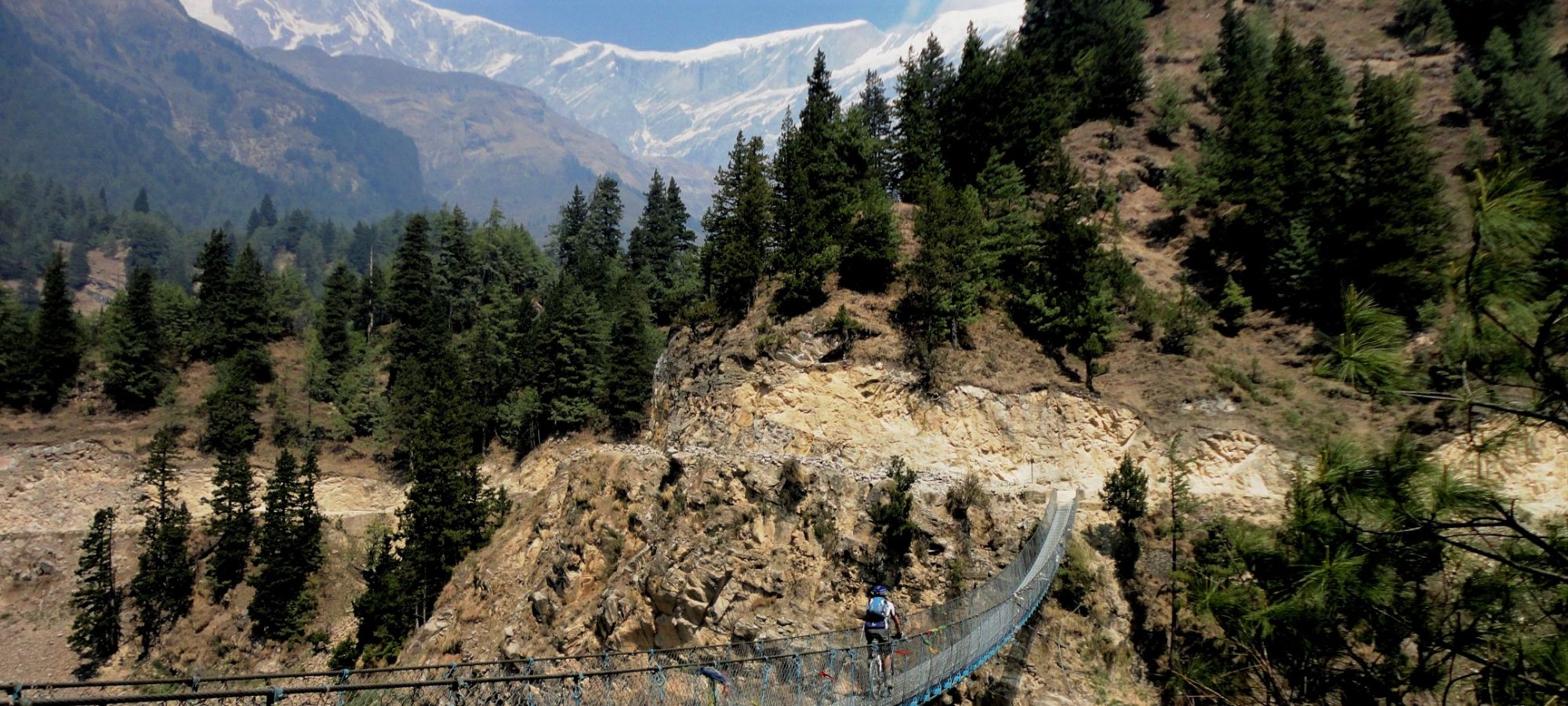
redspokes Nepal cycling holiday offers a complete experience of this wonderful country’s varied landscape and culture. Bicycling from the Kathmandu Valley you will travel over mountain passes and into the tropical plains of the Terai to explore the flora and fauna of Chitwan National Park. You will take an exhilarating flight up to Jomsen over snow-capped peaks, and fly right between the Himalayan giants Annapurna and Dhaulagiri with breath taking views. From Jomsen we cycle between the Nilgiri Massifs up to one of the holiest temples in Nepal, Muktinath at the foot of the mighty Thorung La Pass (5416m). From here we follow single track cycling downhill crossing a dramatic suspension bridge and riding along the beautiful Kaligandaki River. This is one of the deepest gorges in the world, we ride past ancient monasteries and traditional villages cycling along cobbled paths and through ice fed streams as the landscape soars towards the snow-capped peaks of the Himalayas.

Nepal has long exerted a pull on the Western imagination. Join us on this exhilarating and memorable Kathmandu to Muktinath adventure cycling holiday and discover its wonders for yourself.

Tour Features

  • Kathmandu: Swayambhu Stupa, Garden of Dreams.
  • Chitwan National Park.
  • Annapurna Cycling Circuit.
  • Pokhara: Phewa Tal Lake.
  • Tatopani hot springs.
  • Shrines, temples, pagodas, holy caves.

What's Included

  • Full vehicle support throughout the tour
  • All overnight stays
  • Most Meals
  • Snacks & Mineral Water on cycling days
  • Airport Transfers
  • Local Professional Guides
  • Chitwan National Park Fees
  • Annapurna Conservation Permit

What's Not Included

  • International Flights
  • Domestic Flight
  • Alcoholic Drinks
  • Meals Not Stated on the Itinerary
  • Visa Fees
  • Travel Insurance
  • Tips for Guide(s) and Support Staff
  • Bike Hire (available if required)

Chitwan National Park

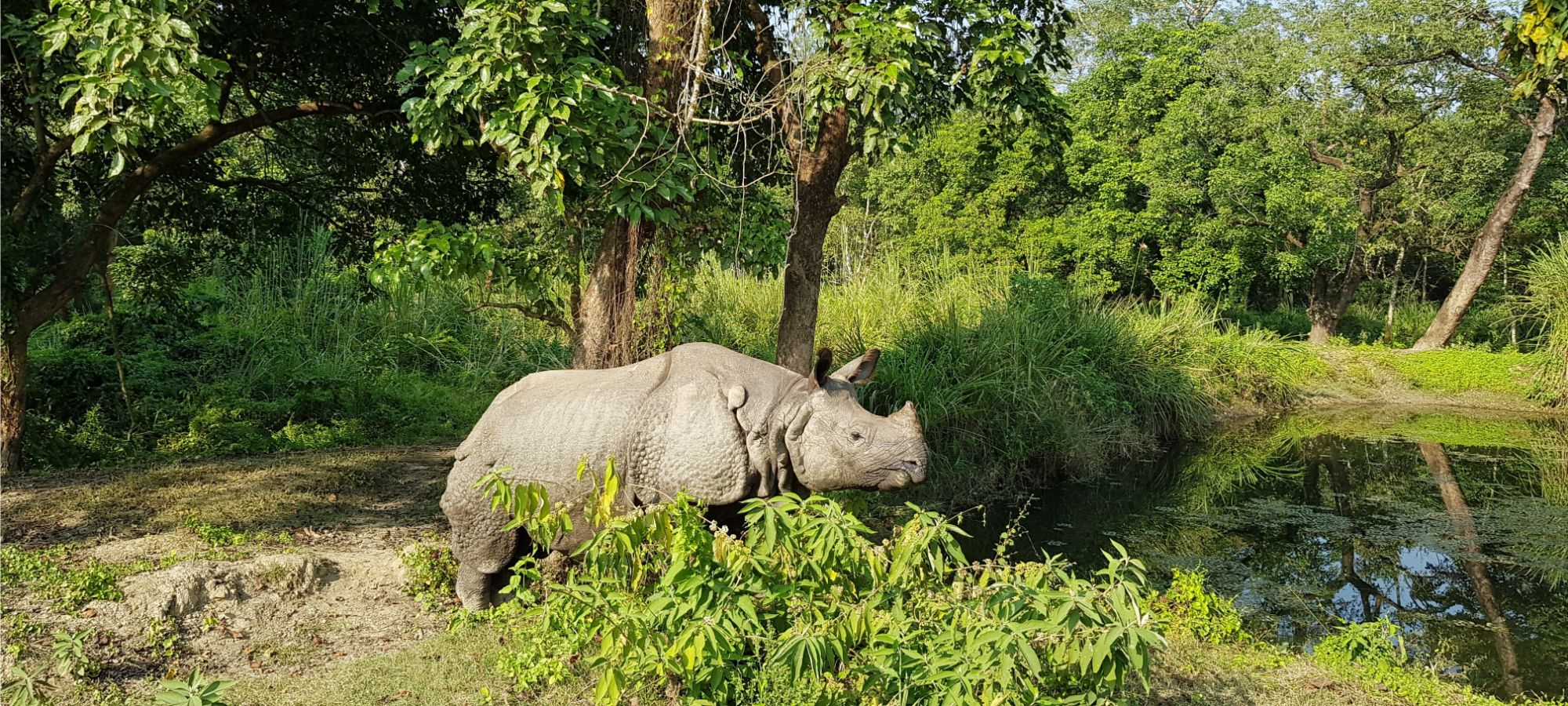
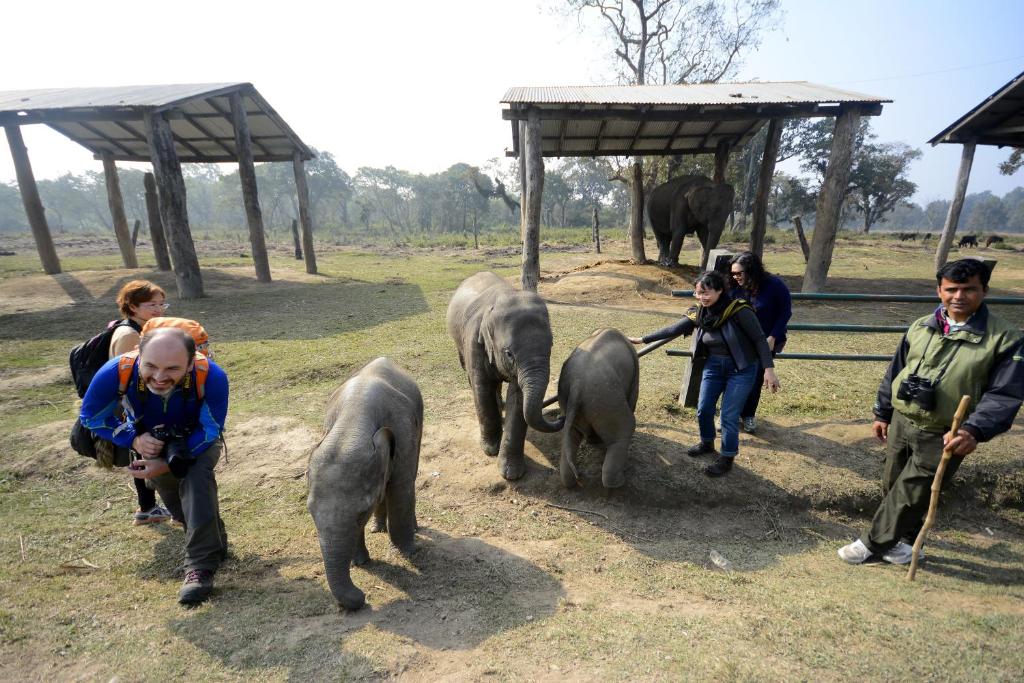
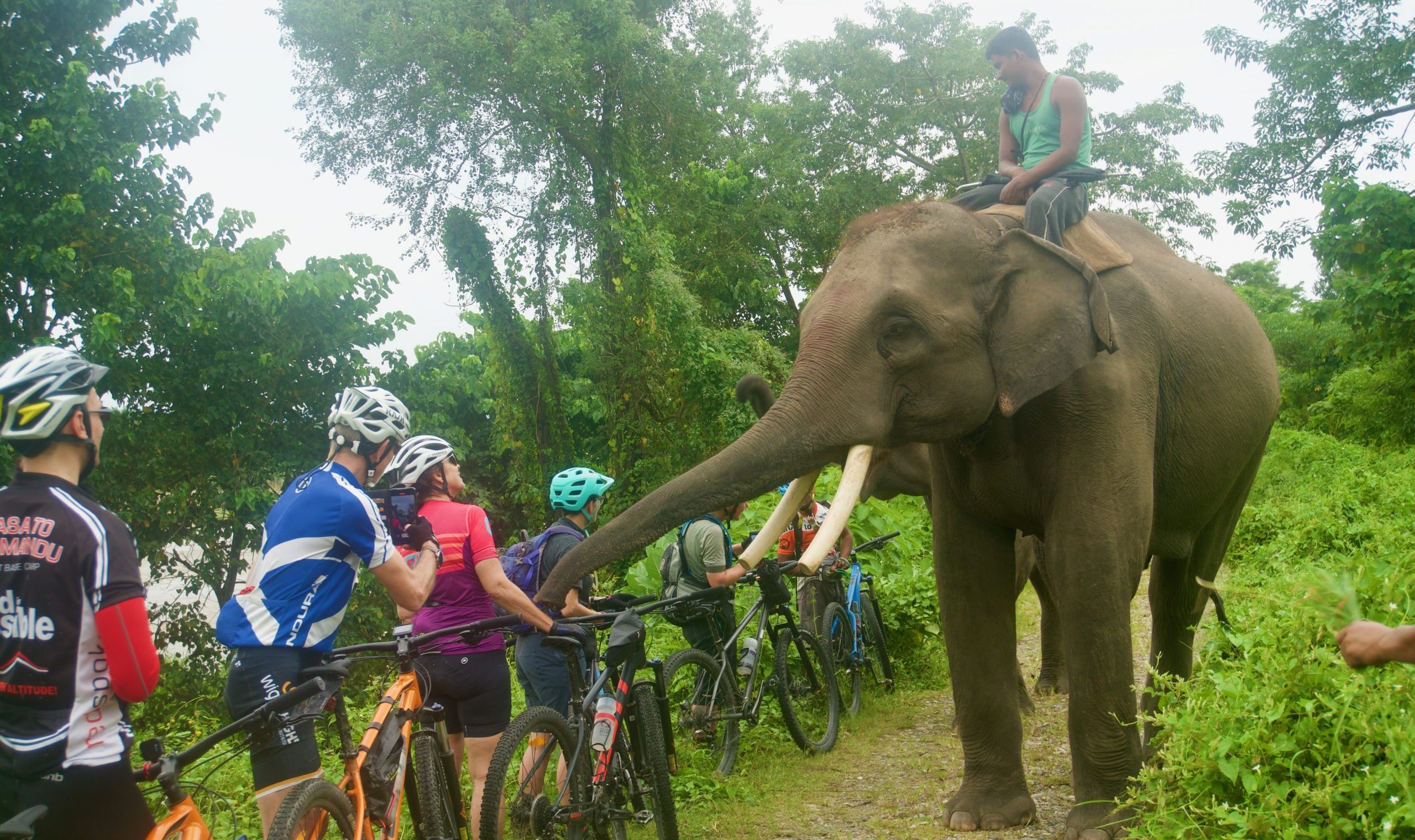
Setting the bikes aside, your rest day here at the Chitwan National Park affords the opportunity to discover one of Nepal’s great delights. The Park was established in 1973 and recognised as a World Heritage Site in 1984. It is situated in the subtropical Inner Terai Lowlands of south-central Nepal in the Chitwan district and varies from about 100 m (330 ft) altitude in the river valleys to 815m(2,674 ft) in the Churia Hills. Historically Chitwan was a popular hunting ground of the Nepali ruling class, shooting leopards, tigers, rhinoceros and sloth bears. Today the area in the national park south of south of Rapti river is demarcated as a rhinoceros sanctuary.

Within the park a number of ecosystems co-exist including the Churia hills, ox-bow lakes and the flood plains of the Rapti, Reu and Narayani rivers. The Churia hills to the east rise from 150m. To more than 800m. In the western park area are the lower and more rugged ‘Someshwor Hills’. Here the park borders onto the ‘Parsa Wildlife Reserve’. Within the Chitwan valley are tropical and subtropical forests. Sal forests cover 70 percent of the park. Sal leaves are used locally for plates in festivals and religious offering. About 20 acres of the national park area is grassland. There are more than 50 different types of grasses including elephant grass (Saccharum Ravennae). Renowned for its growing potential this grass can grow as high as to 8 metres. The shorter grasses (Imperata spp.) are used for roof thatching, and mats, rope and paper making purpose. The park hosts than 50 mammal species, over 525 birds, and 55 amphibians and reptiles.

The best place to start is at the Visitor Centre at Sauraha which provides fascinating information on wildlife and conservation programmes. The park is a popular destination for eco-tourists and activities (at an extra charge) include:

Canoeing: A journey down the river Rapti in a traditional dugout canoe offers the chance to quietly observe the exotic species of birds and animals that come to drink at the water’s edge.

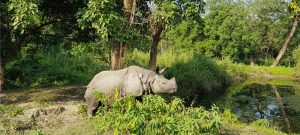
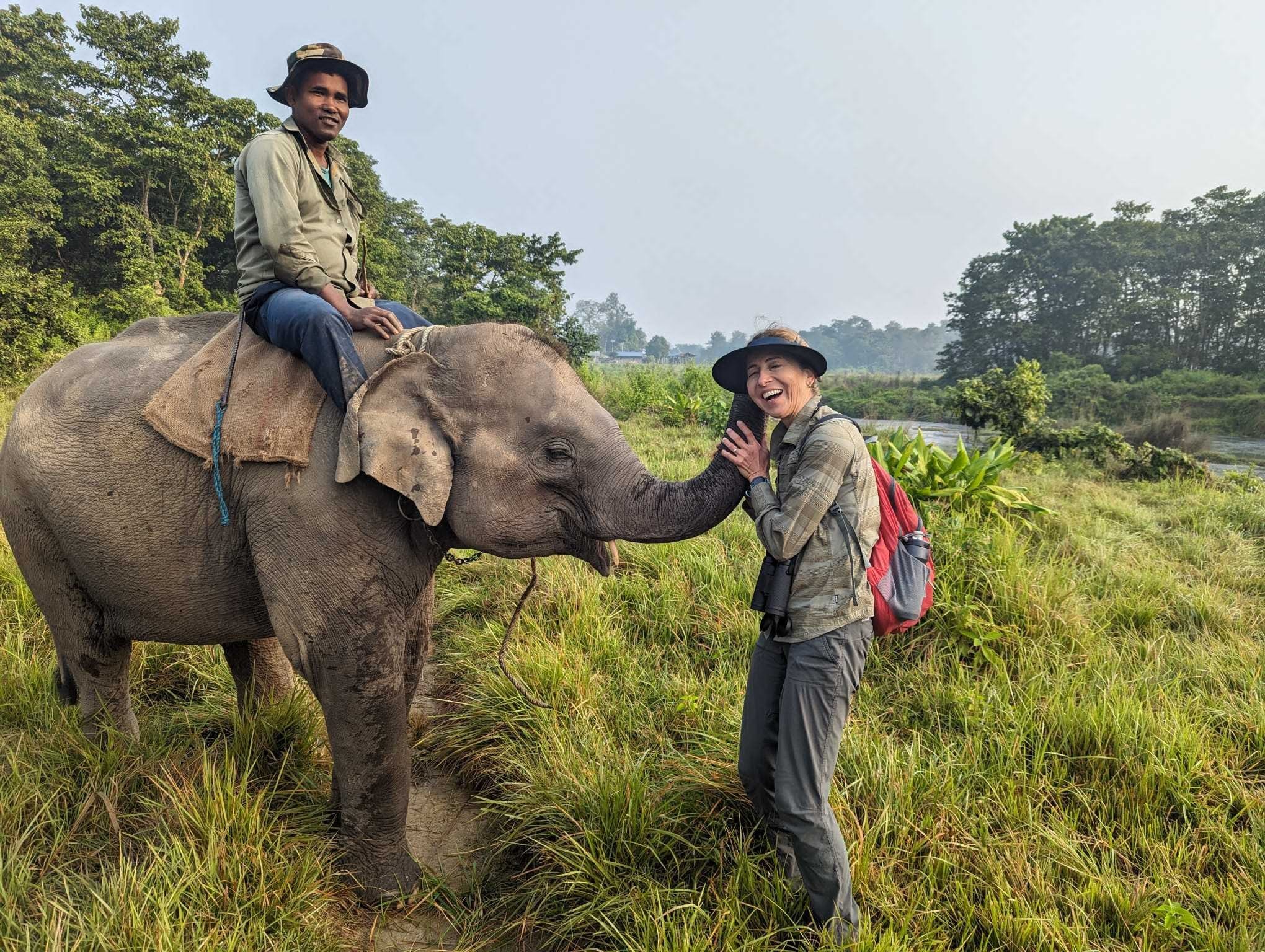
Elephant safari: The opportunity to get a closer view of the endangered one-horned rhinoceros and possibly the elusive Bengal tiger from a safe vantage point.

Guided jungle walk or drive: Walk or drive deep into the jungle, accompanied by an experienced naturalist, to prime locations in search of rare animals.

Bird watching: An early morning walk through the bush and along the Rapti River, with an expert guide to view some of the 450 species of exotic birds including the Giant Hornbill, Lesser Florican and Paradise Flycatcher.

Observation tower: Climb the 22 foot high wooden tower built in a prime location within the park for a unique perspective on wildlife.

Village tour: Visit a traditional Tharu village deep in the jungle.

This evening you can relax in the hotel ready to set off on the bikes again tomorrow as we head off for a full days cycling onto Lumbini.

Kathmandu

When you arrive in Nepal, you will have a day to collect your bike if you are hiring one for the trip, meet the group, and take in the atmosphere of Nepal’s primary city.

The capital, Kathmandu, is a key destination for trekkers and independent travellers, with an established tourist district, Thamel. This is a great starting point from which to explore the city, with an array of souvenirs for sale on colourful stalls in narrow cobbled streets. If you search a little further you will see the real Nepal; a place of contrasts, marigold strewn temples, winding back streets where traders sell their wares and artisan workshops of a bygone era.

Head from Thamel towards the world heritage site, Durbar Square; you will pass markets, courtyards and stupa decked with colourful prayer flags. Durbar Square comprises 3 areas featuring traditional Nepali architecture. A key attraction in the square is the Maju Deval. A Shiva temple that dates from 1690. Built by the mother of Bhaktapur’s King Bhupatindra Malla. The temple is famed for its Shiva lingam (phallic symbol) inside. The roof is decorated with ornateerotic carvings on the struts and from here you will have a wonderful view of the square and across the roofs of the city. The nine-stage ochre platform of the Maju Deval is a popular meeting place where you can watch the lively coming and goings of the city; flower sellers and fruit and vegetable hawkers, taxis and rickshaws, and other traders offering their wares to visitors. To the east side of the Maju Deval is a smaller temple to Kam Dev, a ‘companion’ of Shiva. .

The Kumari Bahal on the east side of Basantpur Square is the home of the Royal Kumari; living goddess of Nepal. Built in 1757, it is a red brick building, several stories high with ornately carved windows. Stone Lions guard the courtyard. The Kumari is a young girl selected to be goddess until she reaches puberty when it is believed that she resumes life as a mortal. Although it is believed to be bad luck to marry an ex-Kumari. Tradition says that the goddess answers the question you are thinking by the look of her face. When the Kumari is present it is forbidden to take pictures. .

Make sure you visit the Sagarmatha Bazaar on Mandala St. This is the only pedestrianised street in Kathmandu. The other face of this bustling city is the emerging modern development of concrete constructions and heavy pollution from traffic. .

Other key attractions in Kathmandu include: .

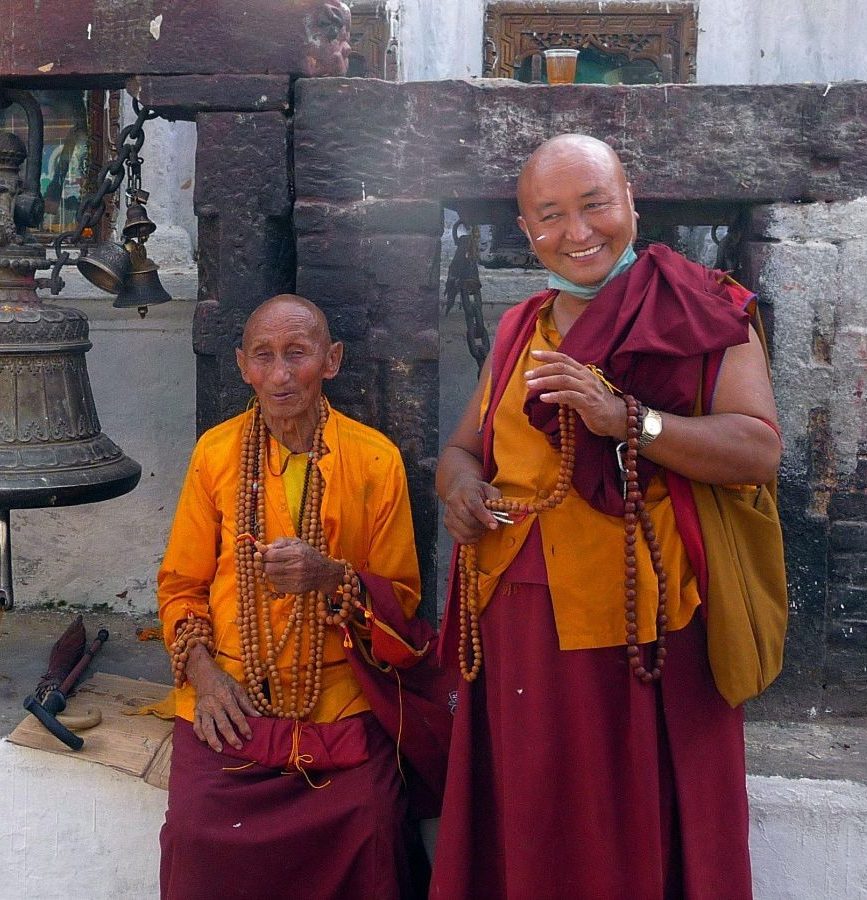
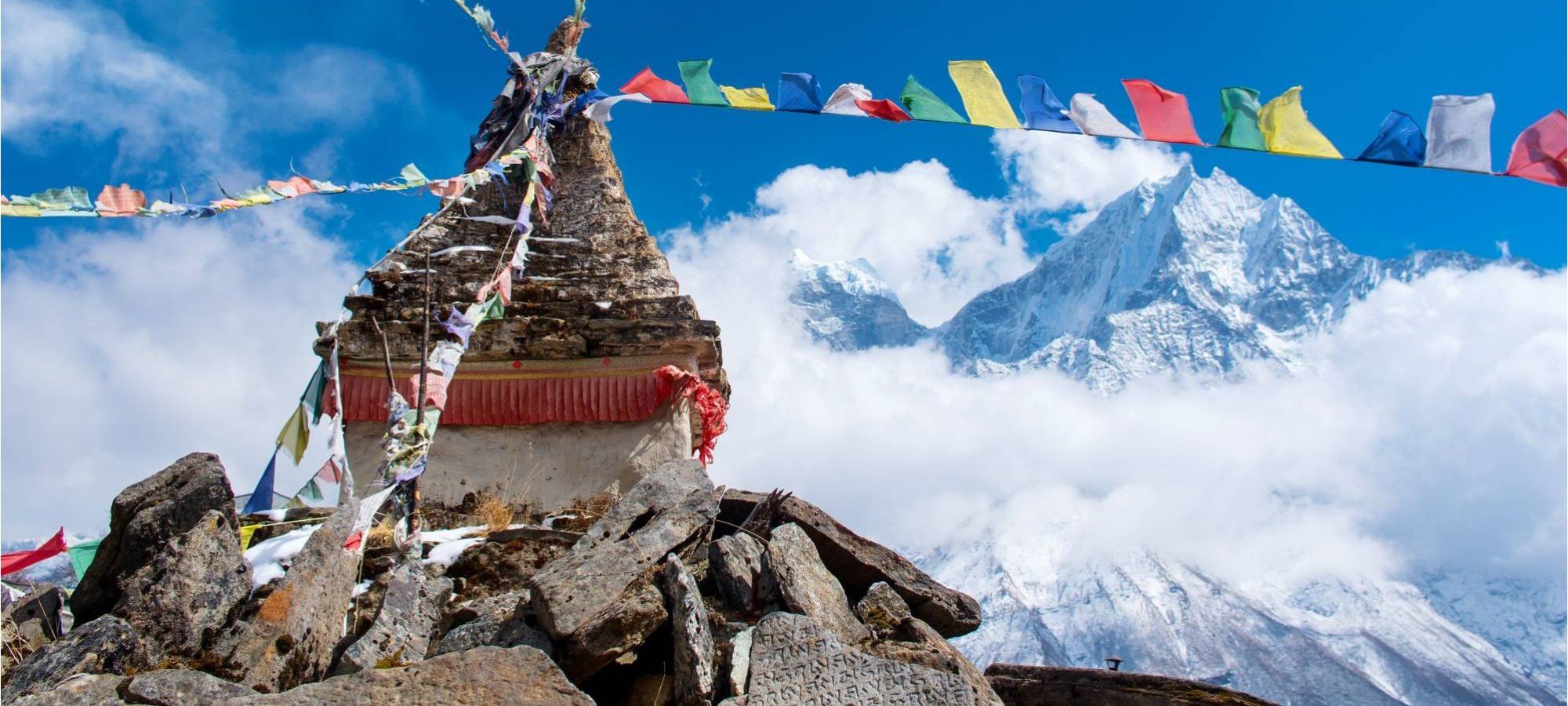
Swayambhu A large stupa, of cultural significance, and one of the most highly revered Buddhist sites in Nepal, with great views over the city. It’s a 20-30 minute walk from Thamel, or take a taxi or rickshaw. Another sacred site for Tibetan Buddhism ,is the Baudha Stupa in Baudha .

Narayanhiti Palace Museum. In 2009 the The Royal Palace became part museum and part foreign ministry. The grand halls of the main building are open to visitors. At sunset as you approach or leave the palace you will be aware of giant fruit bats hanging from the trees and huge bamboo around the building. .

Garden of Dreams – a beautiful, tranquil walled garden close to the former Royal Palace.

Pokhara

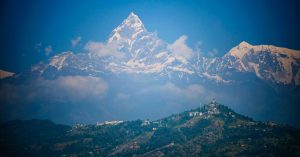
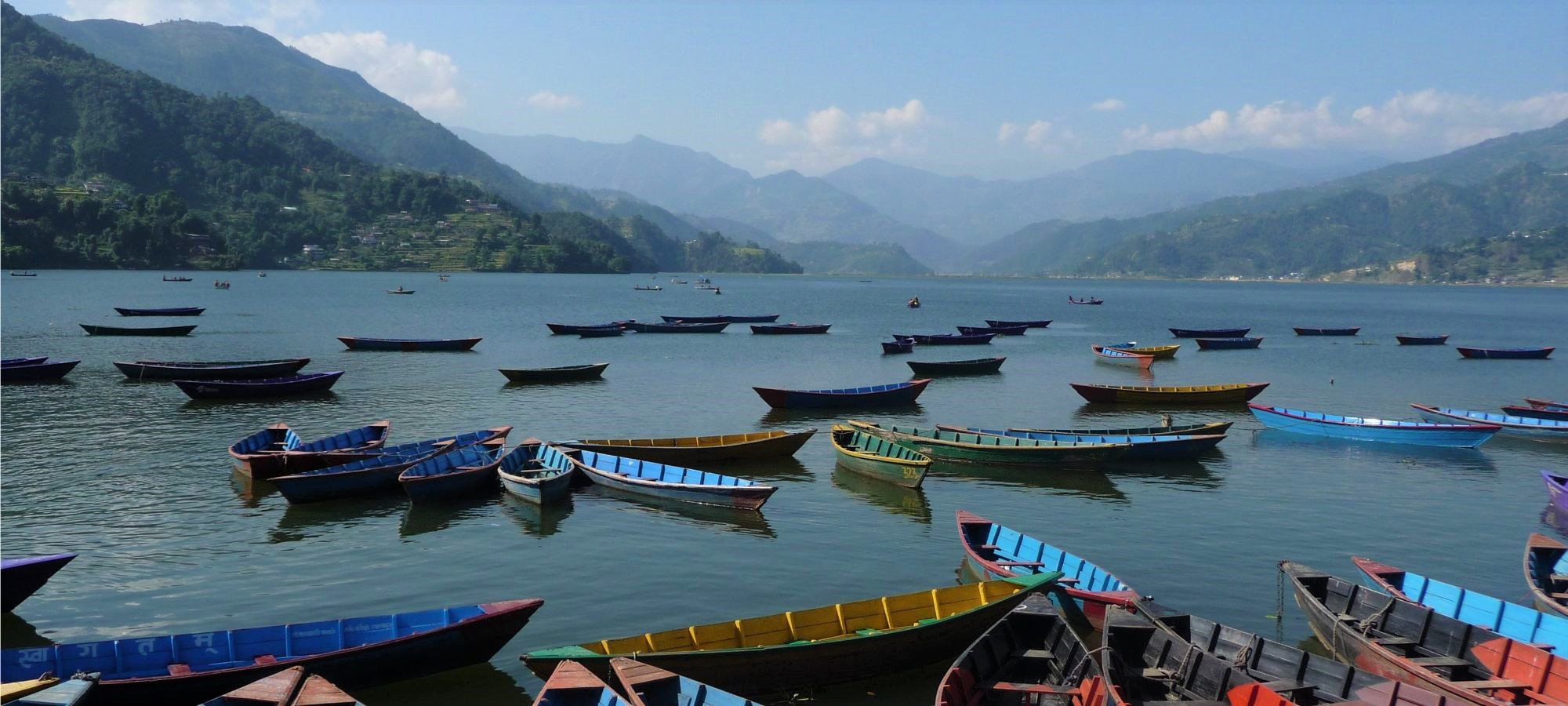
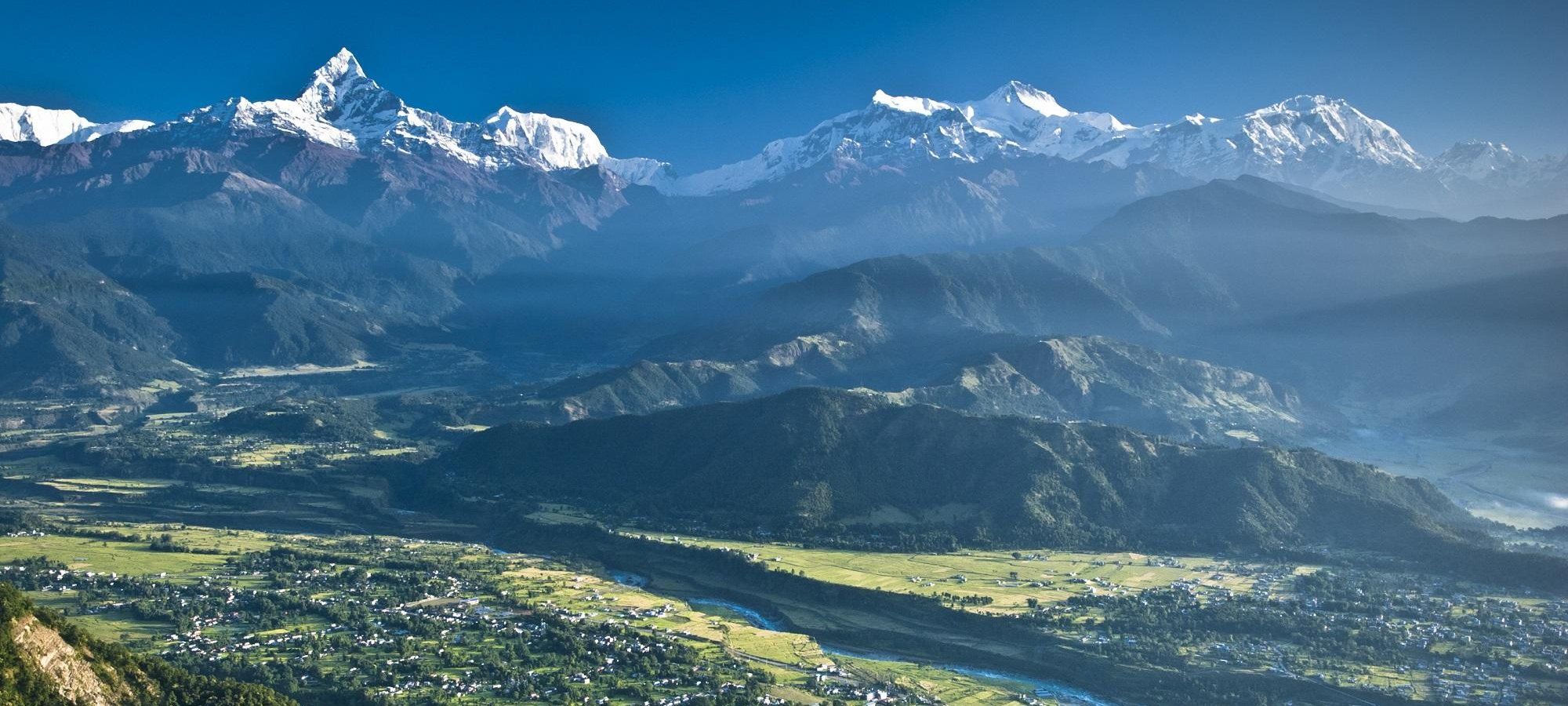
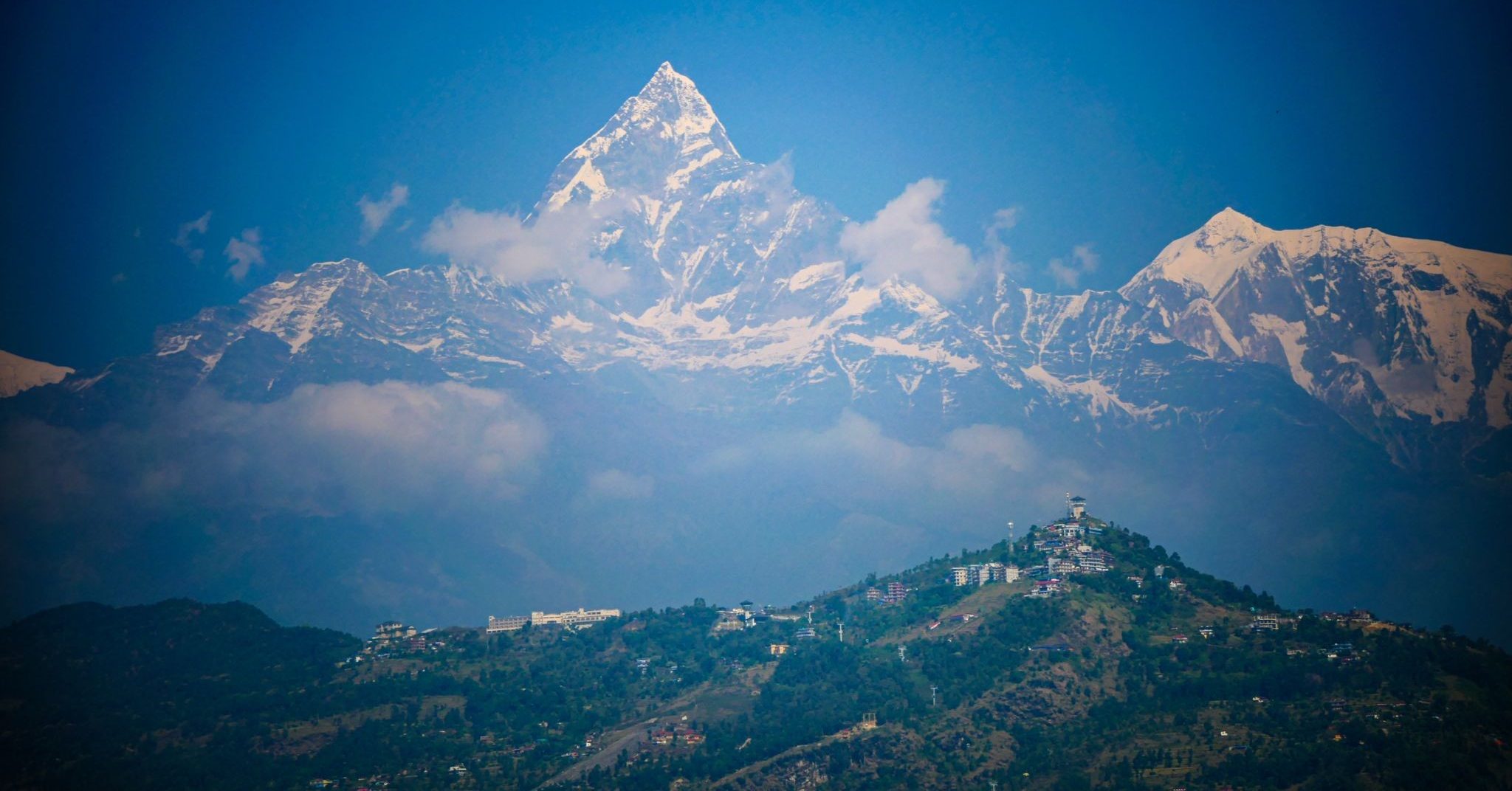
Pokhara is a popular tourist destination. It is a base for trekkers undertaking the Annapurna Circuit and other treks along the Annapurna mountain range. Situated in a valley with steep mountains rising around it, Pokhara is renowned for its tranquil atmosphere and beautiful surrounding countryside. Mount Machhapuchhare rests high above the city, its peaks are reflected in the still waters of Phewa Tal lake, an expanse of crystal clear Himalayan water. In this area, within 30 km, the elevation rises from 1,000 m to over 7,500 m and you can expect rain.

The city lies on the ancient trading route between China and India. Today you will find tourists milling amongst traders selling colourful prayer flags and carpets, amongst other goods. There are numerous museums, caves, waterfalls and Tibetan settlement villages to visit in the surrounding hills including Barahi temple, situated in the middle of Phewa lake, Pokhara Museum, Annapurna Museum, Bindhyabasini temple, the World Peace Pagoda and Davis Falls.

The Annapurna Circuit

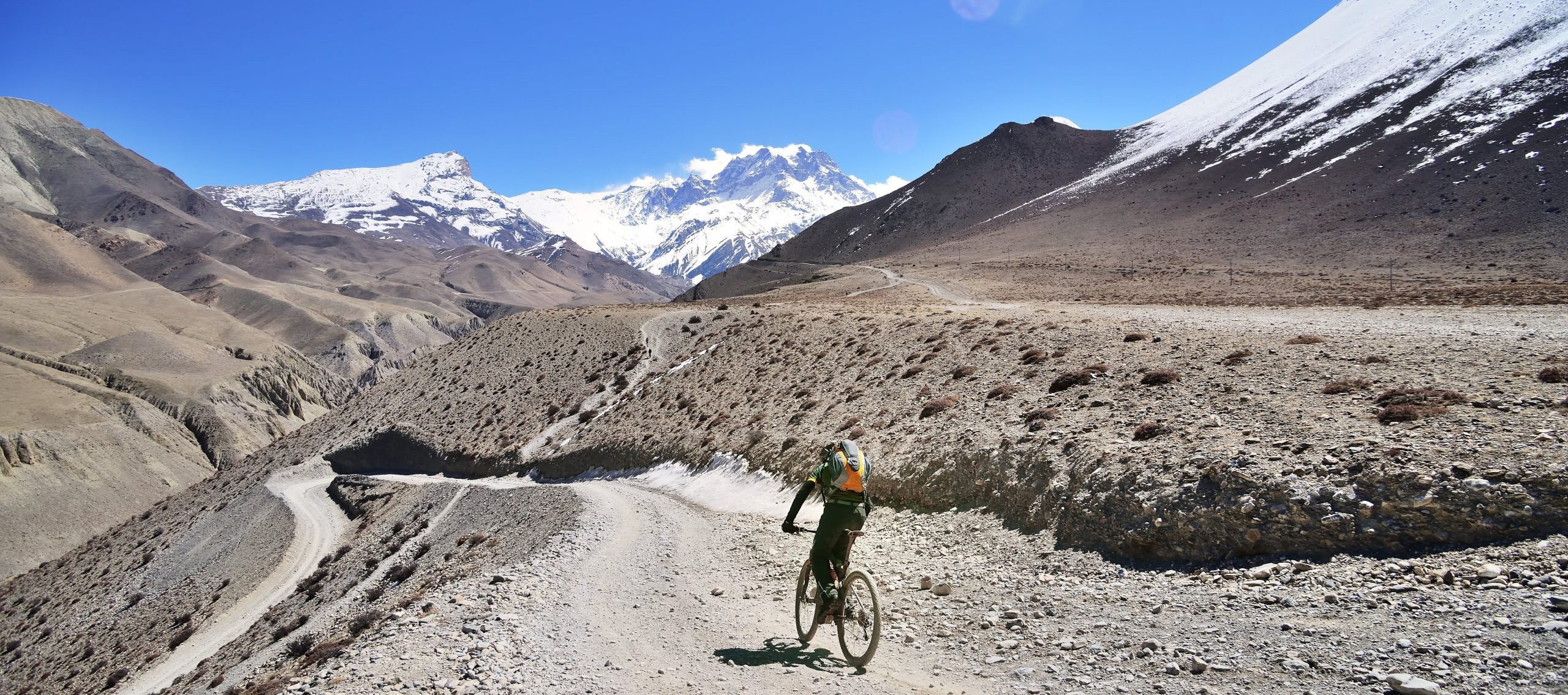
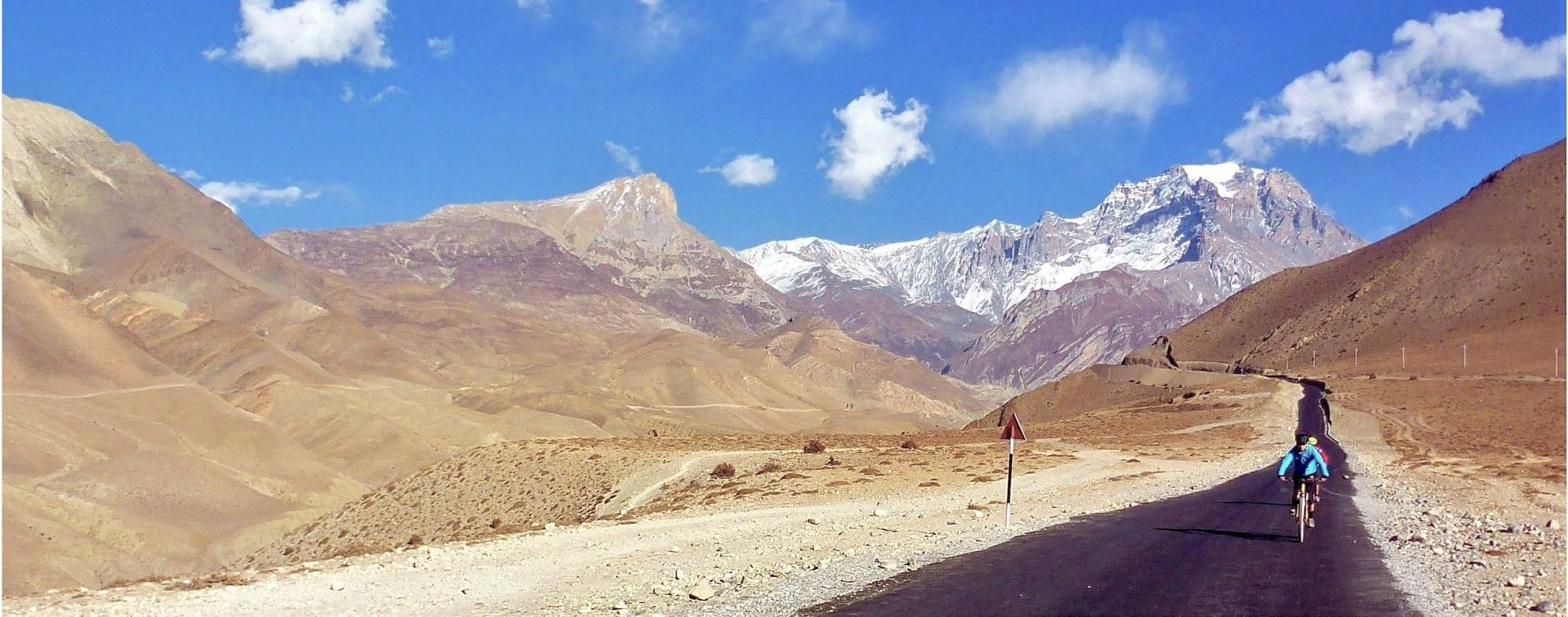
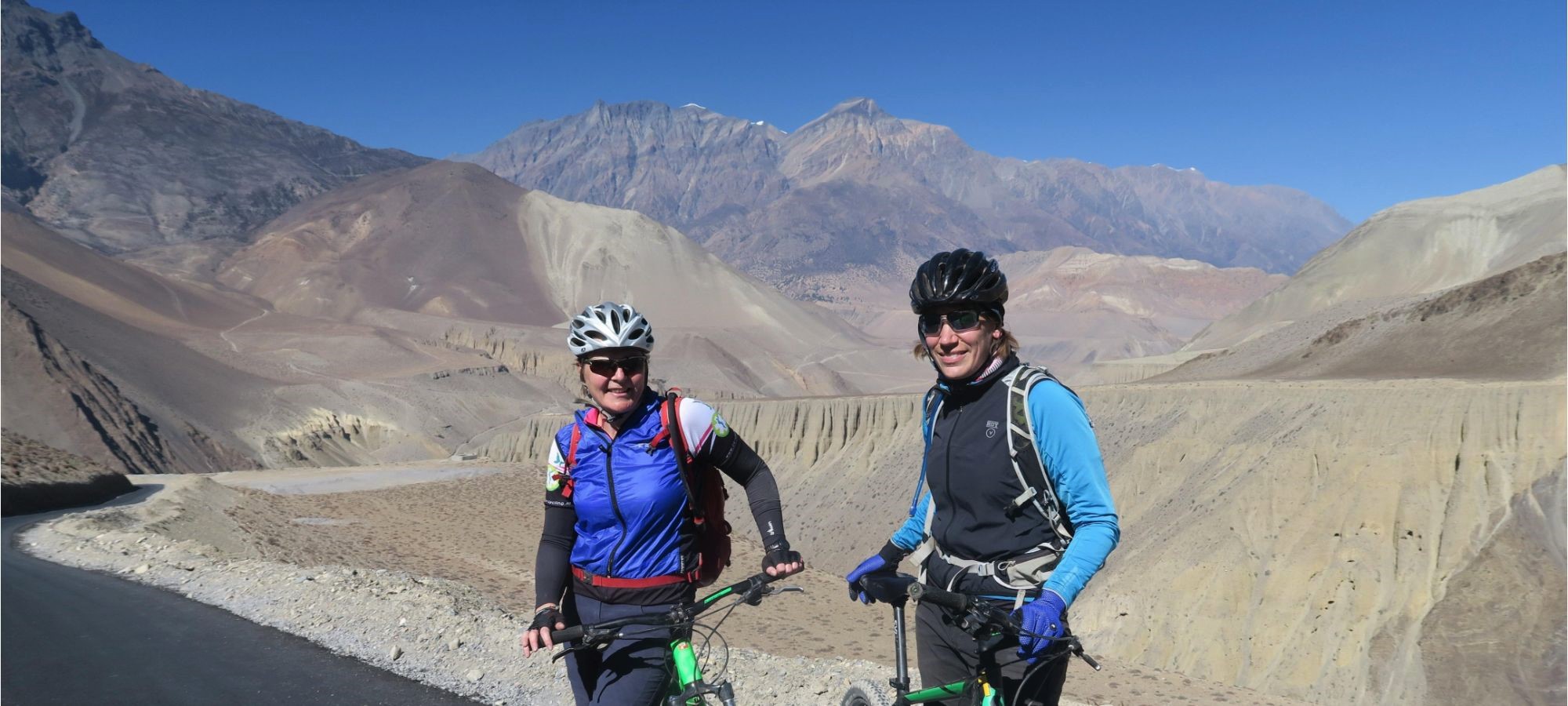
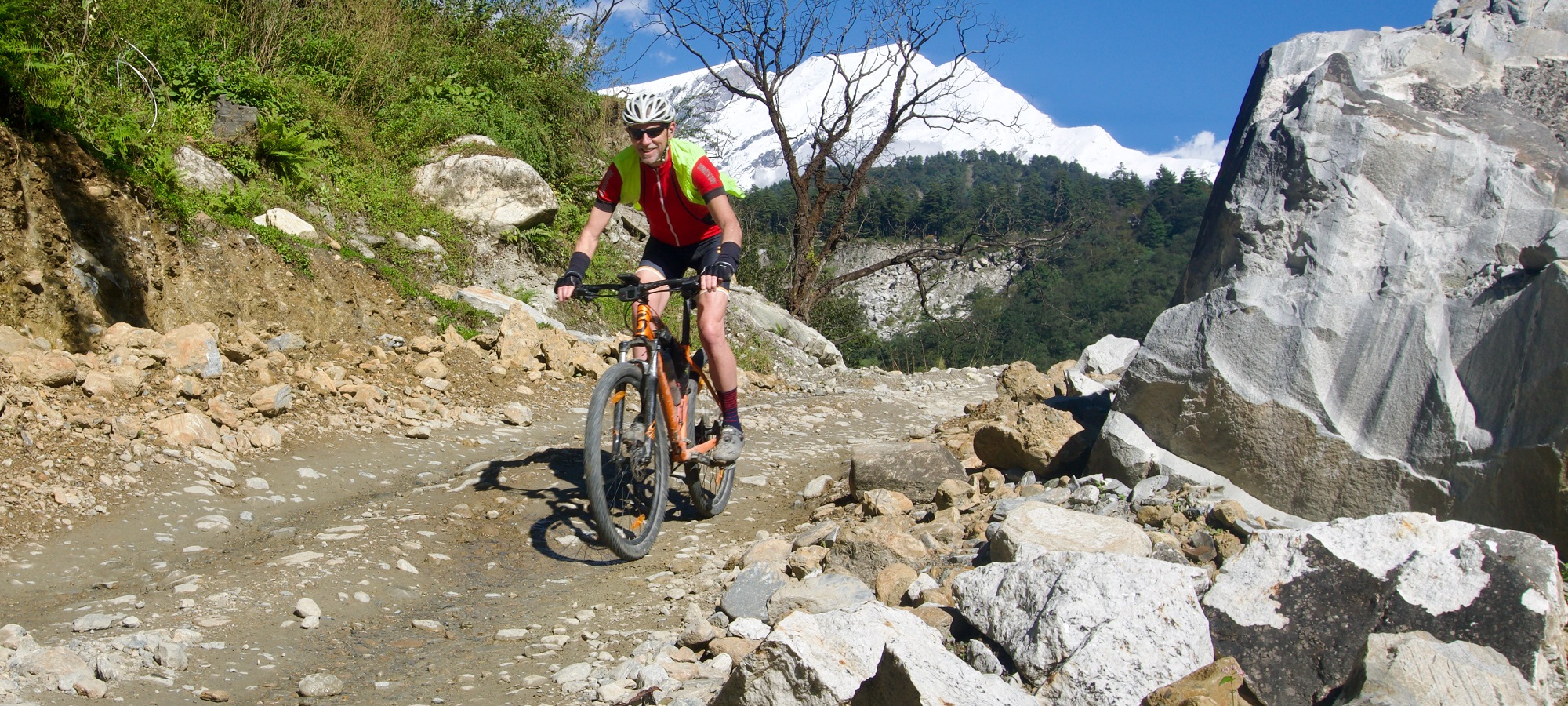
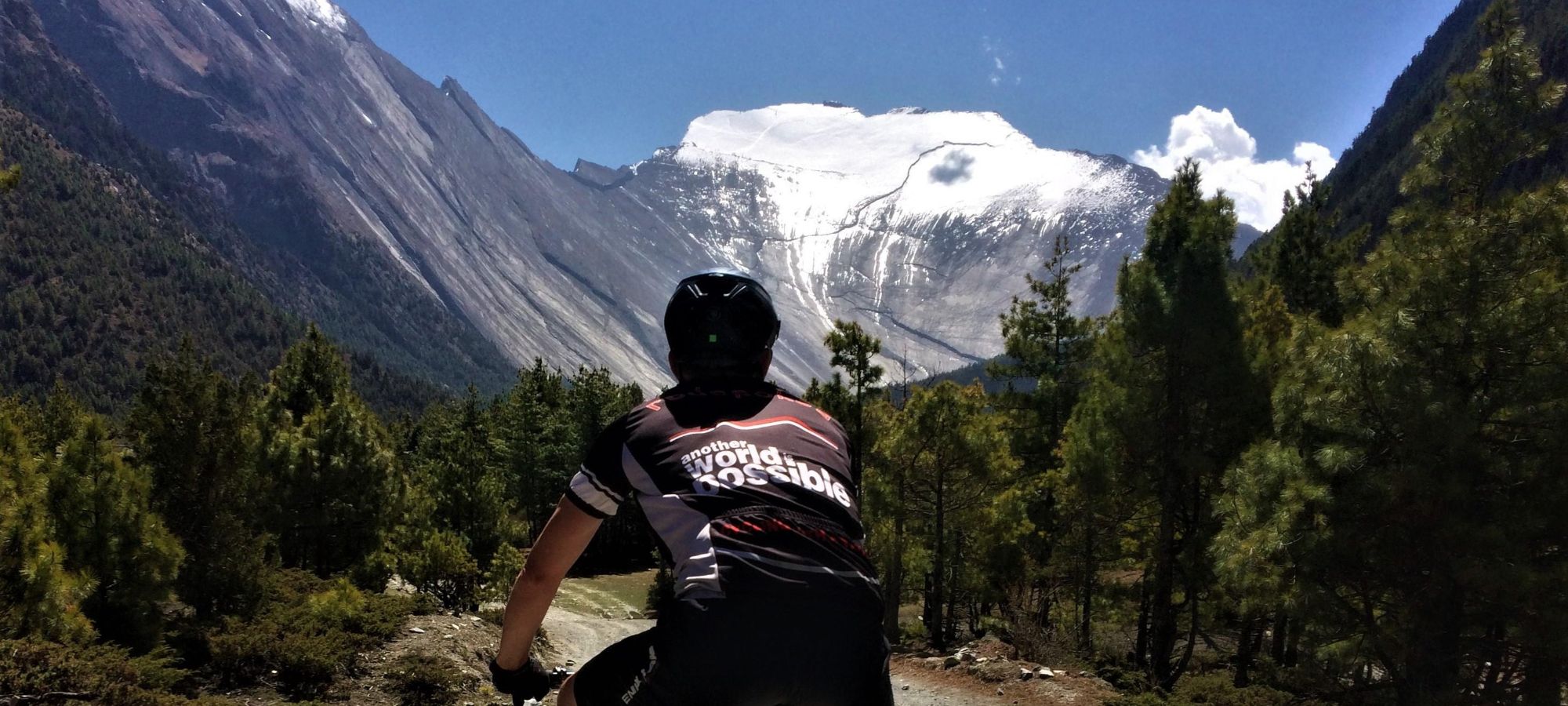
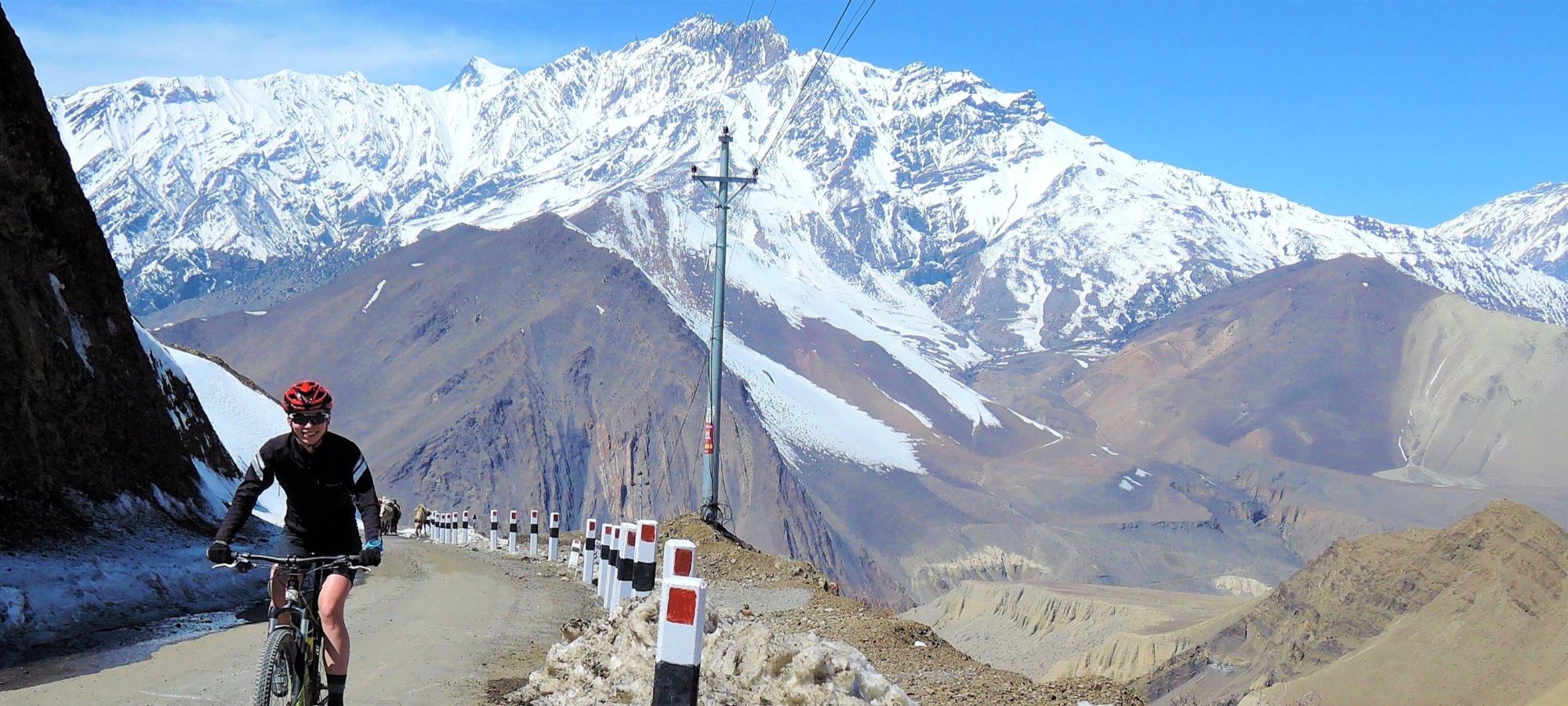
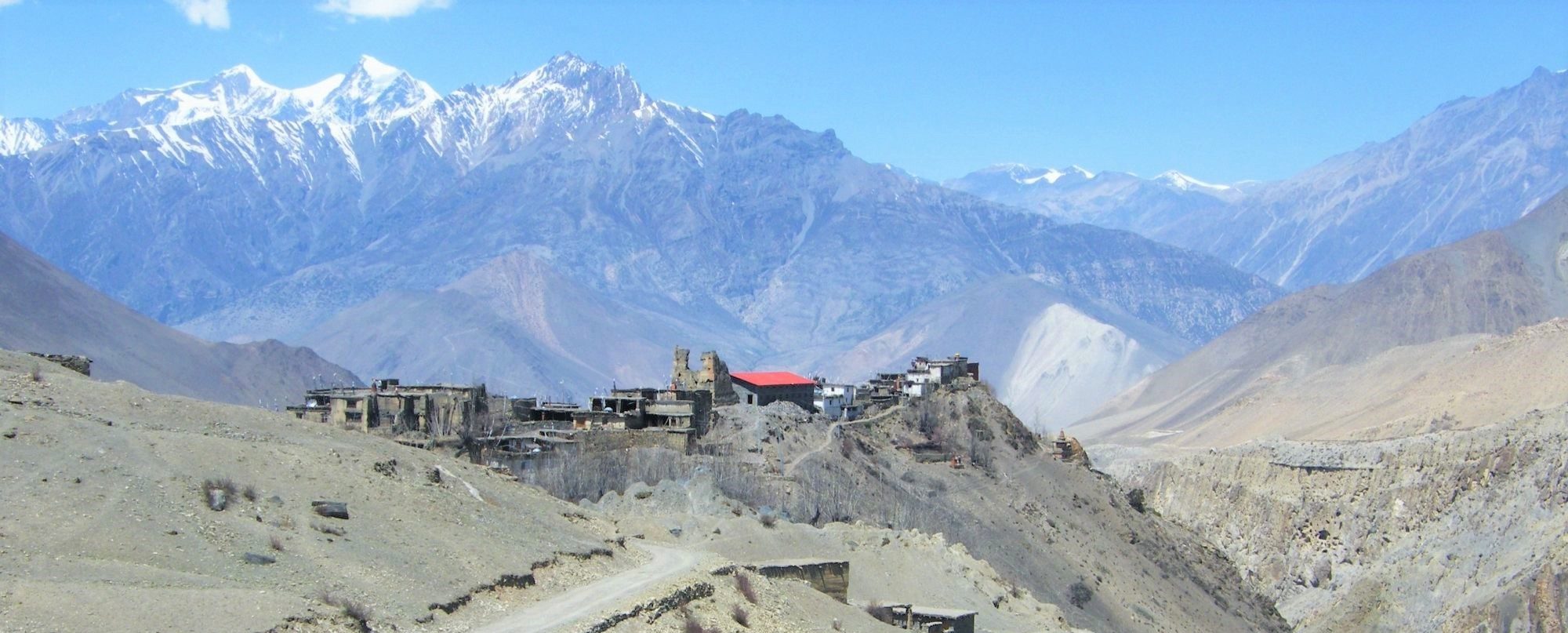
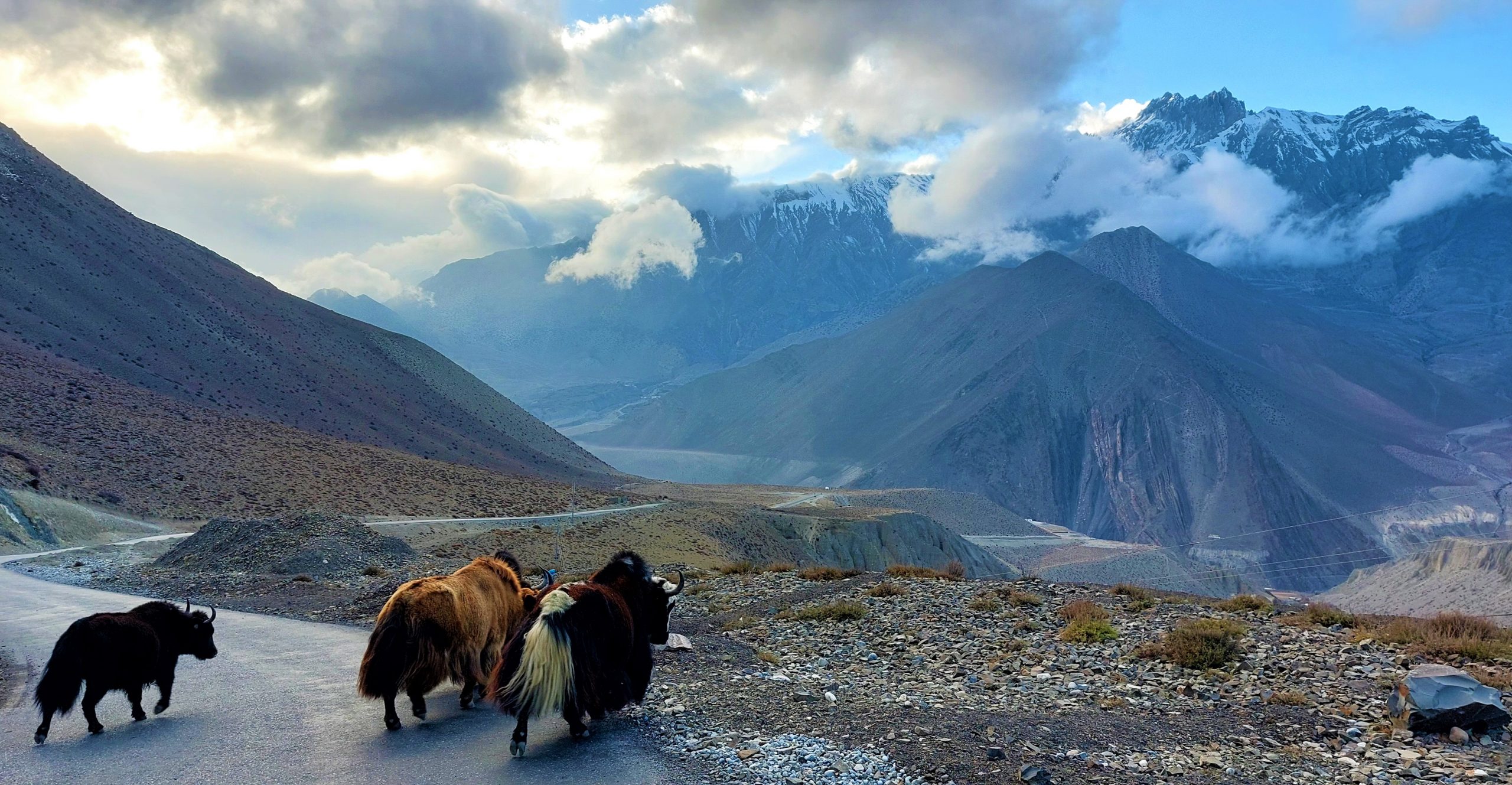
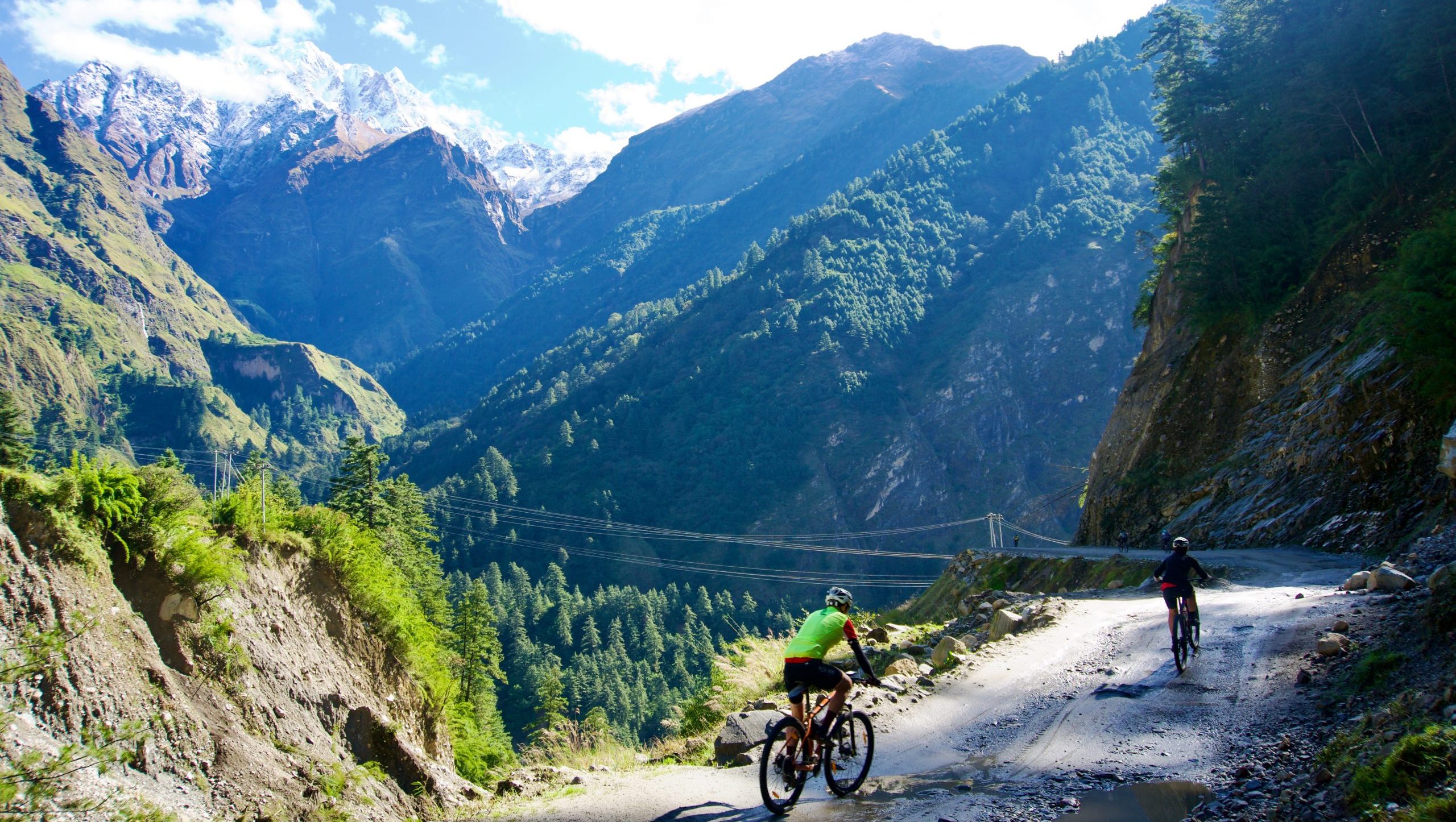
Jomsom is the headquarters of the Mustang District and a key location along the popular Annapurna Circuit trekking route. Mustang is one of the last areas of the world where the ancient Bonpo Religion is practised. Villages to visit for Bonpo are Thini and Lupra near Jomsom, and Nargon near Kobang. Annapurna is a series of Himalayan peaks, it literally means ‘full of food’ but is usually translated as ‘Goddess of the Harvests’. The trekking circuit is within Nepal’s largest conservation area and is renowned for its outstanding beauty. We cycle off-road from here, mainly uphill through a dramatic, arid landscape towards Muktinath (3,825 m). It is a tough ride over rocky terrain which resembles the Tibetan plateau with some fascinating rock formations en route.

Muktinath

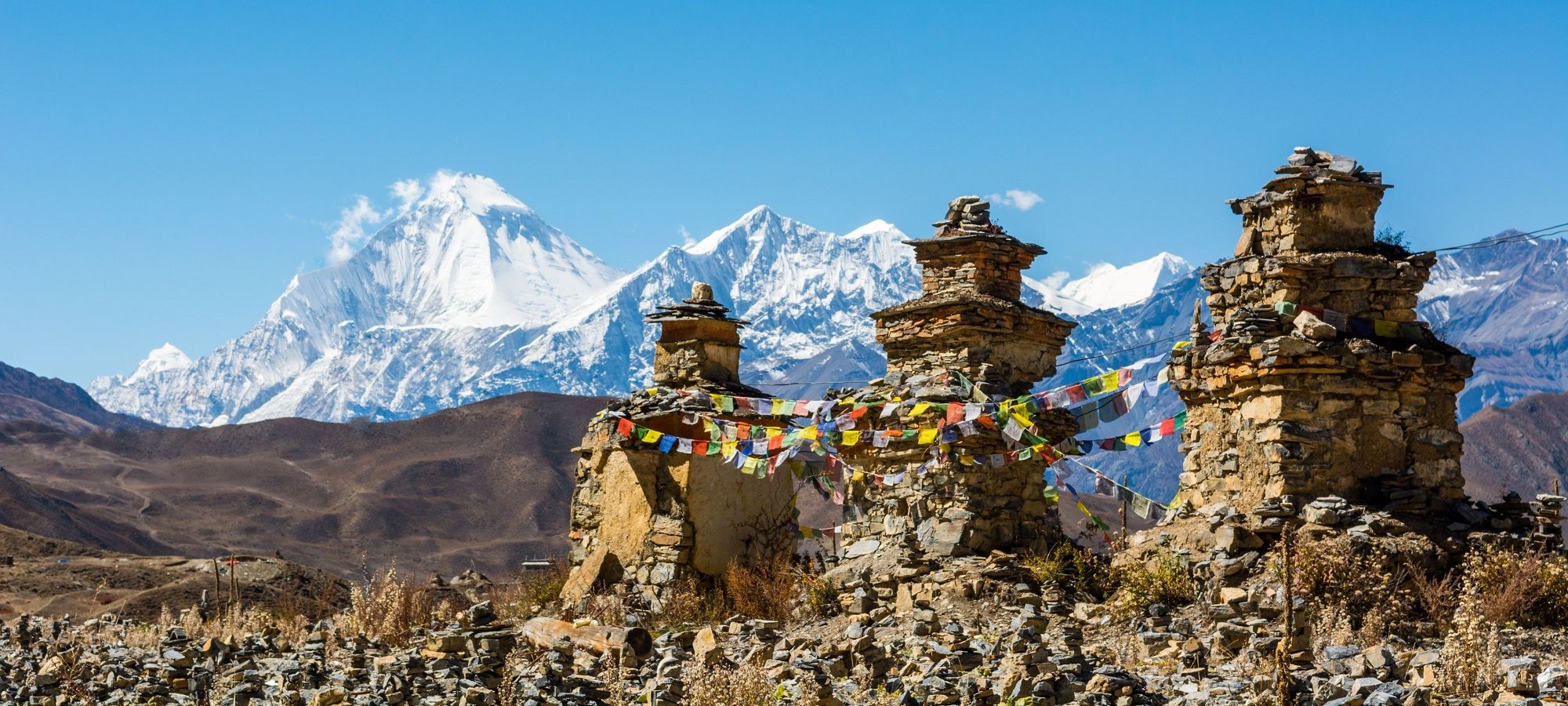
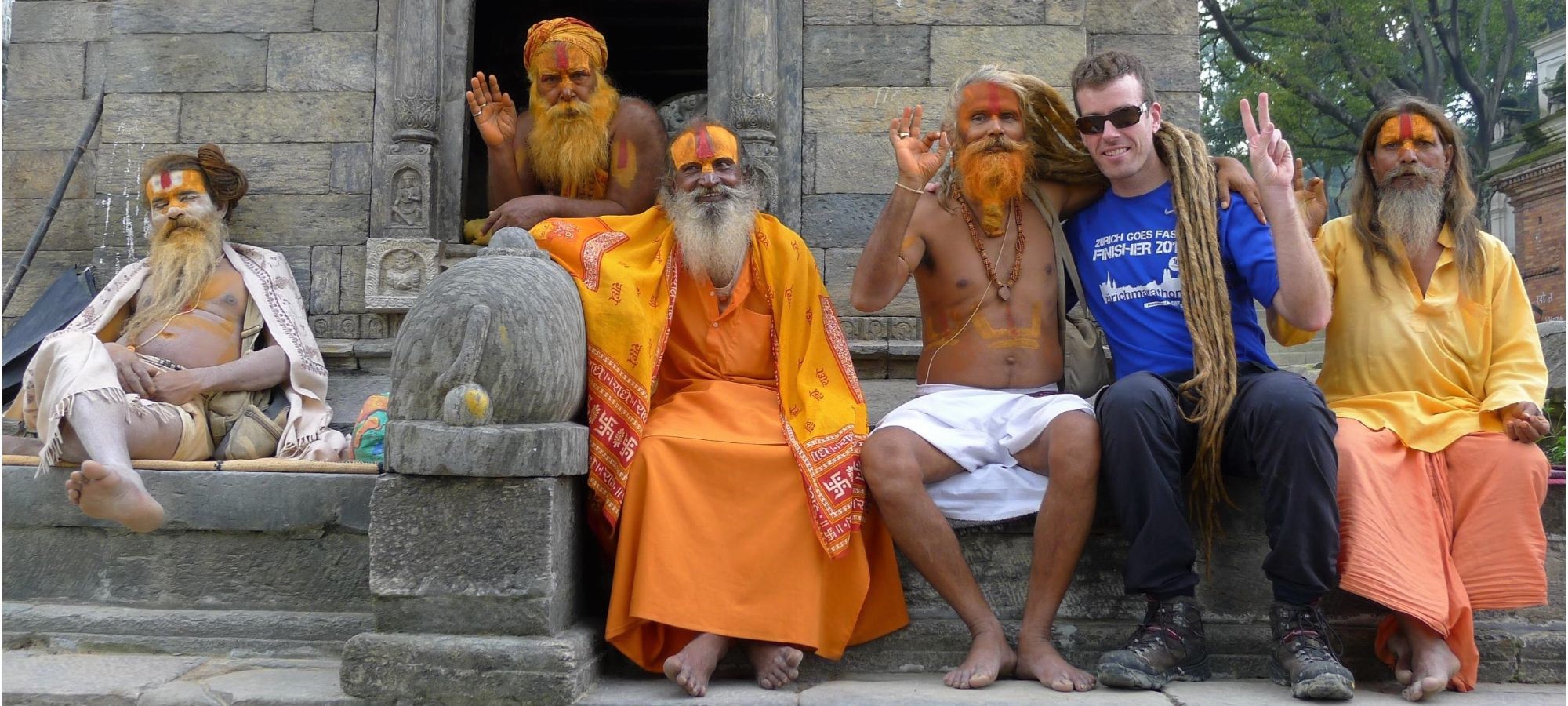
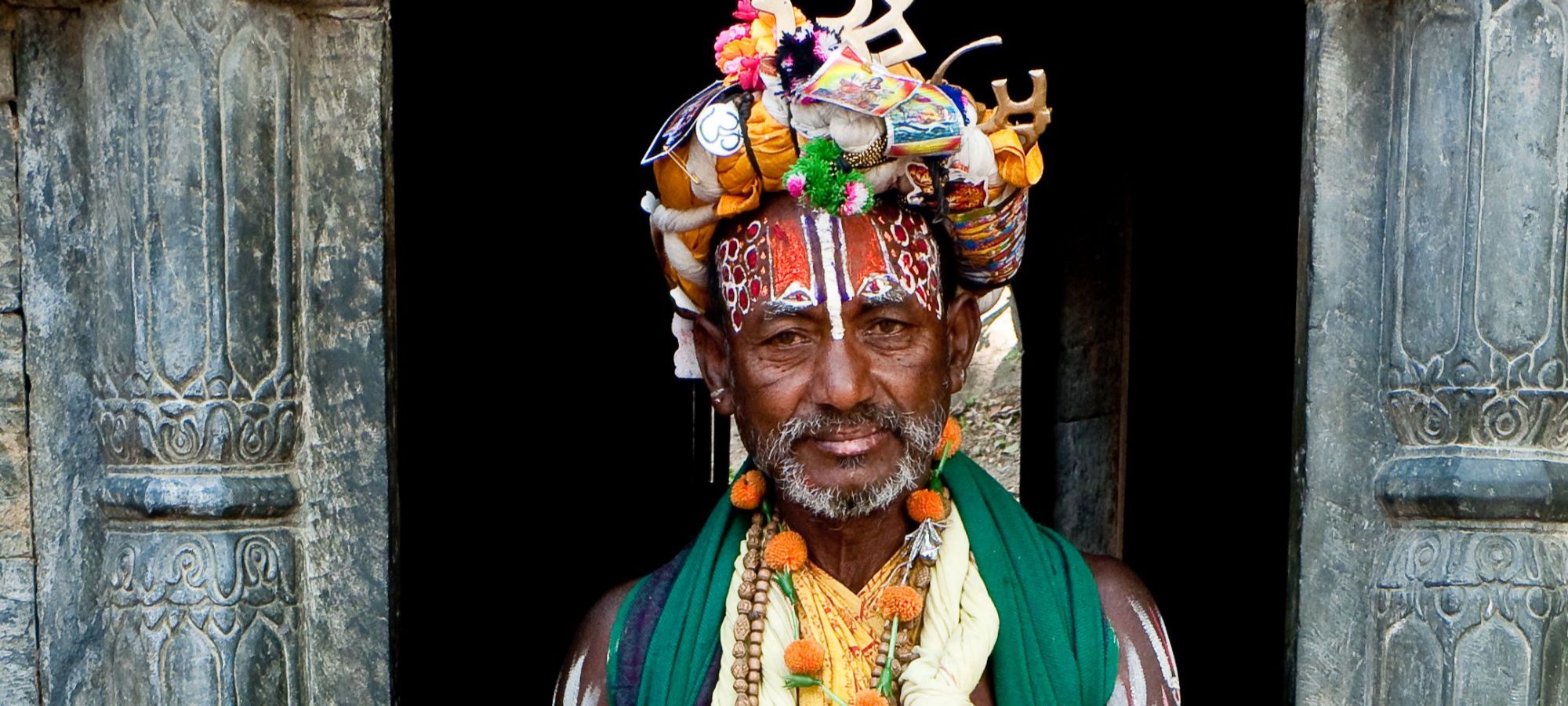
When we arrive at Muktinath your cycling stamina will be rewarded with the spectacular views at the foot of the Thorong La mountain pass. This is an outstanding view point. The temple here Muktinath-Chumig Gyatsa is a remarkable example of a sacred place of shared by two world religions and a key pilgrimage site in Nepal for Buddhists and Hindus. For centuries, they have journeyed from Nepal and India to visit the central shrine. Tibetan Buddhist nuns conduct services and outside the temple, we will see long-bearded Hindu sadists wrapped in scarves and turbans. The local name for the temple is Chumig Gyatsa (hundred waters). According to Buddhist and Hindu tradition, everything in life is born of the five elements earth, air, water, sky and fire. It is the presence of all five elements here that bring these two religions together. Inside the Jwala Mai temple, an eternal flame burns from deep within the earth. On the mountainsides, trees grow abundantly at unusually high altitude. Tradition says that one hundred and eight water spouts pour down from mountain streams, supplying a constant source of cleansing holy water to the village.

In the Hindu faith Lord Vishnu was given salvation from the curse of Brinda (wife of Jalandhar) here. Therefore he is worshipped as Muktinath (meaning Lord of Salvation). The main shrine of Muktinath is a pagoda – shaped temple dedicated to the Lord Vishnu. Buddhists worship Vishnu as Avalokiteshvara. Tibetan Buddhists regard Muktinath-Chumig Gyatsa as a location of Dakinis (goddesses known as ‘Sky Dancers’) and is one of the 24 Tantric places.

The temple itself is one of the oldest Hindu temples still in existence dates back several hundred years, it features metal statues of Lord Vishnu and Goddesses Laxmi, Saraswoti, Janaki, Garuda, Lava-Kush and Sapta Rishis.

Itinerary

Day 1: Arrive Kathmandu Expand

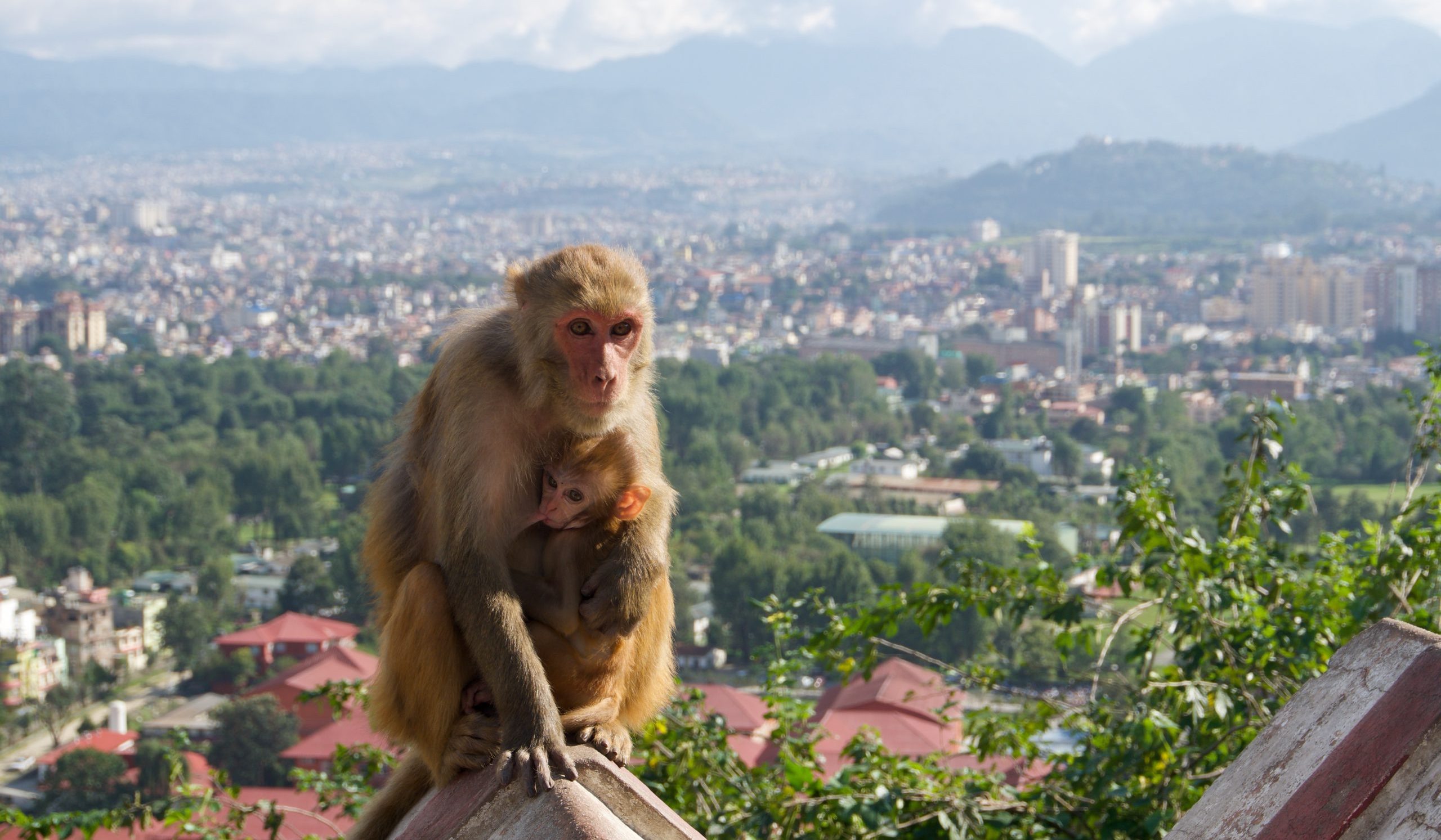
redspokes Kathmandu to Muktinath cycling tour begins in Kathmandu. On arrival you will be met at Tribhuvan International Airport (located 6 miles from central Kathmandu) and transferred to our hotel. For the rest of the day you are free to acclimatise and explore Nepal’s bustling capital city. Kathmandu is one of the world’s oldest cities and has a rich cultural heritage. The old city quarter is criss-crossed with narrow medieval streets. Durbar Square, a World Heritage Site, sits at its centre. The old quarter boasts distinctive pagoda-roofed temples, old monasteries and numerous historic monuments. Other key sites include the Royal Palace, Swayambhunath Stupa (one of the holiest Buddhist sites in Nepal; known as Monkey Temple) Boudhanath Stupa (for an insight into Tibetan culture) and Pashupati Temple (one of the holiest Hindu shrines in the world). Take some time to wander through the bustling markets and lively backstreets. Souvenirs are plentiful and include Nepali clothing, embroidery and ceramics.

This evening we will have group introductions and hear more about the journey ahead from our local team.

Accommodation: Hotel

Day 2: Kathmandu – Dakshinkali Expand

Our first day of cycling in Nepal takes us from the bustling streets of Kathmandu through the serene countryside, with picturesque hills and terraced fields lining our route. After our ride we will organise a visit to the Dakshinkali Temple, one of Nepal’s major Hindu temples. Dedicated to the goddess Kali, who represents the destructive aspects of cosmic energy, the temple is nestled amidst lush forests and attracts thousands of devotees who seek blessings and offer sacrifices. The temple visit is a perfect way to cap off an exhilarating day of cycling, providing a unique insight into the cultural and religious practices of Nepal.

Cycling Distance: 32.4km (20.6 miles)
Cycling Ascent: 789m (2,588ft)
Accommodation: Hotel (B,L,D)

Nepal Day 2: Kathmandu - Dakshinkali
Day 3: Dakshinkali – Palung Expand

This is a tough but rewarding day, we cycle along dramatic trails passing through pine forest and villages on our way to Markhu, where we stop for lunch beside a beautiful lake. This afternoon we ride the 14km stretch of the Tribhuvan Highway between Nauboise and Daman. This has been described as the most spectacular bike ride in Nepal, if not the world. Until the bypass through Mugling opened about two decades ago this was the only road to India.

Today there is little traffic. We cycle along a reasonably good tarmac road which spirals up and down endless hills and passes, through broad valleys and small villages. We climb in two stages towards Daman. First cycling to a pass at 2,000m. We then descend a few hundred metres before embarking on a final climb of 500 – 600m. Our accommodation is in Palung located 8 km before Daman.

Cycling Distance: 44km (27 miles)
Cycling Ascent: 1,145m (3,756ft)
Accommodation: Hotel (B,L,D)

Nepal Day 3: Dakshinkali - Palung
Day 4: Palung – Hetauda Expand

After breakfast, we continue our Nepal tour cycling to Daman. At 2,400m Daman has a most spectacular outlook on the Himalaya – an incredible 400km panorama which extends from Annapurna to Everest. There are also great views over the Terai to India. There is a short 5 km ascent to the pass above Daman at 2,500 m. From the summit we look down over the plunging slopes of the Mahabharat Lekh which leads to the Terai, the low plains of Nepal.

For the rest of the day we enjoy thrilling downhill riding through pine and rhododendron forests which eventually give way to semi-tropical vegetation as the air becomes more humid. Small clusters of houses cling to lonely hill tops, but as we approach the Terai we cycle through more and more villages. Watch out for stray animals and children as you ride through! All the while the road snakes down to the ground, nearly 2,000m below. The town of Hetauda (455m) lies at the bottom of the hill and you will end today’s cycling on an unforgettable high.

Cycling Distance: 78km (48 miles)
Cycling Ascent: 1,090m (3,576ft)
Accommodation: Hotel (B,L,D)

Nepal Day 4: Palung - Hetauda
Day 5: Hetauda – Chitwan National Park Expand

A much flatter ride today after the adrenalin-pumping downhill of yesterday. We are now in central Terai, a region of hot subtropical plains, and the surrounding vegetation reflects this. Sal (hard wood) and Kal (silk cotton) trees line the roads on our route cycling towards the Chitwan National Park, a World Heritage Site since 1984.

At Tadi, the route diverts onto a dirt track to the outskirts of the park area at Sauraha. Tonight we will stay at a hotel in the park. The park is the largest and most famous wilderness in Nepal, and covers a pristine area with a unique ecosystem. It boasts more than 43 species of mammals and is especially renowned for the endangered one-horned rhinoceros and Bengal tigers. It is also home to 450 species of birds and 45 types of amphibians and reptiles. This evening we hear more about the range of activities on offer tomorrow.

Cycling Distance: 72km (45 miles)
Cycling Ascent: 129m (423 ft)
Accommodation: Hotel (B,L)

Nepal Day 5: Hetauda - Chitwan National Park
Day 6: Chitwan National Park Expand

Today is a welcome break after the exertion of the previous days of cycling. You may choose to rest and recuperate at the hotel or explore the Chitwan National Park. The best place to start is the Visitor Centre at Sauraha where you will find plenty of information on wildlife and conservation programmes.

The park is a popular destination for eco-tourists and activities (arranged through our local team at extra cost) include:

Canoeing: A journey down the river Rapti in a traditional ‘dug out canoe’ and an opportunity to quietly observe the exotic species of birds and animals that come to drink at the water’s edge.

Elephant safari: Get a closer view of the endangered one-horned rhinoceros and possibly the elusive Bengal tiger from a safe vantage point.

Guided jungle walk or drive: Accompanied by an experienced naturalist you can walk or drive deep into the jungle, to prime locations in search of rare animals.

Bird watching: An early morning walk through the bush and along the Rapti River, with an expert guide to view some of the 450 species of exotic birds including the Giant Hornbill, Lesser Florican and Paradise Flycatcher.

Observation tower: Climb the 22 foot high wooden tower built in a prime location within the park for a unique perspective on wildlife.

Village tour: Visit a traditional Tharu village deep in the jungle.

Accommodation: Hotel (B)

Day 7: Chitwan National Park – Bandipur Expand

Our first 50 km ride is relatively flat, and we advise caution for the first 15 km due to traffic. However, our van is always available for anyone who would prefer to use it. Later in the day, we face two challenging 500-meter climbs, making it one of the most challenging days on the trip.

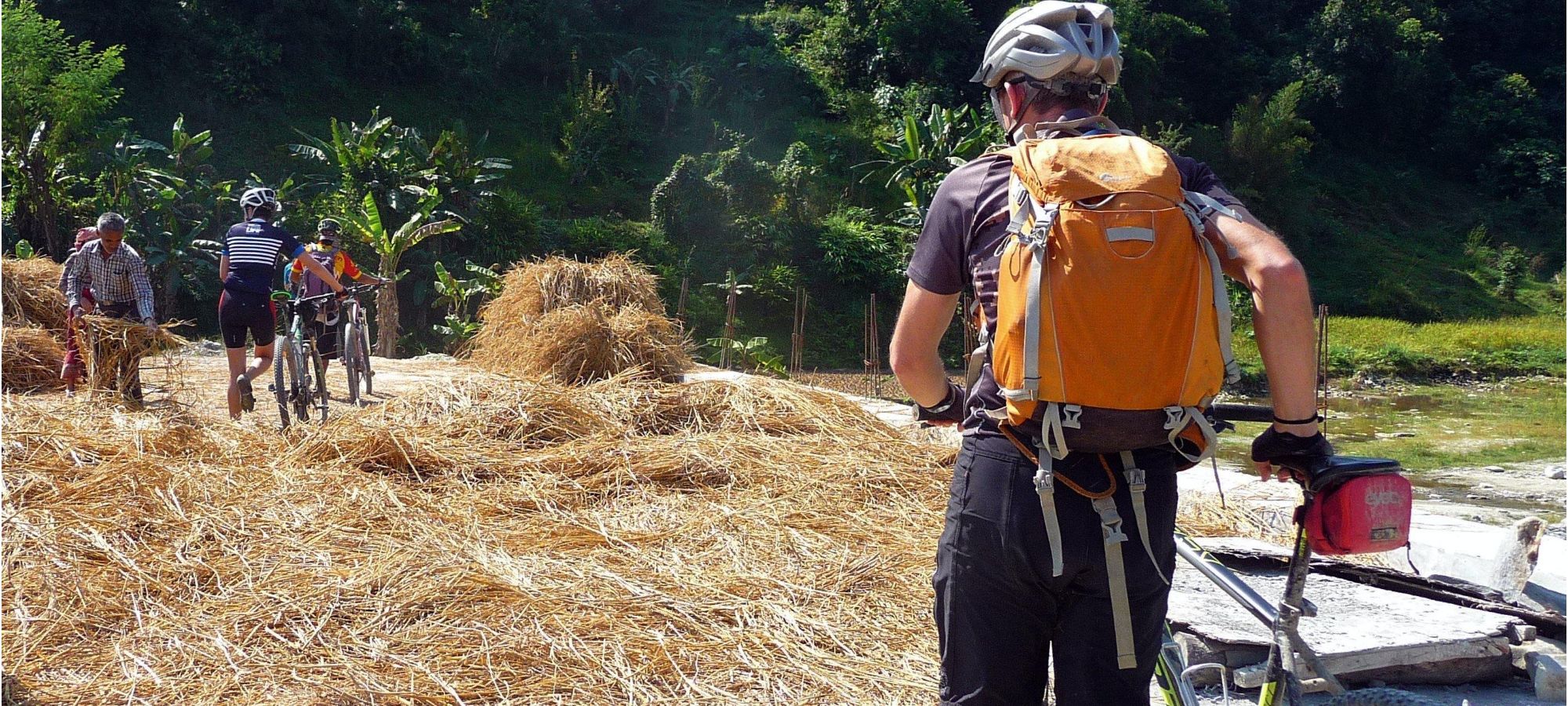
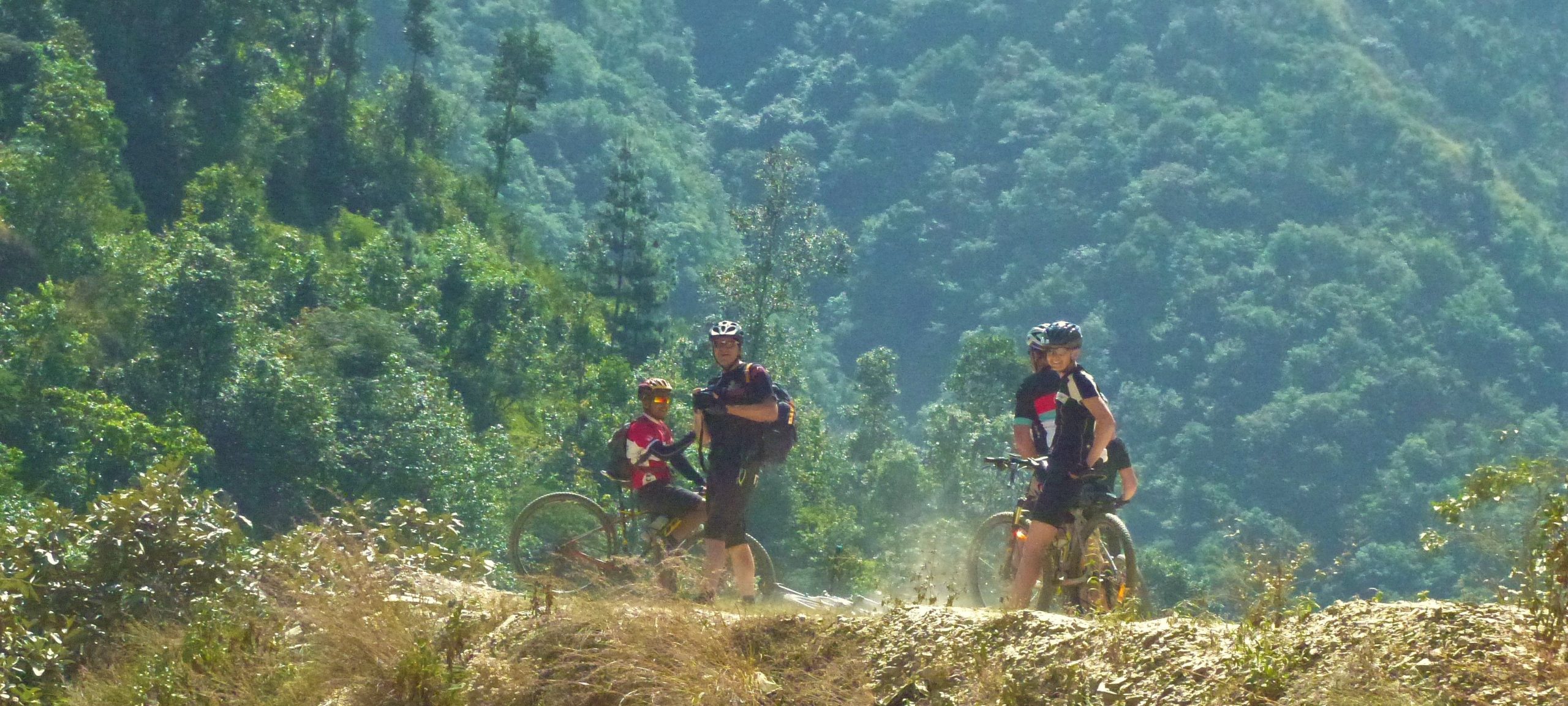
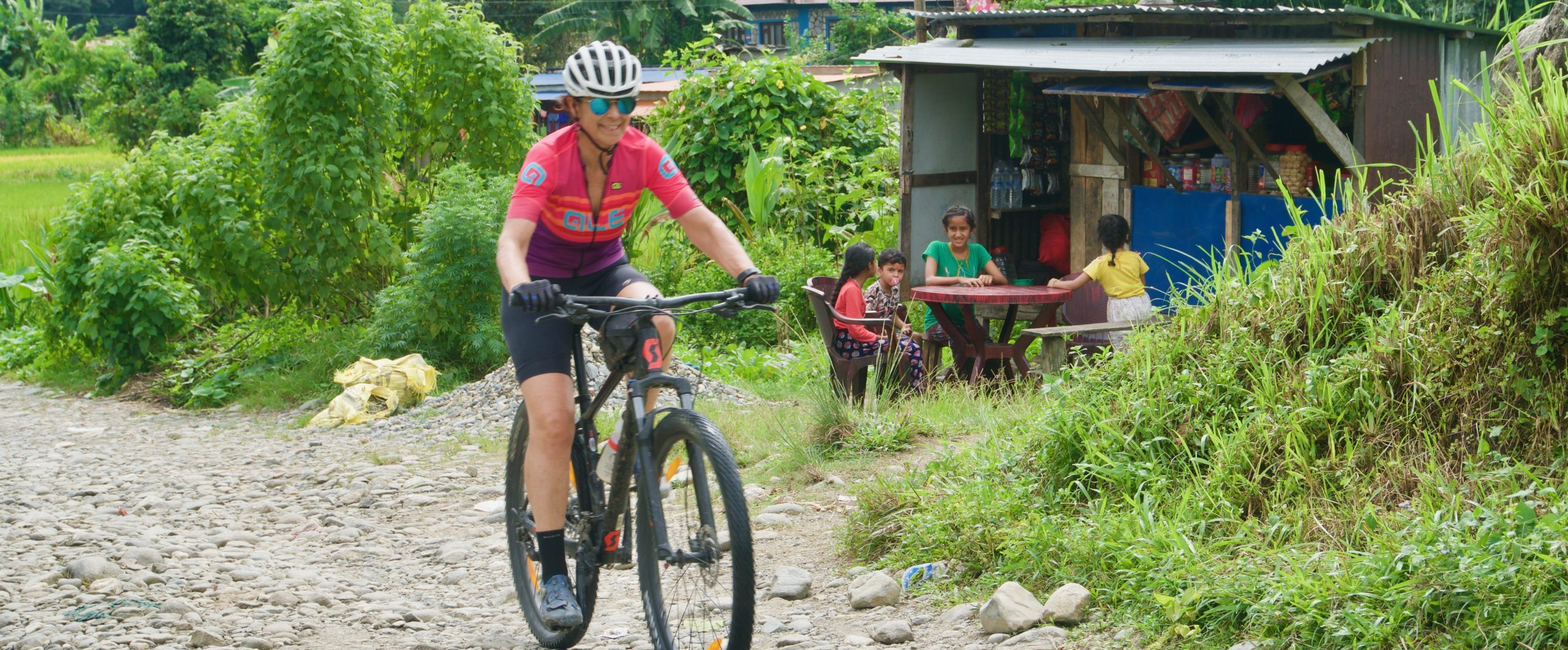
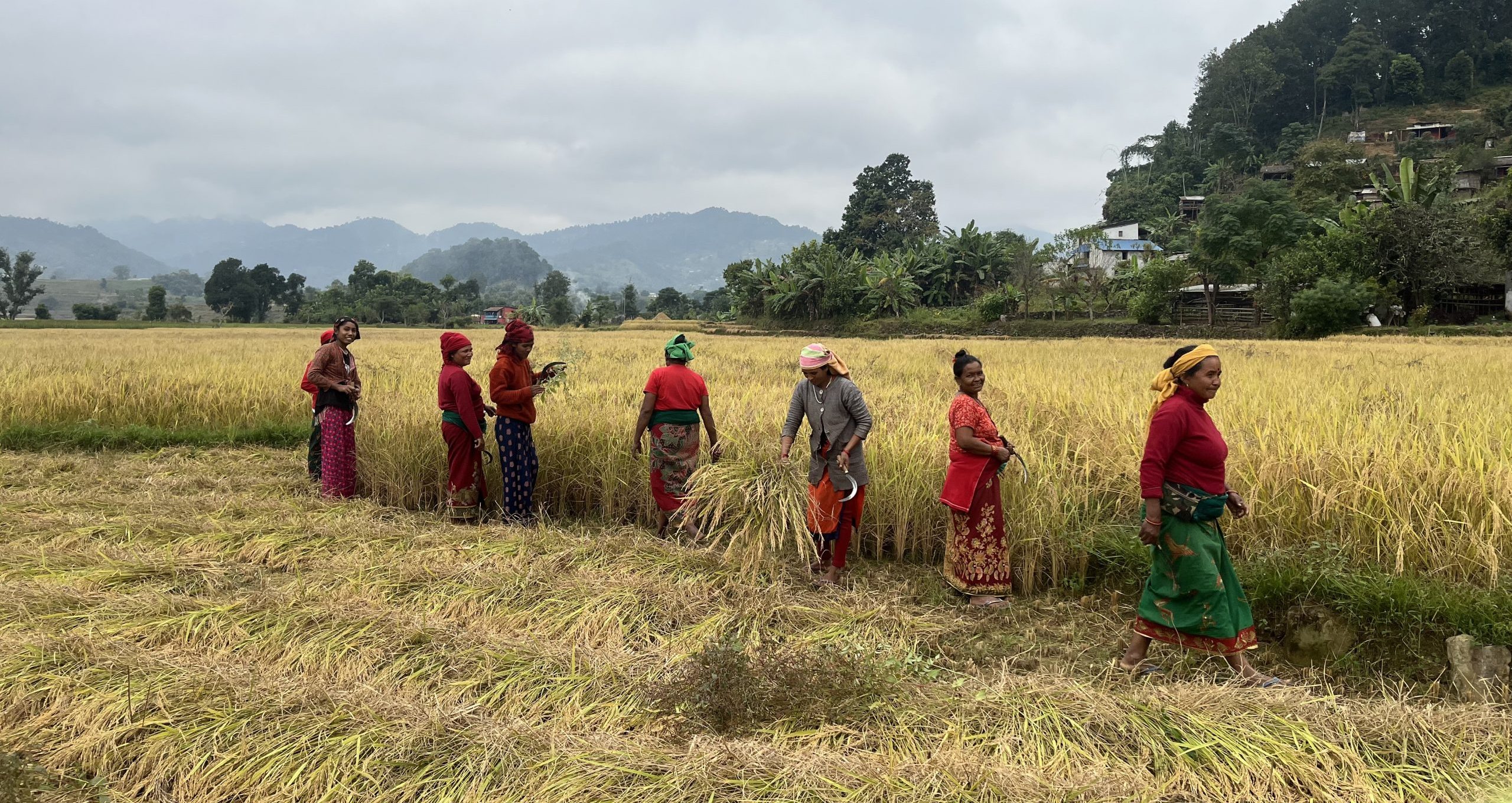
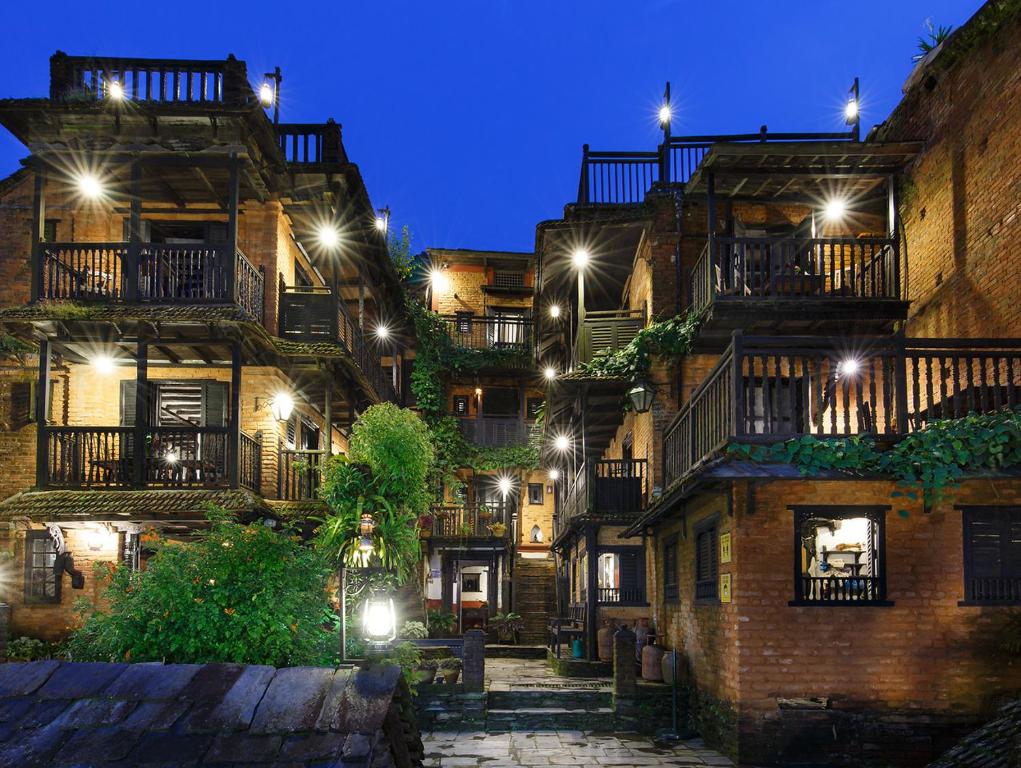
Today’s ride offers a real glimpse into local life in this part of Nepal. We pass through picturesque thatched villages where farming methods have changed little in centuries. Cycling is the ideal way to discover this beautiful area and to meet friendly villagers living a traditional and simple life. We finish cycling for the day at Bandipur, a picturesque Newar (historical inhabitants of the Kathmandu valley) mountain village with stunning views of the Annapurna Range and the peaks of Dhaulagiri, Manaslu, and Langtang. Retaining much of the charm of ‘old Nepal’ there are shrines, temples and pagodas to visit. There are also holy caves in the area featuring limestone formations of geographical and religious interest, including what is said to be the largest cave in Asia the Siddha, which is 750m long. The caves attract many pilgrims and adventurers. The historic trail to Bandipur was immortalized in a poem by King Mahendra, who observed how remarkably long and steep it was.

Cycling Distance: 71km (44.2 miles)
Cycling Ascent: 1,670m (5,479ft)
Accommodation: Hotel (B,L,D)

Nepal Day 7: Chitwan National Park - Bandipur
Day 8: Bandipur – Damauli Expand

Today’s cycle from Bandipur to Damauli is full of adventure and natural wonders. The morning starts with a walk around Bandipur before we set off on our bikes. We enjoy a stunning 10-kilometer descent, taking in the panoramic views of the Annapurnas along the way. Our journey takes us to the awe-inspiring Siddha Gufa cave in Bimal Nagar, where we explore the intricate rock formations. The last hour of our ride to Damauli is on a paved road, but as we cycle up into the mountains, the scenery becomes more rugged and awe-inspiring.

Cycling Distance: 24km (15 miles)
Cycling Ascent: 248m (813ft)
Accommodation: Hotel (B,L,D)

Nepal Day 8: Bandipur - Damauli
Day 9: Damauli – Pokhara Expand

Today’s cycle ride takes us through breathtaking scenery, with stunning views of the Himalayas, and hardly any traffic on the way to the outskirts of a beautiful city. As we cycle along, we pass through small villages with traditional mud houses and thatched roofs, giving us a glimpse into a bygone era. We see children playing with homemade toys, elderly villagers basking in the sun on grass mats, and farmers tilling the land by hand.

The city we’re heading to is situated in a magnificent valley of lakes and mountains, and it’s a popular tourist destination. It boasts some of the best mountain panoramas in the world, with Machhapuchhre (Fishtail Mountain) being the most impressive peak, located just 25 km away. The reflection of the peak in Lake Phewa is considered one of the most beautiful sights in the region.

Cycling Distance: 66km (41 miles)
Cycling Ascent: 1,455m (4,773ft)
Accommodation: Hotel (B,L)

Nepal Day 9: Damauli - Pokhara
Day 10: Pokhara Expand

We have a break from our bikes today in order to spend more time exploring Pokhara and its surroundings. If Kathmandu is the cultural hub of Nepal, Pokhara is its adventure centre. There are opportunities to participate in some of the activities on offer in this spectacular setting (for an extra charge). They include: trekking, rafting, kayaking, paragliding, horse riding and jungle safaris.

Pokhara is also a place of outstanding natural beauty. The serenity of Phewa Lake and the magnificence of the fish-tailed summit of Machhapuchhre rising behind it create an ambience of peace and tranquillity. You may decide to simply relax by the lake enjoying the temperate, sub-tropical climate. Alternatively, you can explore the town: Pokhara bazaar, Devi’s Falls, World Peace Pagoda and Seti Gorge. This evening we hear more about our final 3 days of cycling in Nepal from the local team.

Accommodation: Hotel (B)

Day 11: Pokhara – Jomsom – Muktinath – Jomsom Expand

This morning we take a short flight from Pokhara to Jomsom (2,713 m). Jomsom is the headquarters of the Mustang District and a key location along the popular Annapurna Circuit trekking route. We cycle off-road from here through a dramatic, arid landscape towards Muktinath (3,825 m). It is a tough ride over rocky terrain which resembles the Tibetan plateau with some fascinating rock formations en route. Muktinath is as pilgrimage centre for Buddhists and Hindus. The shrines, in a grove of trees, include a Buddhist monastery and the Vishnu temple of Jiwala Mayi. An old temple nearby shelters a spring and natural gas jets which provide Muktinath’s famous eternal flame. The earth – water – fire combination accounts for Muktinath’s great religious significance. Spectacular views of the Dhaulagiri, Nilgiri, Tukuche peaks and several other 8,000m peaks are visible. We return to Jomsom where we stay tonight.

Cycling Distance: 42km (26 miles)
Cycling Ascent: 1,065m (3,494ft)
Accommodation: Hotel (B,L,D)

Nepal Day 11: Pokhara - Jomsom - Muktinath - Jomsom
Day 12: Jomsom – Tatopani Expand

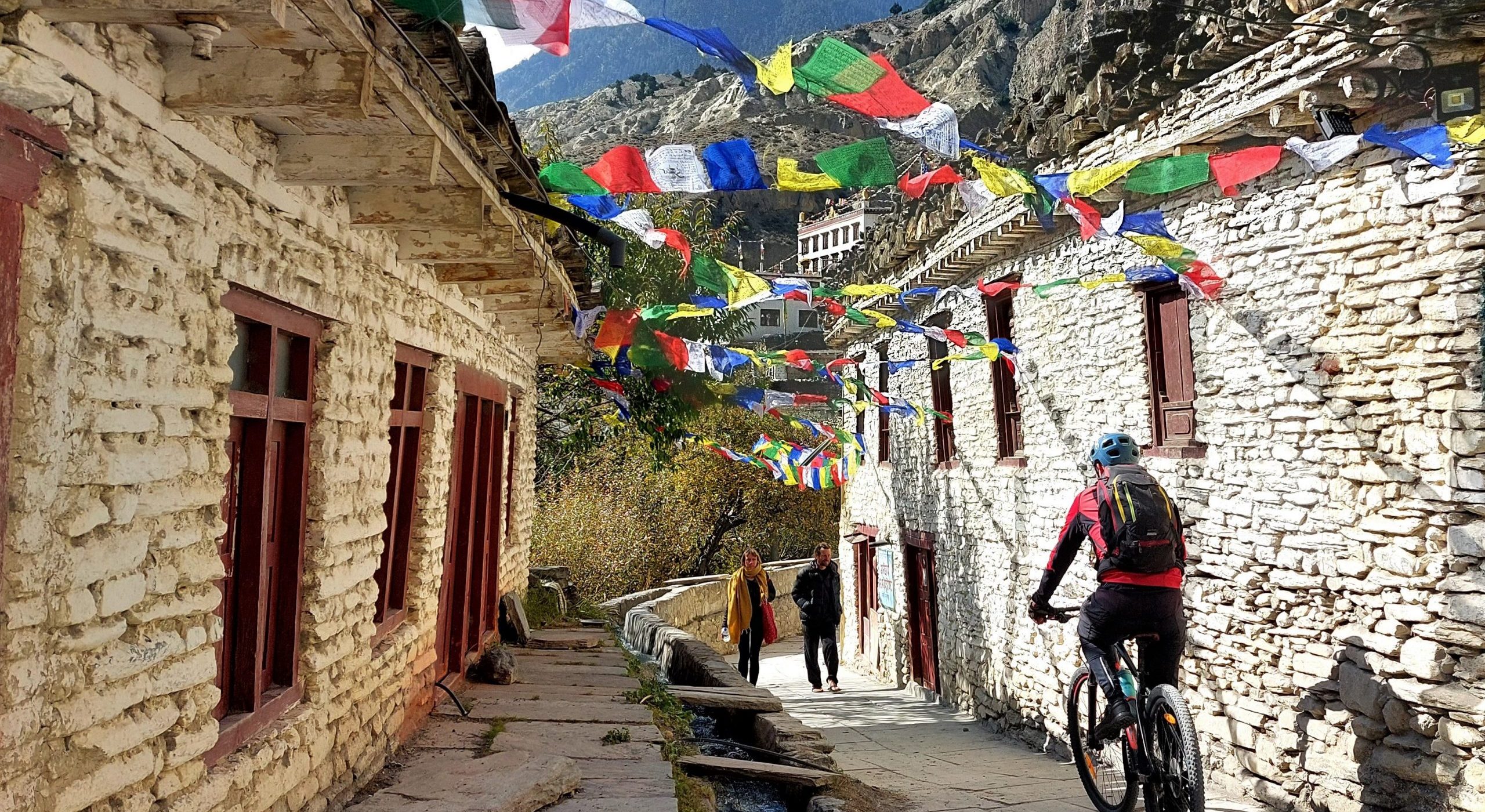
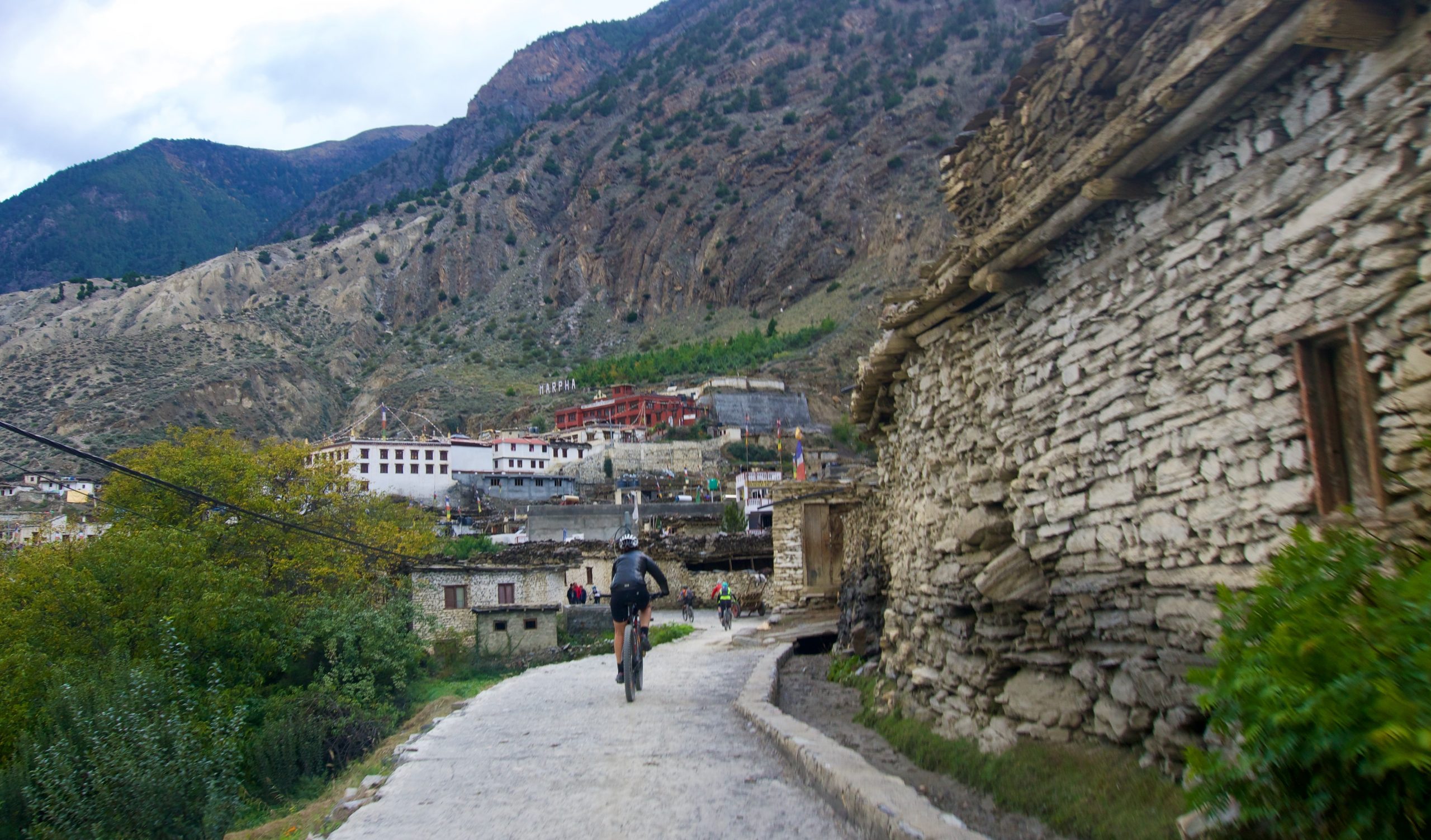
We set off from Jomsom cycling alongside the Kali Gandaki river, riding over sandy and rocky tracks. We pass through various villages including Marpha, a picturesque place with white-washed houses and cobbled streets that is well known for its apple production. The next section is easy riding, we cycle following a jeep track to Kalopani, a beautiful village set below the Dhaulagiri Himal. From the village there are panoramic views of Dhaulagiri, the Nilgiri peaks and Annapurna I. After about 25 km we reach Kalopani (2,530m) which means ‘black water’.

From there the route is downhill at first. We cross a suspension bridge and ride through pine forest to reach Ghasa. The trail then goes steeply down to the Rupse waterfall, one of the biggest along the route. Beyond, the trail is much easier, passing through Dana village and crossing rice paddies to Tatopani (1,190m), a small town on the north bank of Kali Gandaki River. Tatopani means ‘hot water’ in Nepali and the village took its name from the hot springs nearby. At this point we have cycle 48 km today.

Cycling Distance: 48.1 km (29.9 miles)
Cycling Ascent: 319m (1,047ft)
Cycling Descent: 1,678m (5,505.3ft)
Accommodation: Hotel (B,L,D)

Nepal Day 12: Jomsom - Tatopani
Day 13: Tatopani – Beni – Pokhara Expand

Today’s cycling trail follows the Kali Gandaki River as we ride through the world’s deepest gorge to reach Beni. (830m). This is an easy ride through stunning scenery. The remainder of today’s route is 100% on-road which will be a relief after the last couple of days of riding on dirt tracks. We leave Beni, headquarters of the Parbat District, and head back into the tranquil countryside. We continue following the Kali Gandaki river in order to reach the Baglung Highway. We cycle along this road to Naudanda, an attractive village perched on a hilltop surrounded by steep rice terraces. From here we ride to the Sarangkot viewpoint (1,592m) which offers the best and most spectacular panoramas in the Pokhara area.

You will marvel at the views of Annapurna (8,019m), Manasalu (8,165m), Ganesh Himal (7,446m), Dhaulagiri (8,167m) and Machhapuchhre (6,993m). We now have a final steep downhill ride back to Pokhara with lakeside views en-route. We bid farewell to our bicycles here as our Nepal cycle itinerary comes to an end. We will transfer by road back to Pokhara.

Cycling Distance: 68 km (42 miles)
Cycling Ascent: 248 m (813 ft)
Accommodation: Hotel (B,L)

Nepal Day 13: Tatopani - Beni - Pokhara
Day 14: Pokhara – Home Expand

As the Kathmandu to Muktinath cycle tour comes to a close, participants bid farewell to the amazing journey they’ve had. You will be transferred to the airport for your return flight home, cherishing the memories and experiences gained.

Accommodation: Hotel (B)
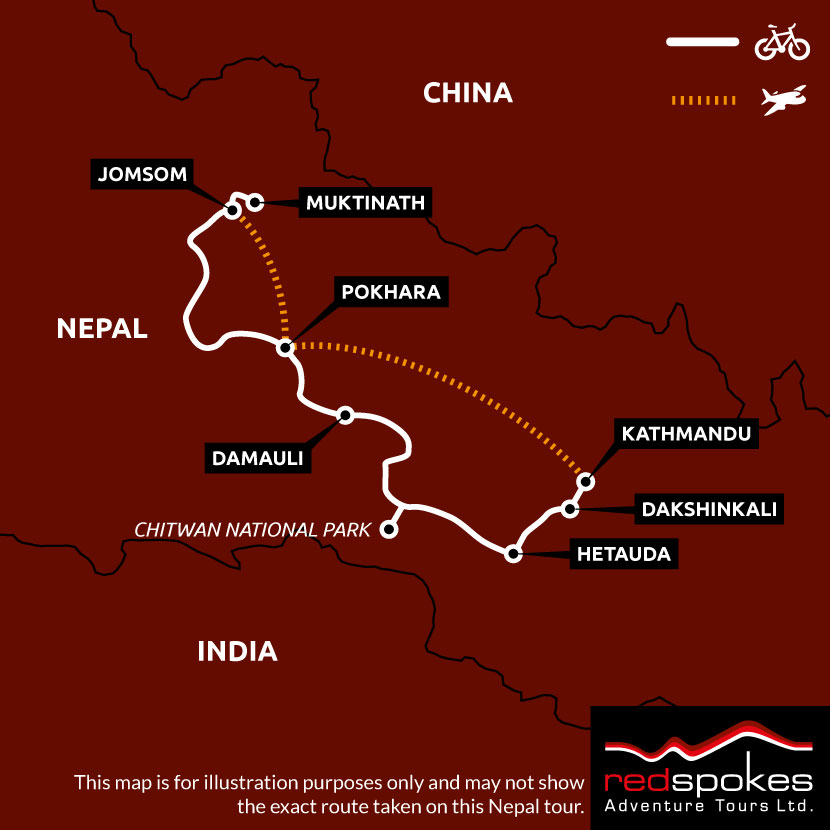
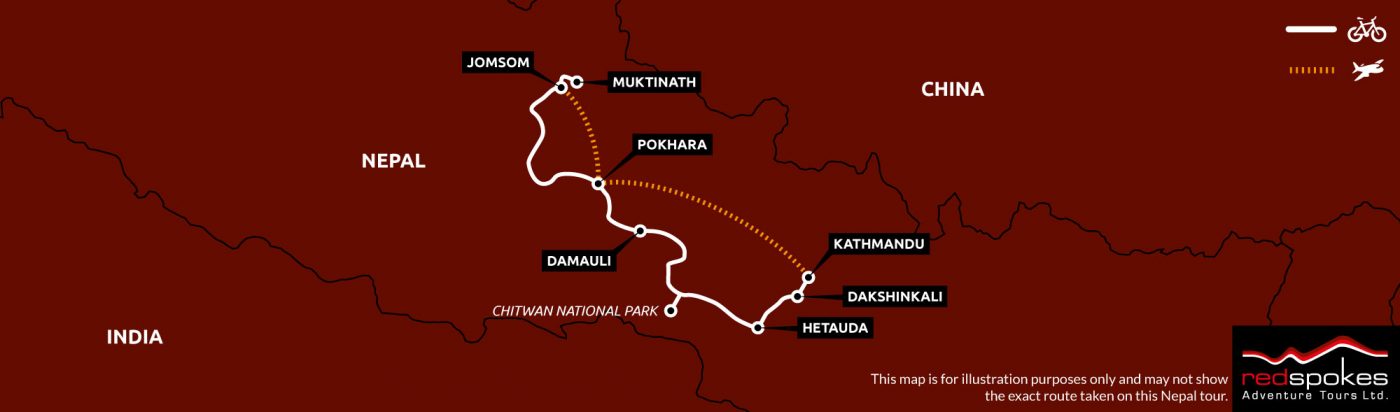
Nepal Cycling Holiday Map - SquareNepal Cycling Holiday Map

Essential Info

Tour Status & Booking Conditions Expand
  • Each tour requires a minimum number of participants to run
  • Tour status updates automatically as bookings are received
  • Do not book flights until the tour status is marked Guaranteed

Tour Status Definitions

  • Guaranteed – Tour is confirmed and open for booking
  • Guaranteed – Limited – Confirmed, with limited spaces remaining
  • Available – 2 More to Guarantee – Needs two more bookings to confirm
  • Available – Open for booking but not yet confirmed
  • Contact – Please get in touch to discuss availability
  • Fully Booked – No places remaining

Booking & Payments

  • A £350 deposit confirms your place on the tour
  • Deposits are refundable until the tour becomes Guaranteed
  • Final balance is due 56 days before the tour start date
  • By booking, you agree to our booking conditions (please read in full)

Small Group Note

For groups of fewer than four participants, the guide may lead from the support vehicle rather than cycling with the group, ensuring full logistical and guiding support.

What’s included Expand

Fully supported cycling holiday

  • Support vehicle for luggage transport and rider assistance
  • Accommodation throughout the tour (twin share unless stated)
  • Most meals (see itinerary using the BLD key below)
  • Snacks and mineral water on cycling days
  • Airport transfers on the first and last day of the tour
  • English-speaking local guide(s)
  • Mechanical assistance for minor bike repairs
  • Chitwan National Park Fees – Entry fees included

Meal Key (used in the itinerary)

  • B = Breakfast
  • L = Lunch
  • D = Dinner
  • Example: B, L means breakfast and lunch are included that day.
  • Special dietary requirements can usually be catered for with advance notice. Please advise us at the time of booking.
What’s not included Expand
  • International flights
  • Domestic Flight ($165 — contact us for details)
  • Travel insurance (mandatory)
  • Visa fees (if applicable)
  • Alcoholic drinks
  • Meals not specified in the itinerary
  • Tips for guides and support staff
  • Bike hire
  • Single room supplements
Getting there and away Expand

Tour Start

  • Start location: Kathmandu
  • Airport transfers included on the tour start date, regardless of arrival time
  • Early arrivals may need to wait for hotel check-in (subject to availability)

Tour End

  • End location: Pokhara
  • Airport transfers included if departing on the final tour day
  • Extra nights and transfers can be arranged at additional cost

Flights

  • International flights are not included
  • Your return flight home at the end of the trip should be booked from Pokhara, not Kathmandu, on the final day of the itinerary. Please feel free to book your flight for any available time on the last day, as you will have completed your tour and will be in Pokhara the previous night.
  • The local flight from Pokhara to Jomsom costs approximately $165. Details on how to book this flight will be sent to you once we receive your booking form.
  • We are happy to advise on suitable arrival and departure airports
Accommodation Expand

We choose accommodation based on comfort rather than luxury. Our prices are based on sharing a twin room. Should you wish to have a room to yourself there is a single supplement option on most of our tours.

Eating & Drinking (Special diets) Expand

Meals on Tour
Most meals are included in your tour price, except on rest days and a few other occasions.
Please check the itinerary for all meals provided.

Dietary Requirements
If you have any special dietary needs, please let us know at the time of booking.
We can cater for most diets, but advance notice is essential to ensure the best experience.

Taste of Nepal

  • Nepalese cuisine is strongly influenced by both India and Tibet.
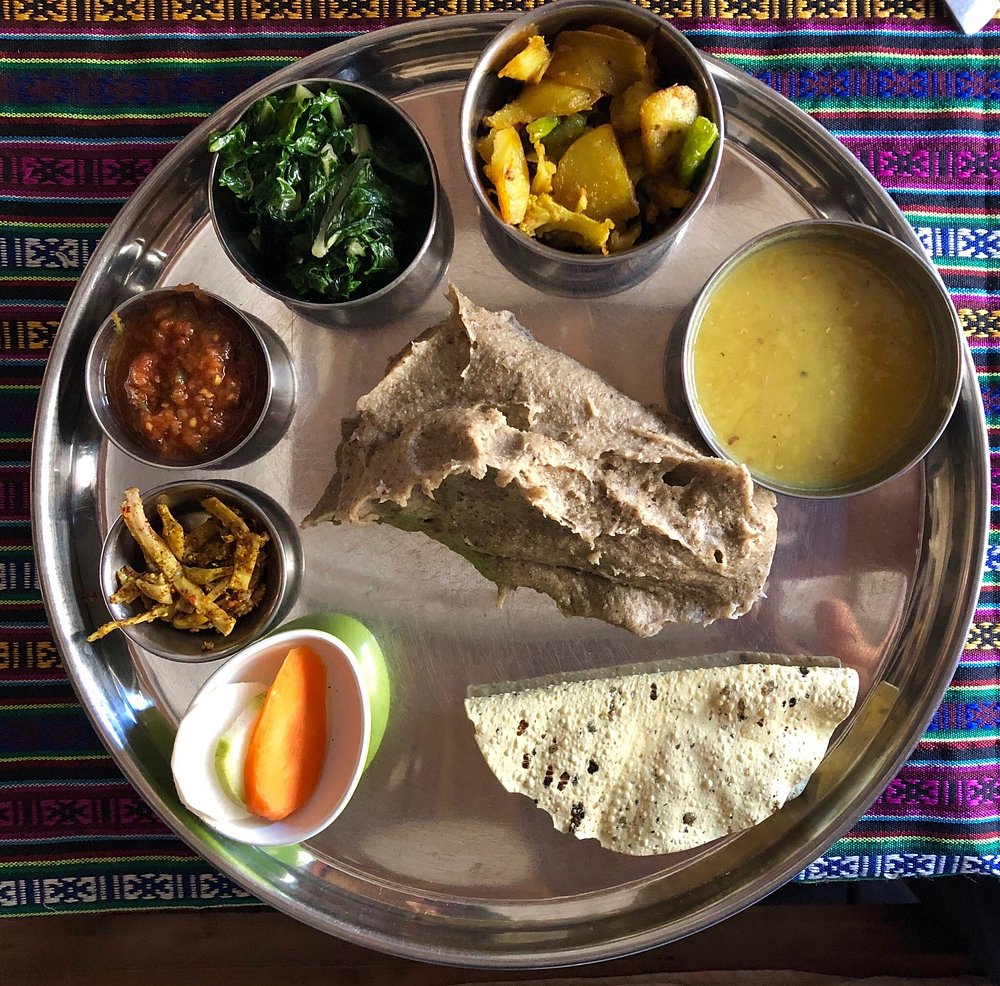
  • A typical dish in Nepal is Dal Bhat, a rice and lentil soup. Many Nepalese will eat this twice a day. There are many variations on the dish, the most popular is dal bhat tarkari which comes with curried vegetables.
  • The indigenous people of the Kathmandu valley are the Newar they have their own cuisine which is influenced by Tibetan and Chinese cuisine.
  • Popular dishes are Chatamari: a snack similar to pizza. Swo, similar to Scottish haggis and Choee which tastes like salami.
  • Nepal is a Hindu country, it is illegal to kill a cow here. Chicken, pork, mutton, buffalo and lamb are eaten and there are many vegetarian dishes
  • Dal bhath,
  • Alu dum is fried potato in gravy
  • Alu acchar (pickled potatoes)
  • Golveda ra dhaniya ko achaar (tomato and coriander) pickle.
  • Popular Nepalese desserts are yoghurt and milk based.
  • Chay, the local tea is served with milk. It is also drunk with ginger or other spices.
  • Suja is a salty tea mixed with milk and butter.
  • Lassi, made traditionally from curd or sometimes yoghurt, is churned and chilled.
  • Popular alcoholic drinks include Raksi made from rice or millet and similar to tequila. (often served on festival days).
  • Jaand is sometimes referred to as Nepalese beer, but it is similar to a rice wine and not as strong as Raksi. It is customary to dilute it with water.
Cycling Support Expand

Support Vehicle

  • A support vehicle accompanies the group throughout the tour
  • Transports main luggage between overnight stops
  • Available for rest breaks or if you need a lift
  • Typically stops every 20 km / 12 miles

On-Ride Support

  • Guides carry tools for minor repairs
  • You only need a small daypack while riding

Helmet Policy

  • Helmets are mandatory while cycling
  • Helmet hire cannot be guaranteed locally
  • You must bring your own helmet
Bike Hire Expand

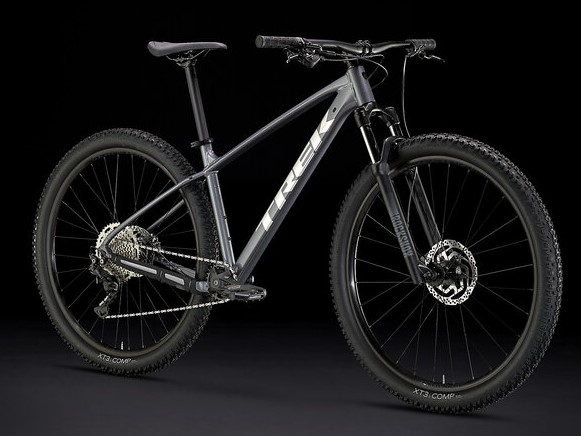
For this tour we have Trek Marlin 7 bikes and similar, in a range of sizes.

What’s Included with Bike Hire

  • Standard flat pedals
  • Basic spares and mechanical support

Customising Your Bike

  • You may bring your own pedals (SPD / clip-in)
  • You may bring your own saddle if preferred
  • Our guide will help fit pedals and saddles on arrival
Trek Marlin 7
Can i bring my own bike Expand
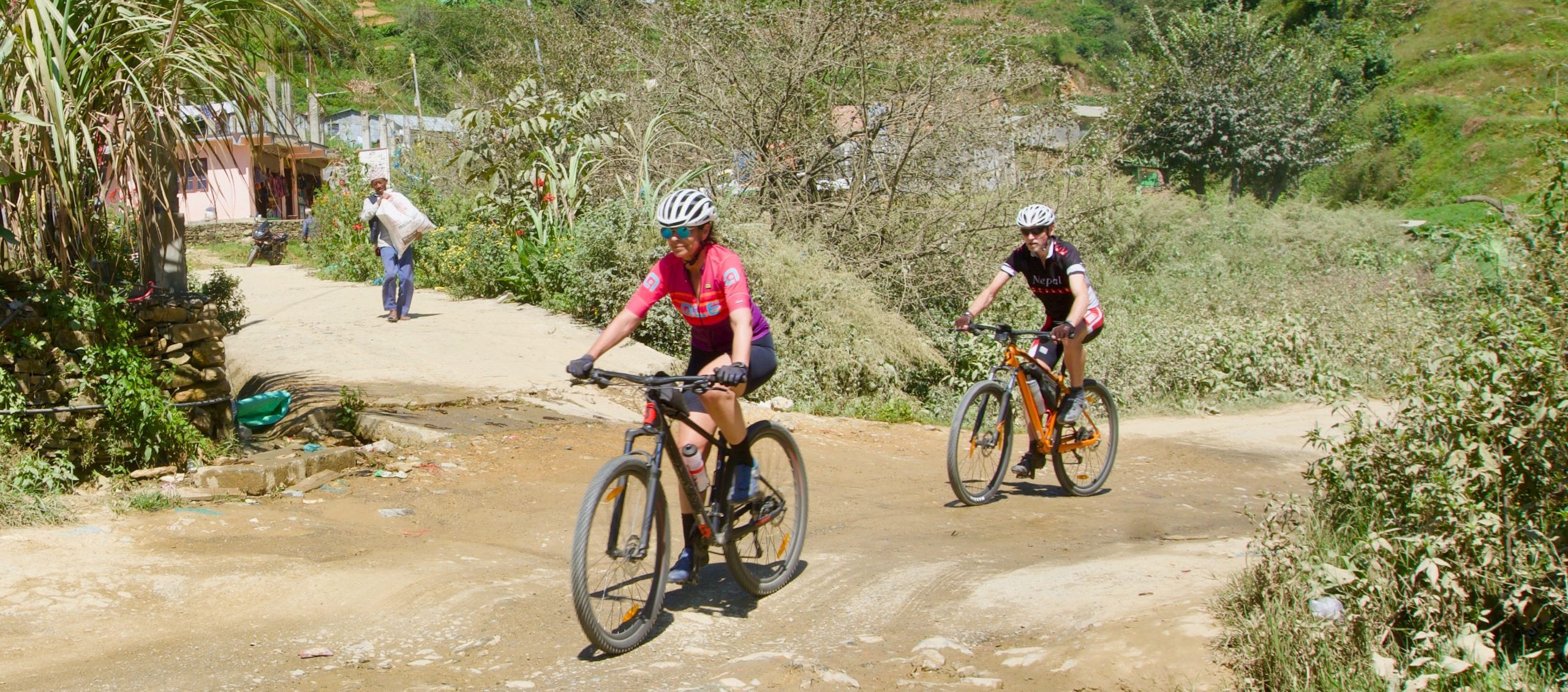
  • Yes, only mountain bikes are suitable for this tour. Although 65% of the route is on roads, many of these are rough, rocky or unpaved. A durable setup is essential for your comfort and safety.
Pre-trip bike servicing
We strongly recommend having your bike fully serviced before travelling. Please make sure:
  • All bearings are properly greased
  • Wheel spokes are correctly tensioned
  • Gear and brake cables are functioning well
  • All nuts and bolts are tightened securely
  • Chain, tyres and quick-release clamps are checked
  • New inner tubes are installed
  • Wheel rims are not excessively worn
  • If you are unsure, ask your local bike shop to carry out a pre-tour inspection.

What to bring
We recommend packing the following essential items:

  • Multi-tool
  • Tyre levers
  • Pump
  • Spare inner tubes
  • Spare spokes
  • Chain links or quick links
  • Spare brake pads (ensure compatibility with disc or rim brakes)
  • Any specialist tools, fluids or parts specific to your bike, such as a bleed kit.

Travelling with your bike
Your bike will need to be packed within your luggage allowance. A bike packed in a cardboard box typically weighs between 15–20 kg, and some airlines may charge excess baggage fees.

If you would prefer not to travel with your own bike, bike hire is available — simply request this when booking.

Money, Currency and Tipping Expand
  • The official currency in Nepal is the Nepalese Rupee (NPR). All transactions must be made in rupees—foreign currency is not accepted in shops, restaurants, or markets.

What to Bring

  • Bring a Visa or Mastercard debit/credit card for ATM access
  • Travellers from the UK, Europe, US, Canada, Australia, and New Zealand should bring USD, EUR, or GBP
  • Bring clean, undamaged notes—torn or worn currency may be refused
  • Cash is essential in rural areas where card use is limited

Where to Exchange

  • At Tribhuvan International Airport (KTM), Kathmandu:
  • Currency exchange booths and ATMs are available in the Arrivals area
  • Exchange a small amount (e.g. NPR 5,000–10,000 / £30–£60) on arrival for immediate use
  • Airport rates are less competitive—better rates are available in Thamel and other tourist areas
  • Your redspokes guide will help you find trusted exchange offices and ATMs during the tour

Spending Money

  • We recommend budgeting around £250 / $320 for personal expenses, including snacks, drinks, and souvenirs throughout the trip.
  • Cash is key, especially in mountain regions and small towns
  • Notify your bank before travelling to avoid card blocks
  • Carry small denominations for convenience
  • Not all ATMs are reliable—your guide will point out the best options
  • Prices in tourist areas may be higher than in rural villages

Staff Tipping

  • Tipping is customary and appreciated as a way to thank the local crew for their efforts.
  • Recommended: £60–£80 per person or $80–$100 equivalent
  • Tips are usually pooled at the end of the tour and distributed fairly by your guide.
    redspokes ensures all staff are paid fairly—tips are an optional, personal thank-you for exceptional service.
Extra Costs & Optional Upgrades Expand
  • Bike hire
  • Single room supplement
  • Extra nights before or after the tour
  • Additional airport transfers
  • Optional excursions or rest-day activities
Solo Travellers Expand
  • Solo travellers are very welcome
  • Prices are based on twin-share accommodation
  • We will pair solo travellers with someone of the same gender where possible
  • Single rooms are usually available for an additional charge
Passport, Visa and Entry Requirements Expand
  • A valid passport is required
  • Passport must usually be valid for at least 6 months after return
  • Visa requirements vary by nationality and can change
  • You are responsible for checking current entry requirements
  • Government travel advice websites are the most reliable source
  • All travellers (except Indian citizens) must have a valid visa to enter Nepal for tourism. Most redspokes customers can easily obtain this either on arrival or by applying in advance online or at a Nepali Embassy/Consulate.
  • Visa on Arrival (Most Common)You can obtain your visa when you arrive at Tribhuvan International Airport in Kathmandu (or certain land border points). The process is straightforward — fill in the form (or complete it online ahead of time), pay the fee, and your visa will be issued at the immigration desk.
  • Online Pre-Registration: You can pre-register your visa application online before travel. This doesn’t replace the visa itself but speeds up the arrival process — you present the online confirmation on arrival and complete the process at immigration.
  • Nepalese Embassy/Consulate. If you prefer or if your nationality requires it, you can apply in advance at a Nepalese Embassy or Consulate (e.g., in London). Applying before travel can save time on arrival.
Health, Insurance and Vaccinations Expand

Travel Insurance

Mandatory for all participants and must cover:

  • Medical expenses and emergency evacuation
  • Cycling and adventure activities
  • Loss or damage to luggage and hired equipment
  • Trip cancellation or curtailment
  • Insurance should be taken out at the time of booking

Health & Vaccinations

  • Consult your GP or travel clinic at least 8 weeks before departure
  • Follow advice from official travel health authorities
Climate and hydration Expand
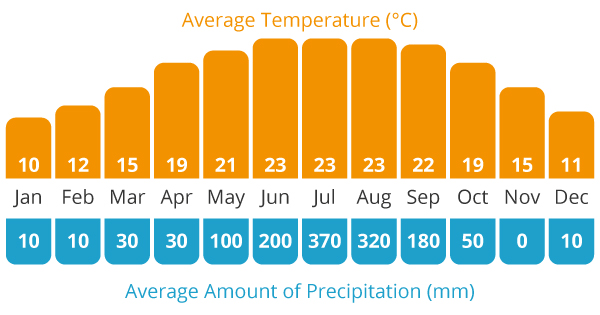
  • Our Nepal tours run during the best cycling and trekking seasons — March, April and November.
  • Spring (March & April) brings warm daytime temperatures, generally clear mornings and spectacular scenery. Hillsides burst into colour as rhododendrons bloom, and snow-capped peaks provide a dramatic backdrop. Occasional light showers are possible, but conditions are typically excellent for riding.
  • Autumn (November) offers crisp air, stable weather and superb mountain views following the end of the monsoon. Days are warm and sunny, while evenings can be cooler at higher elevations — perfect for clear Himalayan panoramas.
  • The monsoon season (June–August) brings heavier rainfall, lush green landscapes and reduced mountain visibility, which is why we avoid running tours during this period.

Staying Hydrated on Hot Rides – 6 Tips for Cyclists
As a cycling company, we know how important proper hydration is—especially when you’re out riding in hot conditions. Below are some general hydration tips that riders find helpful for staying fuelled and feeling strong on the bike.

Please note: We are not medical professionals and this information should not replace advice from a qualified healthcare provider. Each cyclist is different, so if you have specific health concerns or conditions, it is always best to consult your doctor and adhere to their advice.

1. Prioritize Gut Health

  • Why it matters: A healthy gut boosts absorption of water and nutrients.
  • How to do it: Feed your microbiome with probiotics (yogurt, kefir, sauerkraut) and prebiotics (garlic, onions, bananas) to keep digestion and hydration strong.

2. Time Your Hydration

  • Why it matters: When you drink can matter as much as how much.
  • How to do it: Start the day with a big glass of water—add lemon or a pinch of sea salt for an extra boost.

3. Hydrate Beyond Water

  • Why it matters: Water isn’t the only way to stay hydrated.
  • How to do it: Include coconut water, bone broth, or other nutrient-rich drinks to hydrate and replace electrolytes—especially during long rides or after heavy sweating.

4. Don’t Forget the Minerals

  • Why it matters: Minerals like sodium, calcium, and magnesium help retain water.
  • How to do it: Eat mineral-rich foods such as salted nuts, seeds, and dairy—or take a quality mineral supplement if needed.

5. Absorb Water Better

  • Why it matters: Drinking water too fast can flush out nutrients and reduce absorption.
  • How to do it: Sip steadily throughout the day. Add a pinch of sea salt to your bottle and eat water-rich foods like watermelon, cucumbers, and pineapple.

6. Keep Your Electrolytes in Check

  • Why it matters: Electrolytes regulate fluid balance, nerve function, and muscle contractions.
  • How to do it: Eat potassium- and magnesium-rich foods like bananas, avocados, and leafy greens. Add electrolyte tablets or sea salt to your water after intense sweat sessions.
Nepal tour
Equipment & Packing List Expand

In terms of clothing, we have provided below a rough guide as to what to bring. This guide is entirely flexible and should be tailored to your specific needs.

  • Cycle Helmet (mandatory and to be worn at all times when cycling)
  • Bike lights (front and rear)
  • Sunglasses
  • Water bottles or camelbak
  • Base layer tops
  • Fleece jacket/ pullover
  • Waterproof/ Windproof cycling jacket (breathable fabric)
  • Baggy padded cycling shorts
  • Cycling shoes
  • Long trousers
  • Thermal long sleeved top
  • Lightweight socks & heavyweight socks
  • Trekking Shorts
  • Trousers
  • T-shirts– lightweight
  • Long-sleeved shirt
  • Fingerless cycling gloves
  • Warm gloves
  • Warm fleece hat
  • Buff
  • Towel
  • Lipbalm/ sunscreen
  • Dust mask
  • Headlamp & spare bulbs/ batteries
  • Sleeping bag liner
  • Essential items for rest day activities at Chitwan Park

Our guides carry first aid supplies, however we recommend you bring your own first aid kit which should contain the following item; 

  • Paracetamol/ Ibuprofen (or whatever you prefer for headache)
  • Lomotil or Diacalm
  • Rehydration salts (Dioralite)
  • Antiseptic cream
  • Throat lozenges
  • Plasters (band aids)
  • Nasal spray
  • Eye drops
  • Ear plugs
  • Anti bacterial hand wash
  • Antiseptic wet wipes
  • Insect Repellent

Miscellaneous

  • Energy Bars (gels, power bars)
  • Energy/recovery drinks
  • Camera
  • Passport photographs
  • Colour photocopy of photograph page in passport
  • Travel adapter (universal)
Electricity Supply – Plug and socket types Expand

Plug types used in Nepal:

  • Type C – Two round pins (common in hotels)
  • Type D – Three round pins in a triangular pattern (older style, still widely used)
  • Type M – Larger three round pins (less common but found in some buildings)
  • Most hotels in Kathmandu and Pokhara use Type C or D sockets. In more rural areas, you may encounter Type D or M.
  • Voltage: 230 V
    Frequency: 50 Hz
Country Profile Expand
  • Federal Democratic Republic of Nepal
  • Capital: Kathmandu
  • Population 31 million
  • Area 147,181 sq km (56,827 sq miles)
  • Major languages Nepali
  • Major religions Hinduism, Buddhism
  • Life expectancy 68 years (men), 71 years (women)
  • Currency Nepalese rupee

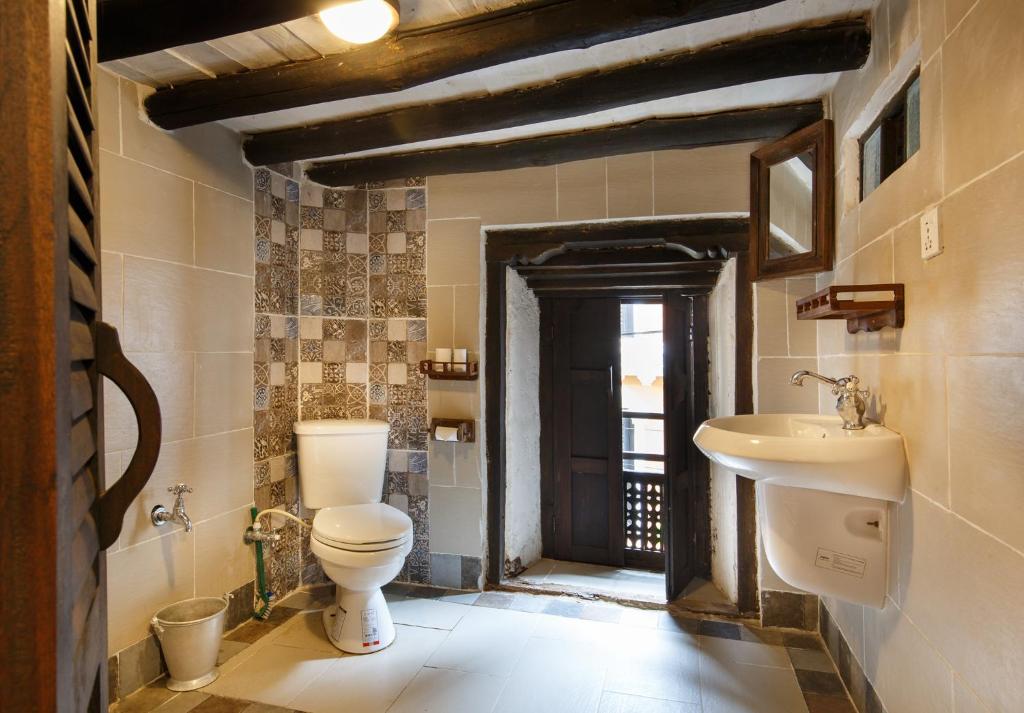
Accommodation

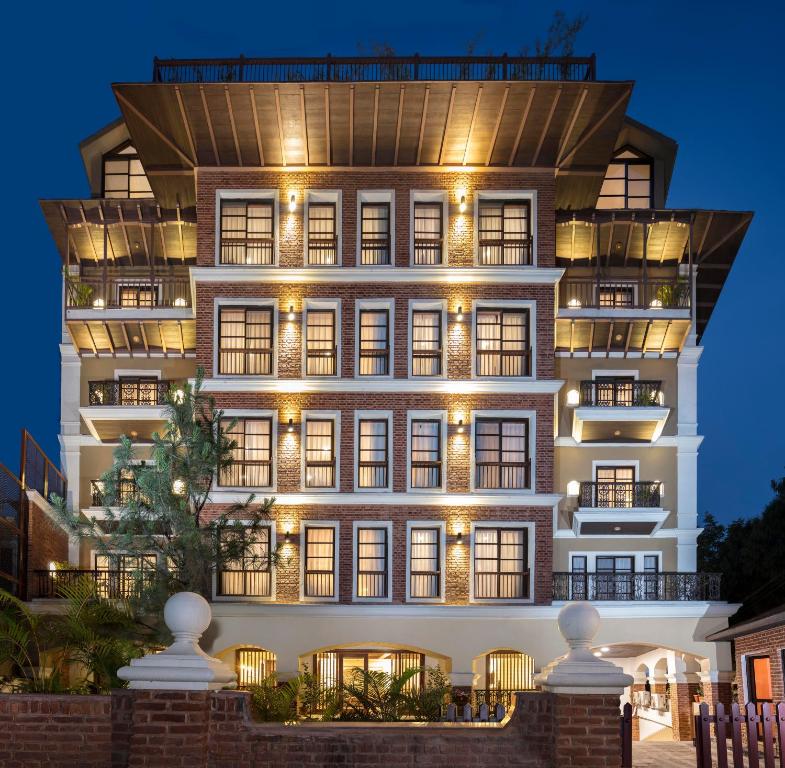
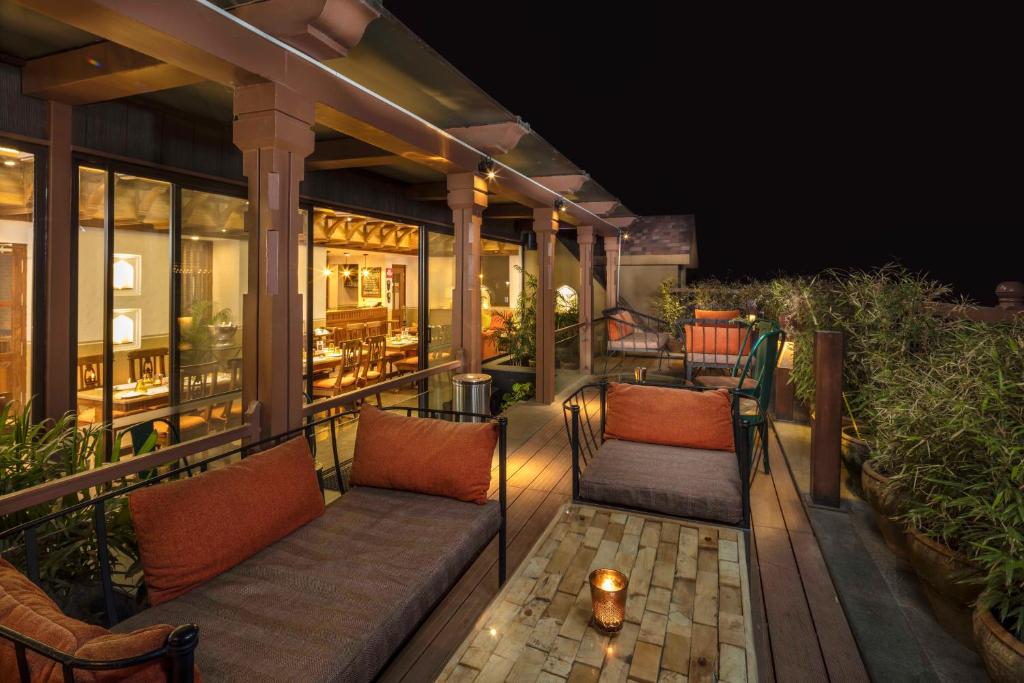
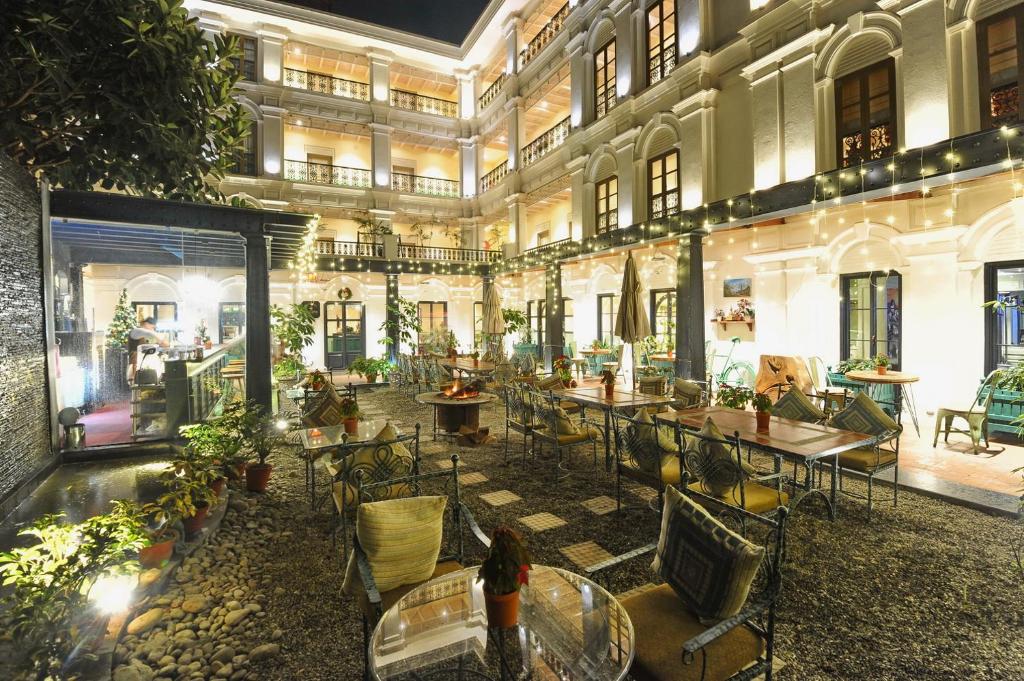
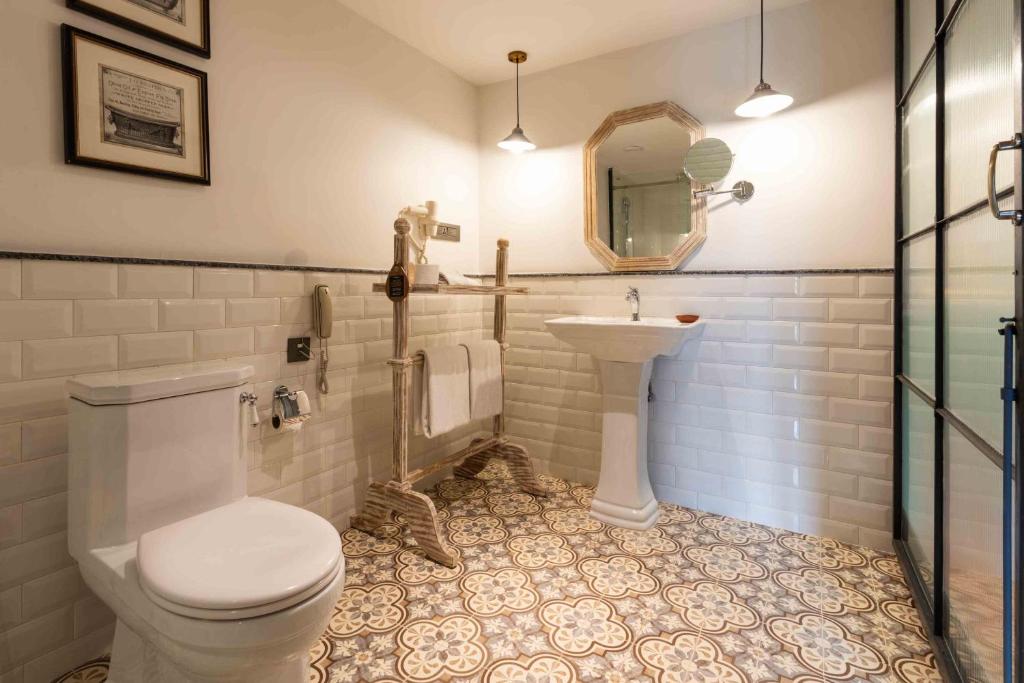
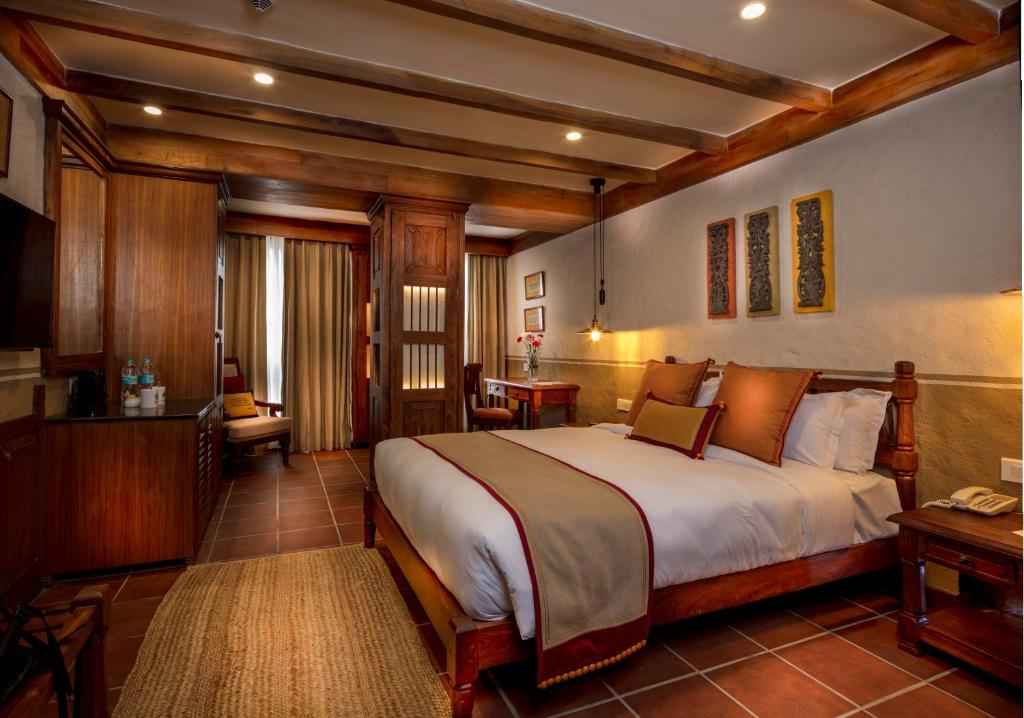
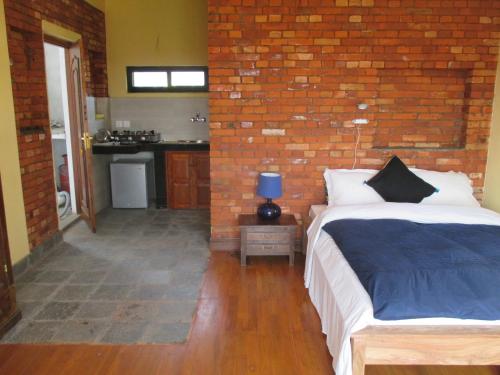
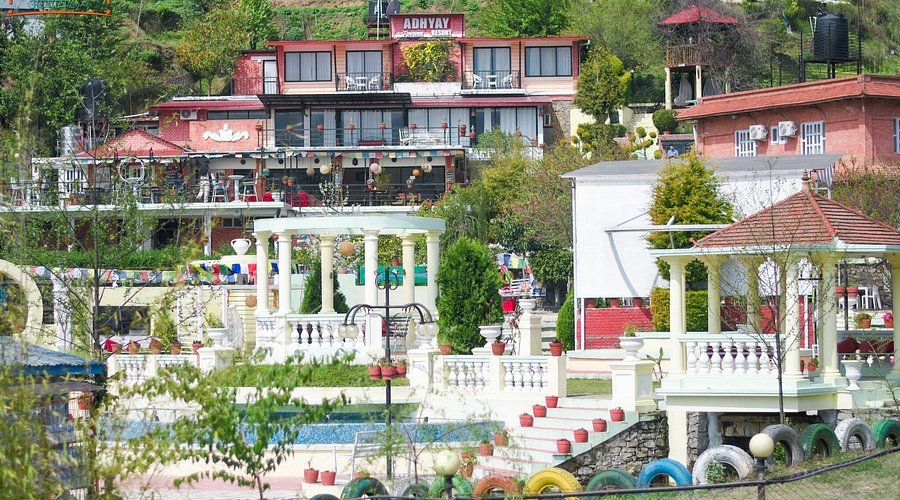
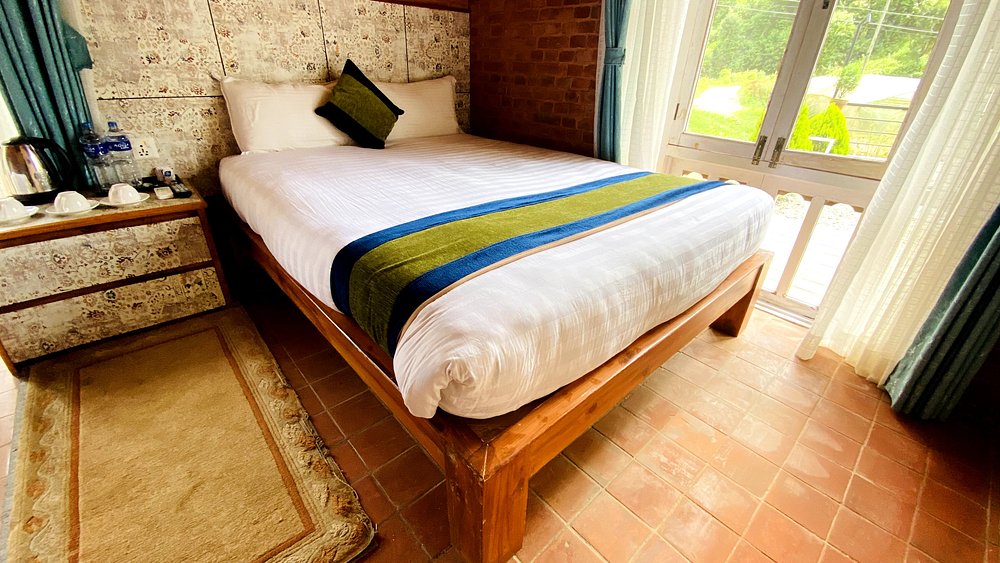
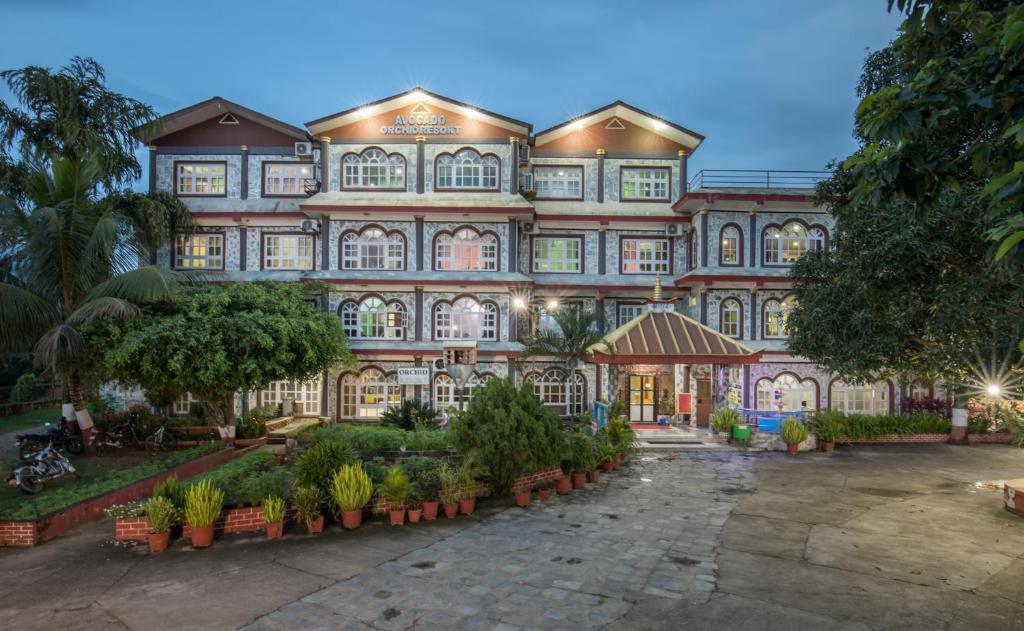
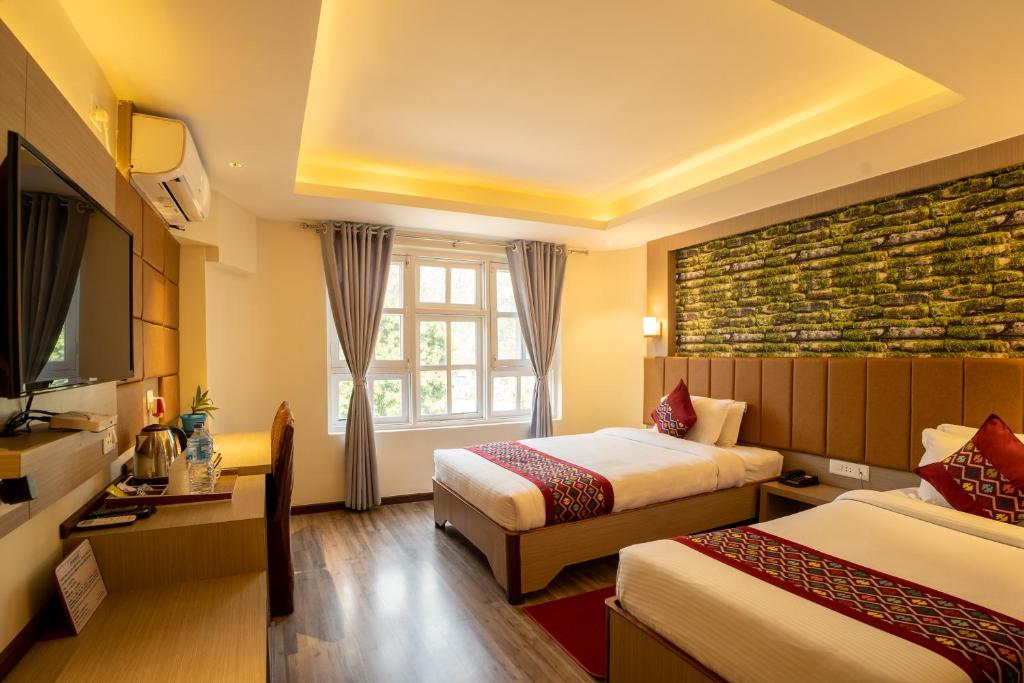
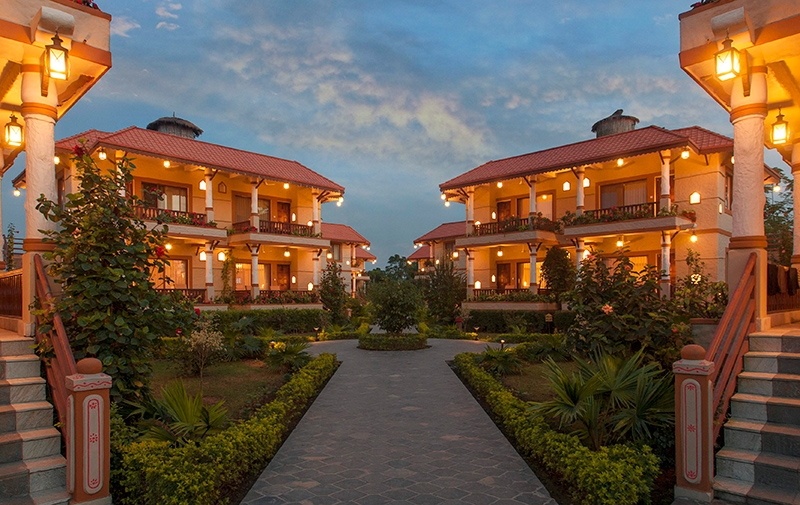
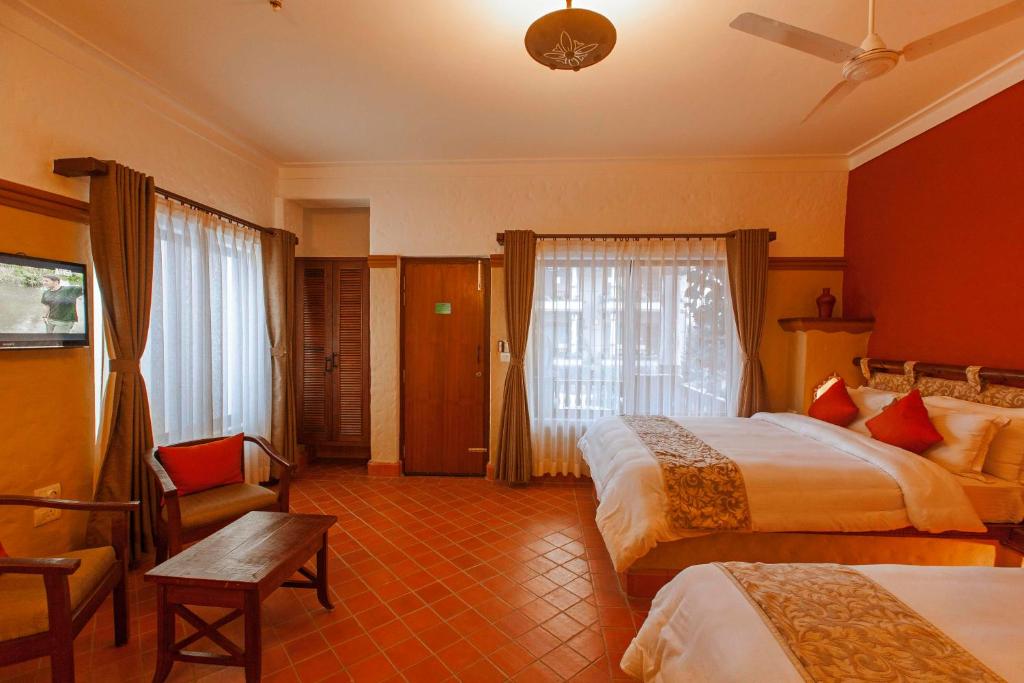
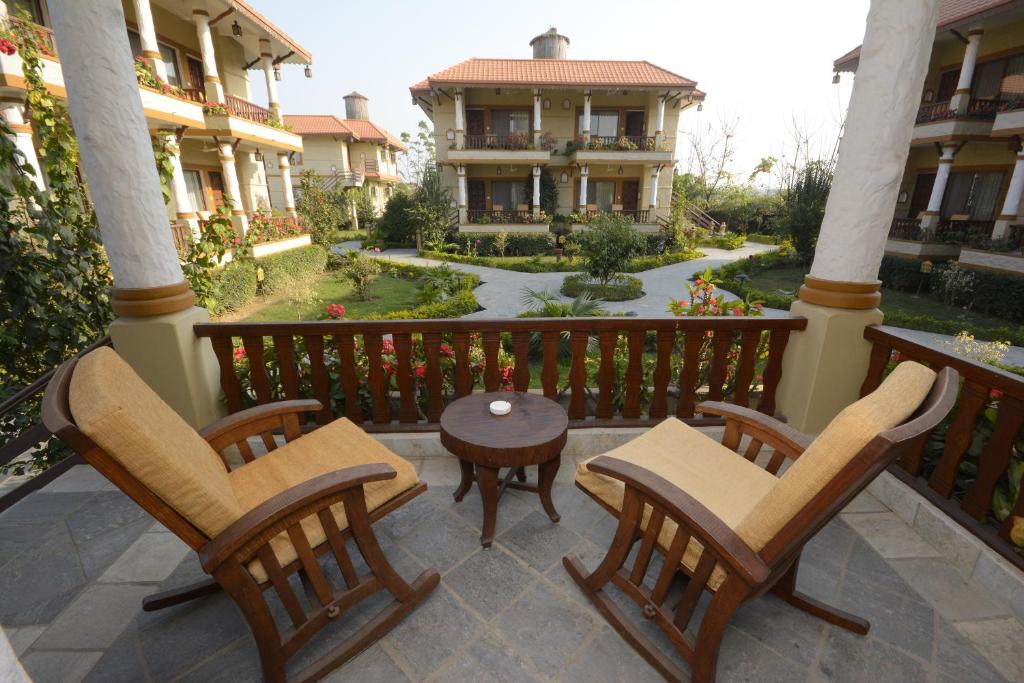
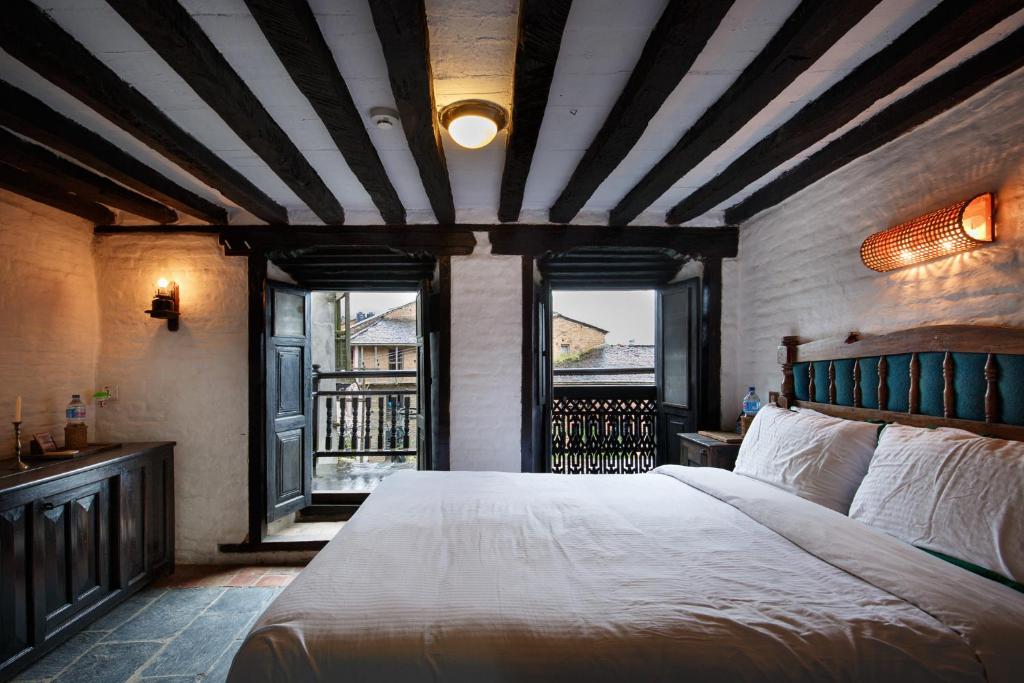
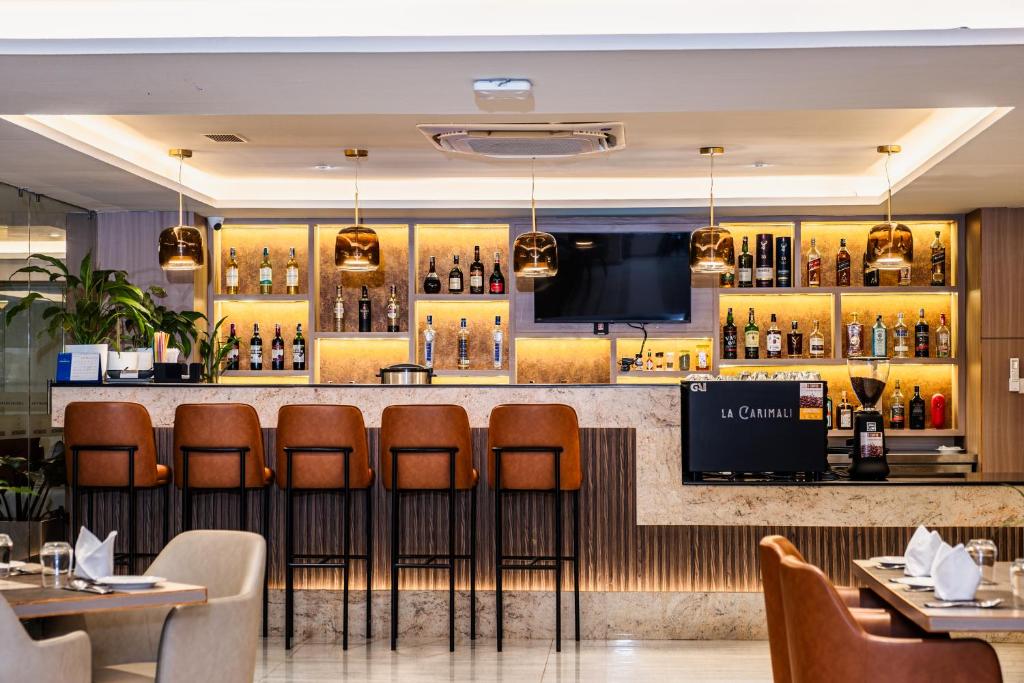
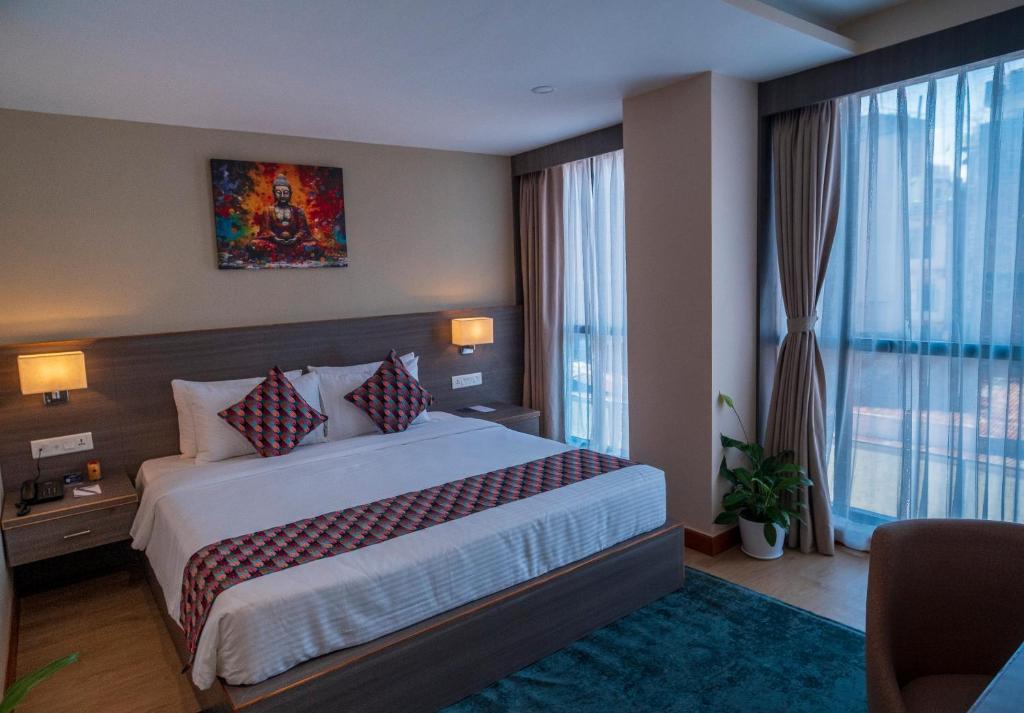
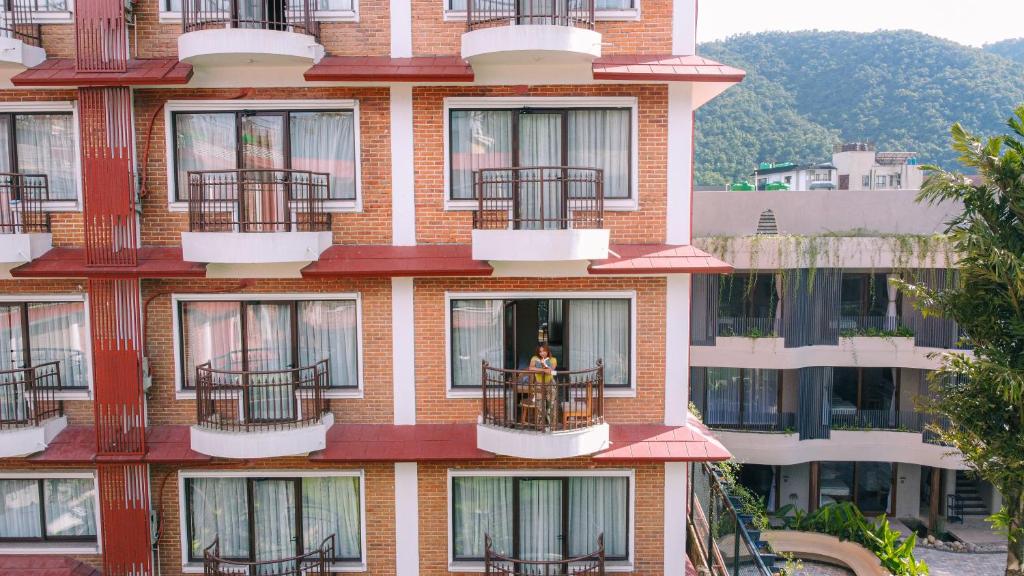
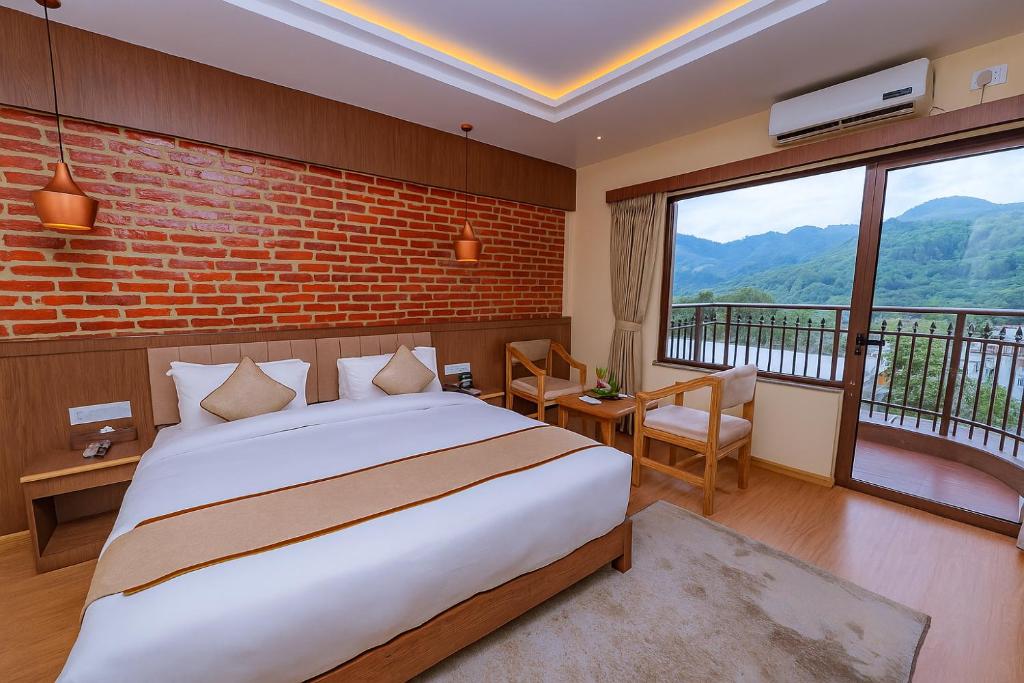
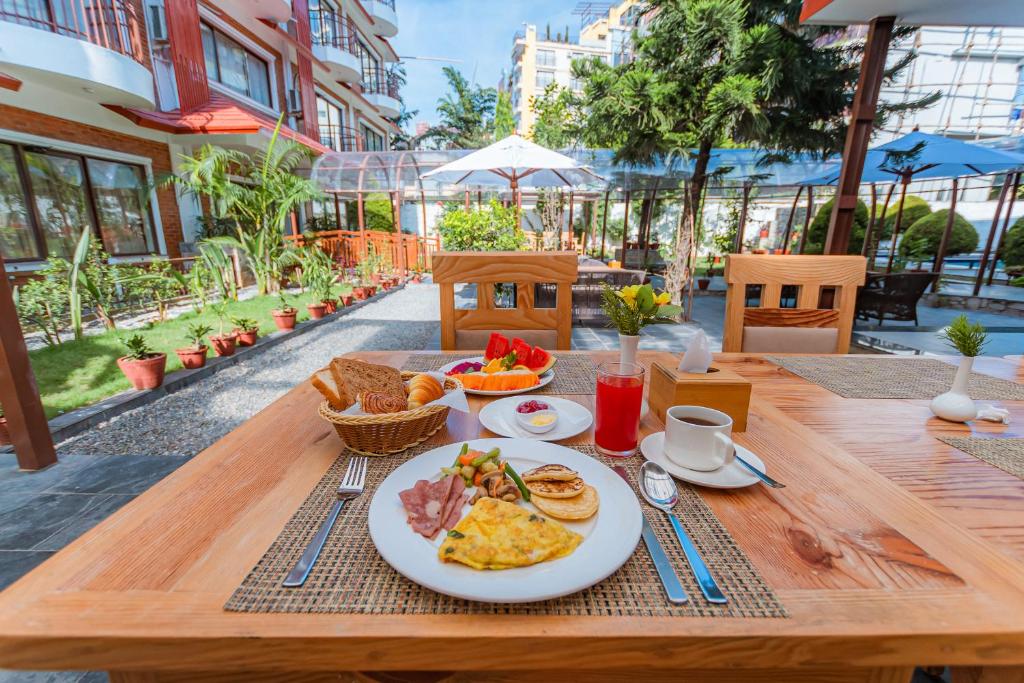
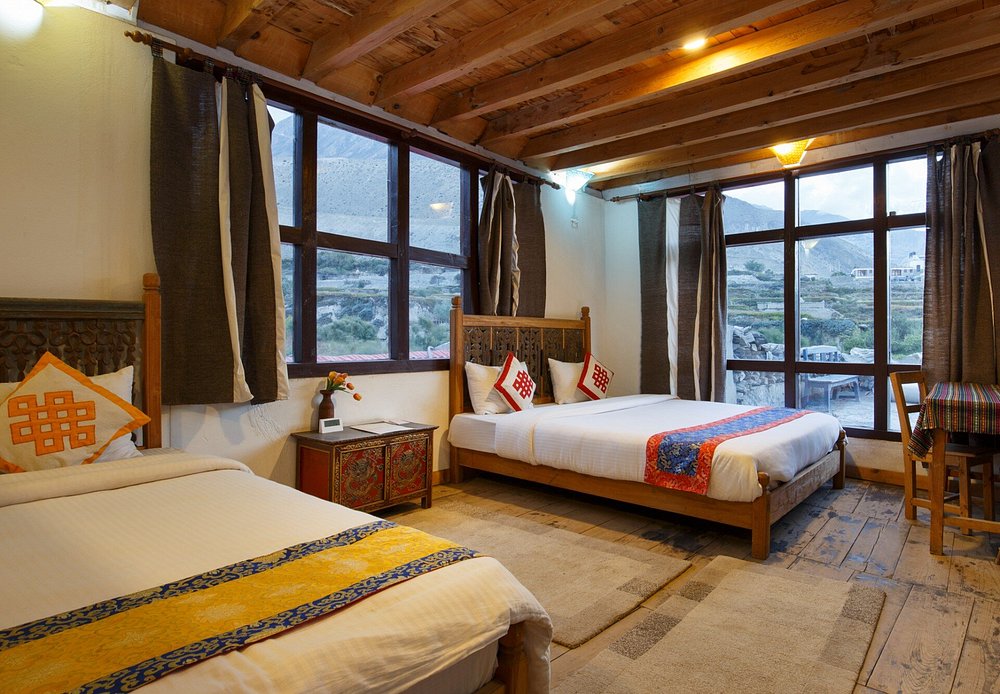
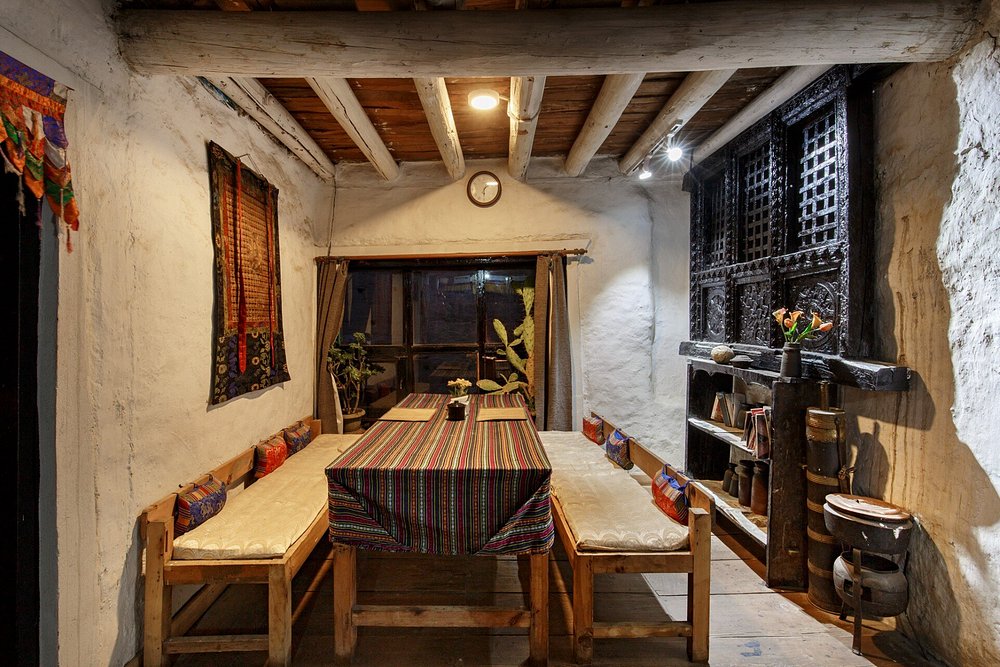
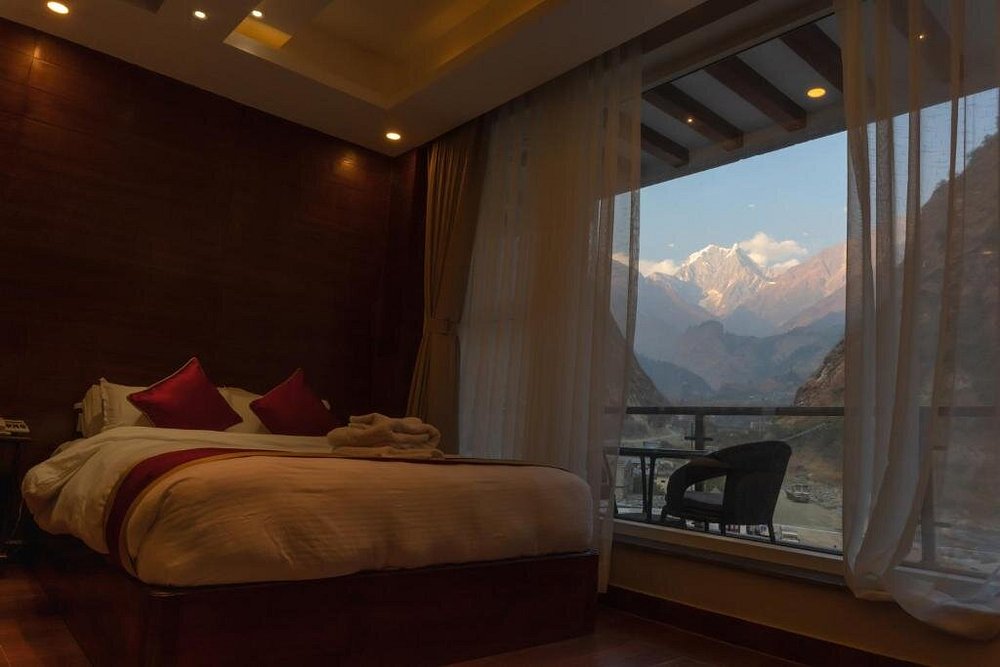
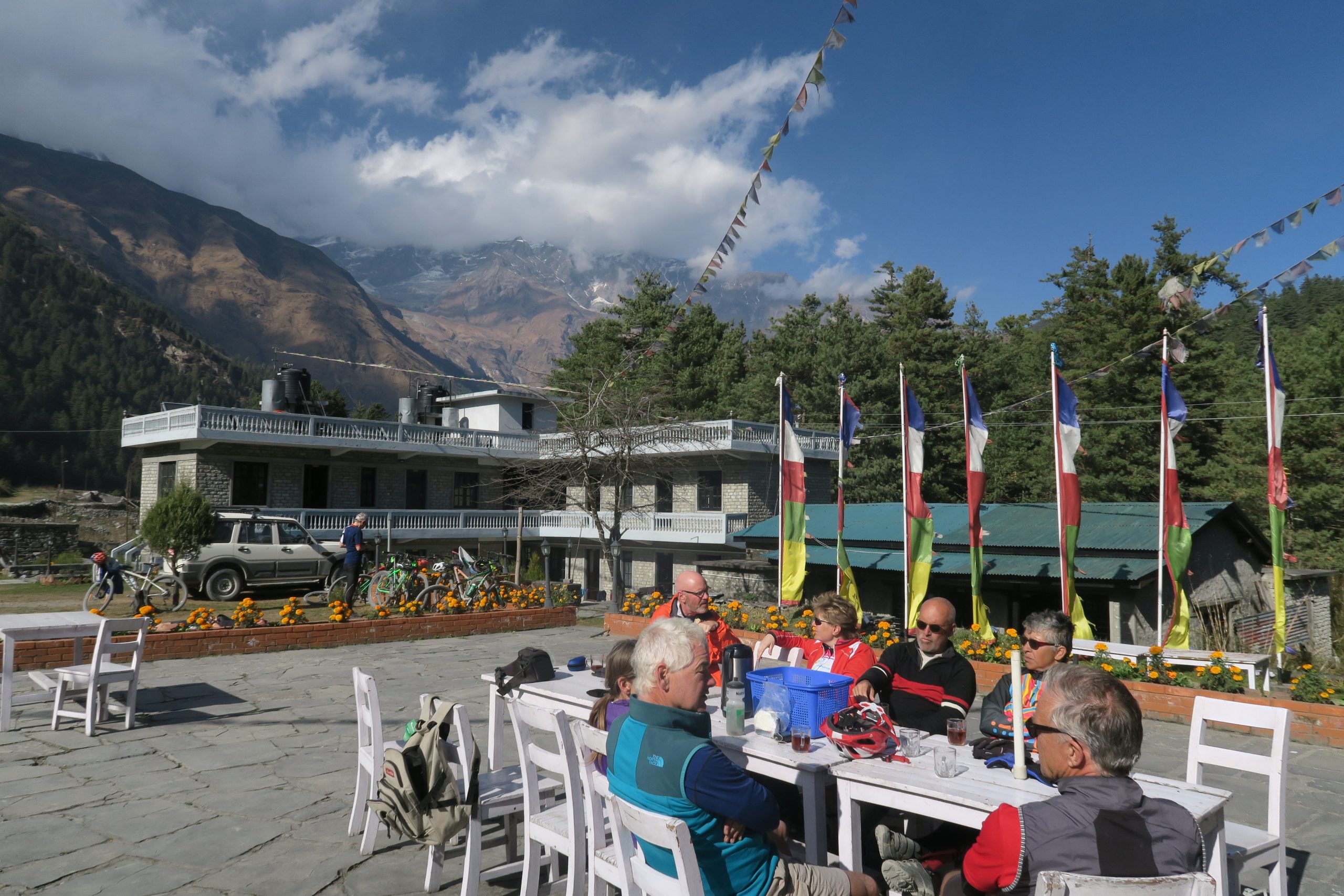
This tour uses a consistently comfortable mix of boutique city hotels, characterful heritage inns and scenic resort-style properties, with all nights spent in hotels or lodges (no camping).

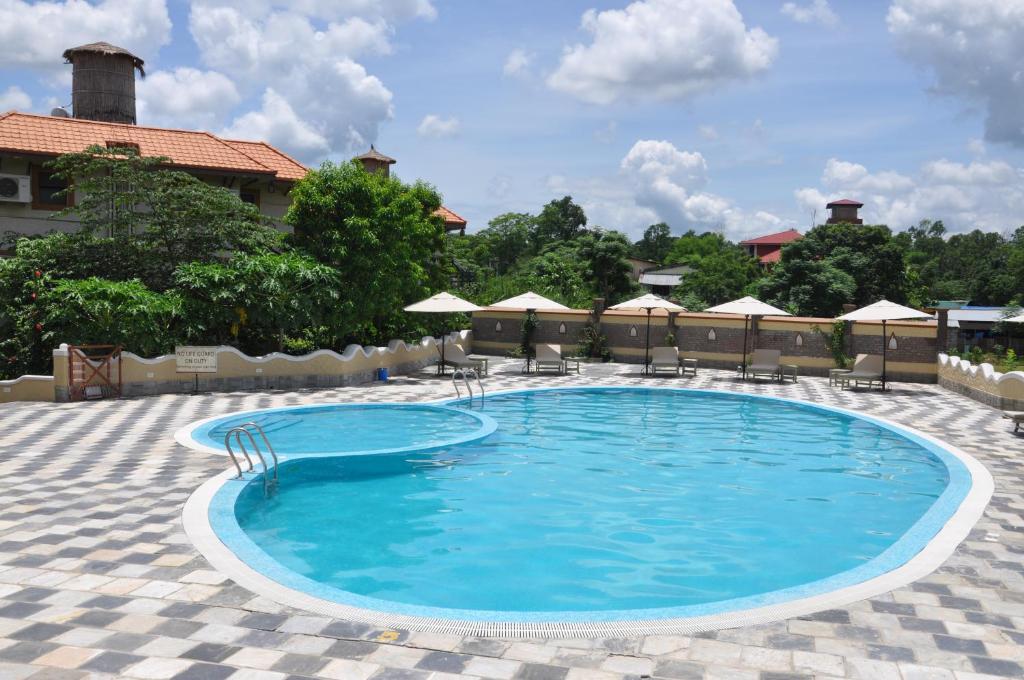
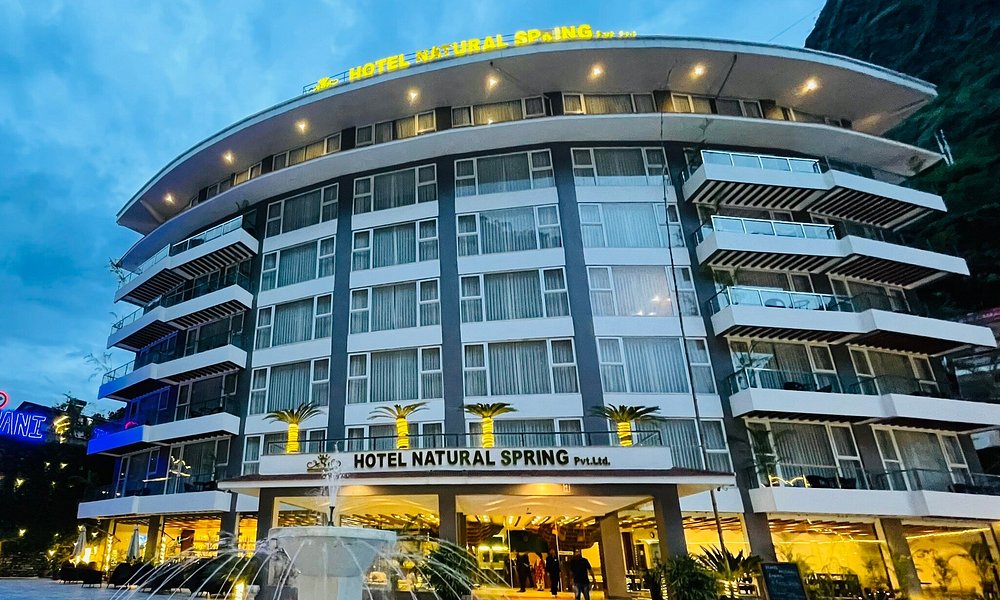
We begin in Kathmandu at Nepali Ghar, a fantastic boutique hotel in the heart of the city, before moving to peaceful countryside resorts such as Hotel Swiss / Swiss Resort Dakshinkali and Lhamhendo Retreat or Om Adhaya Retreat Resort in Palung. As we descend to the Terai, nights are spent in solid mid-range hotels including Hotel Orchid in Hetauda and the well-regarded Green Park in Chitwan, offering a higher standard and a relaxing base close to the national park.

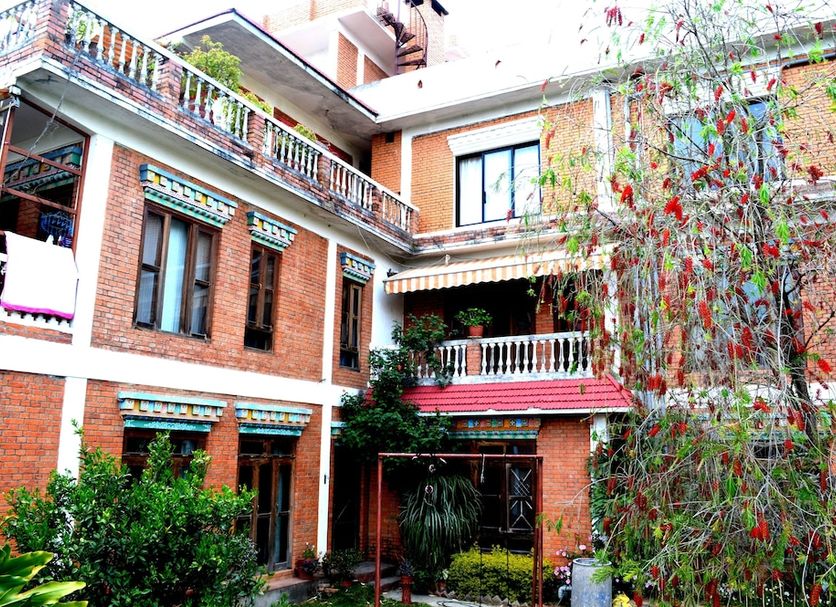
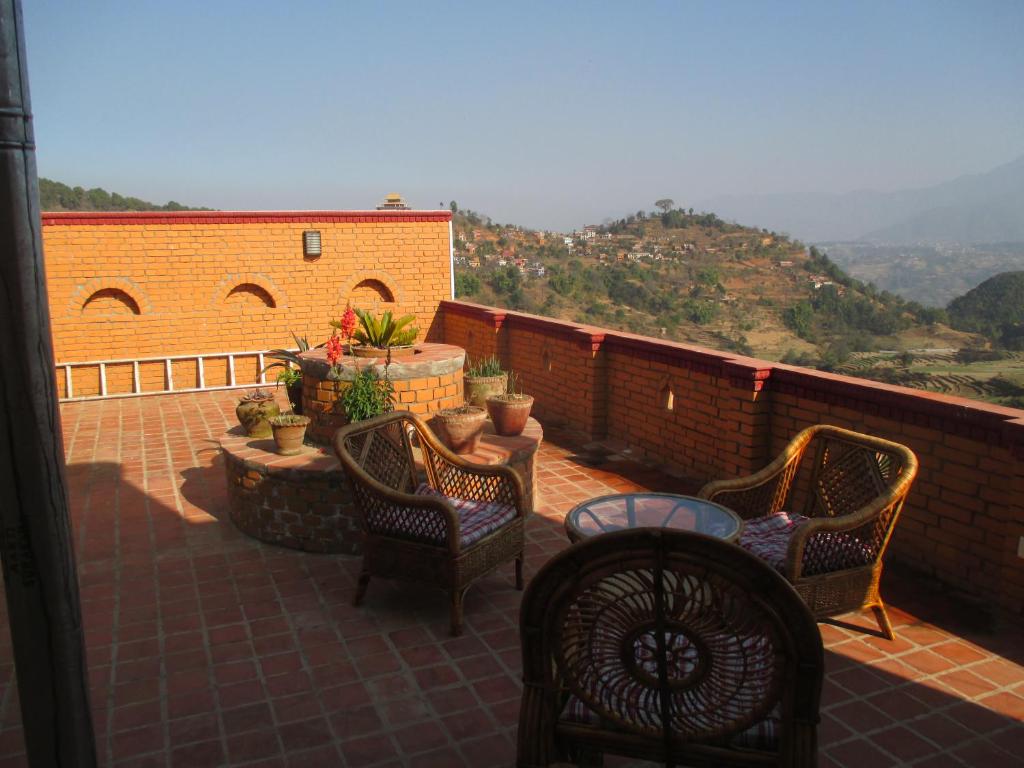
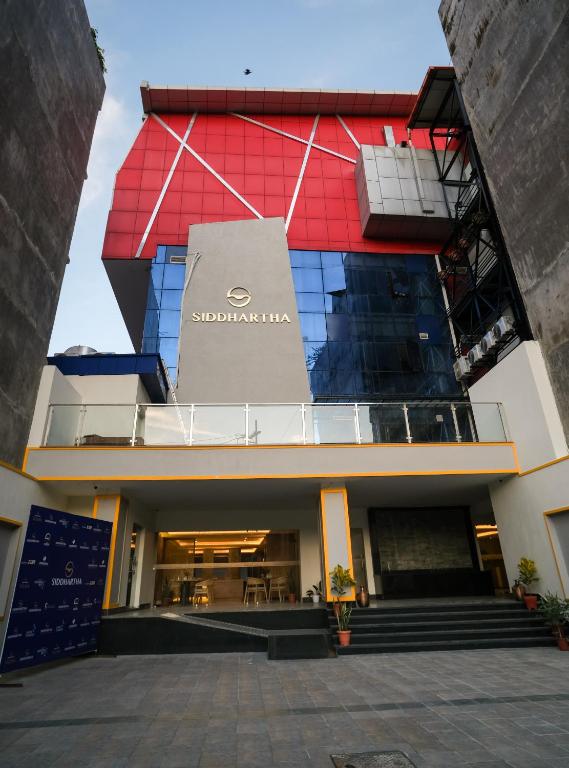
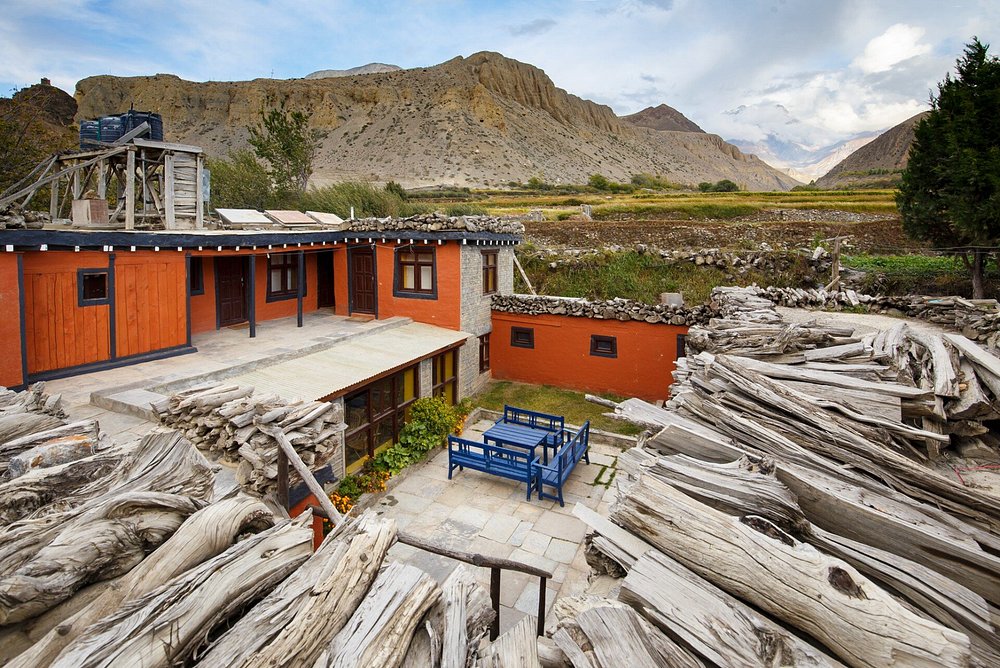
In the hills, we stay in atmospheric smaller properties like The Old Inn in Bandipur and Siddhartha Resort in Damauli, then enjoy multiple nights in Pokhara at Temple Himalaya, a comfortable lakeside base. Higher up on the Muktinath extension, accommodation becomes a little simpler but still welcoming, with traditional-style mountain hotels such as Red House in Kagbeni and Spring Resort in Tatopani reflecting the remoteness of the Kali Gandaki valley.

Expect:

  • Comfortable hotels throughout
  • A mix of boutique city and lakeside stays, heritage-style inns in Bandipur and Palung
  • Simpler but friendly mountain hotels in Kagbeni and Tatopani
  • All properties chosen for character, location and a good balance of comfort and adventure

Dates & Prices

Start Date End Date
Price
Availability
 
08 Nov 2026 21 Nov 2026
£2,295
Guaranteed to run (limited places)
07 Nov 2027 20 Nov 2027
£2,395
Available

*Package Total: £0

FLIGHTS:
redspokes holidays DO NOT include flights to and from the designated cycle tour countries, however, some bike tours contain internal flights that are included in the price. We recommend looking at www.kayak.co.uk or www.opodo.co.uk for an idea of times and prices.

PLEASE NOTE:
Please read through the Essential Information to see exactly what the price includes and excludes before making a booking.

AVAILABILITY MEANINGS:
Guaranteed to run (limited places) – trips are open for booking and confirmed to run but have a limited number of spaces available.
Guaranteed to run – trips are open for booking and confirmed to run.
Available 2 more to guarantee – trips are open for booking but not yet confirmed. 2 more bookings will guarantee the running of this tour.
Available – trips are open for booking but not yet confirmed.
Contact us – If you would like to book this tour, please contact us.
Fully Booked – trips now closed for booking.

Chat on WhatsApp