Albania Classic
Discover Albania by bike on quiet roads from lakes and mountains to the Ionian coast, combining culture, scenery, sunshine and warm hospitality.

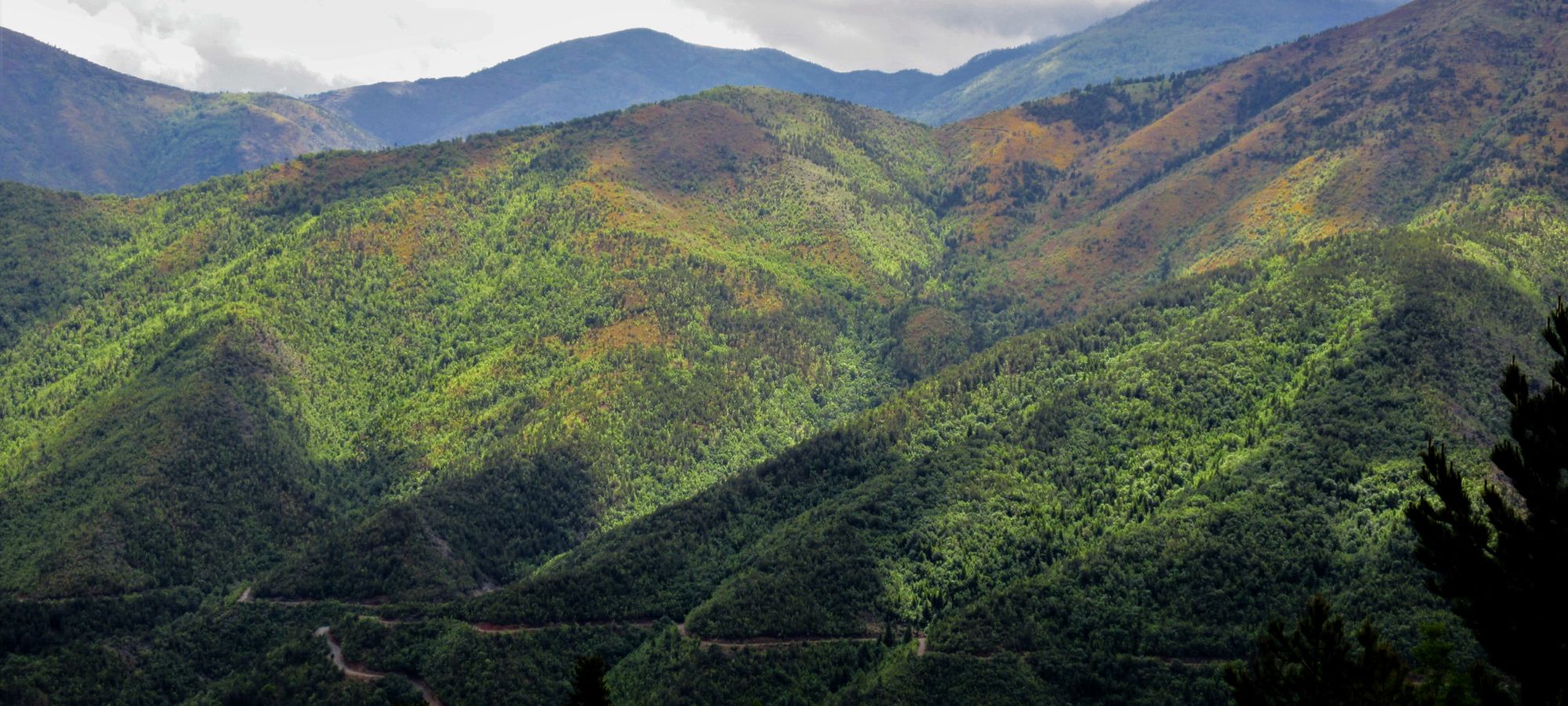
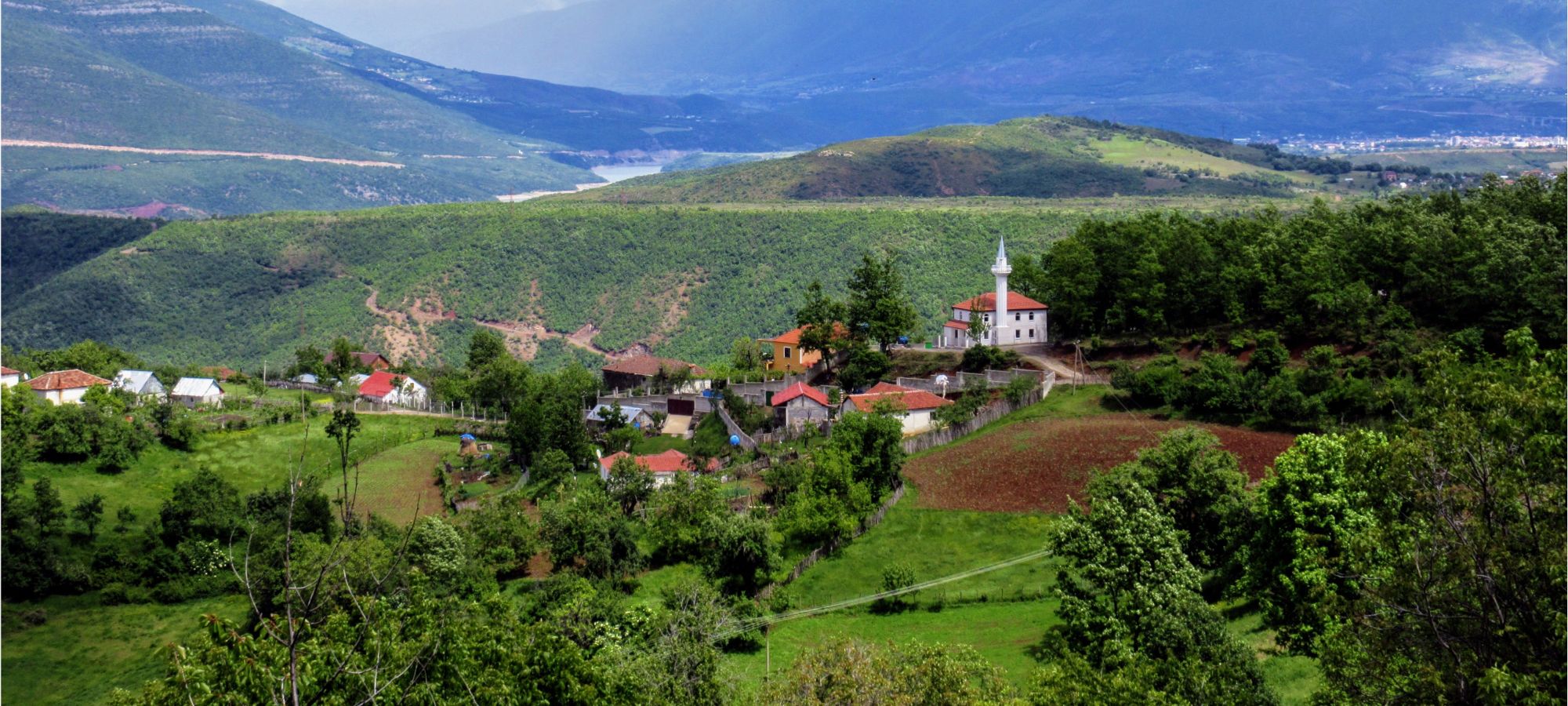
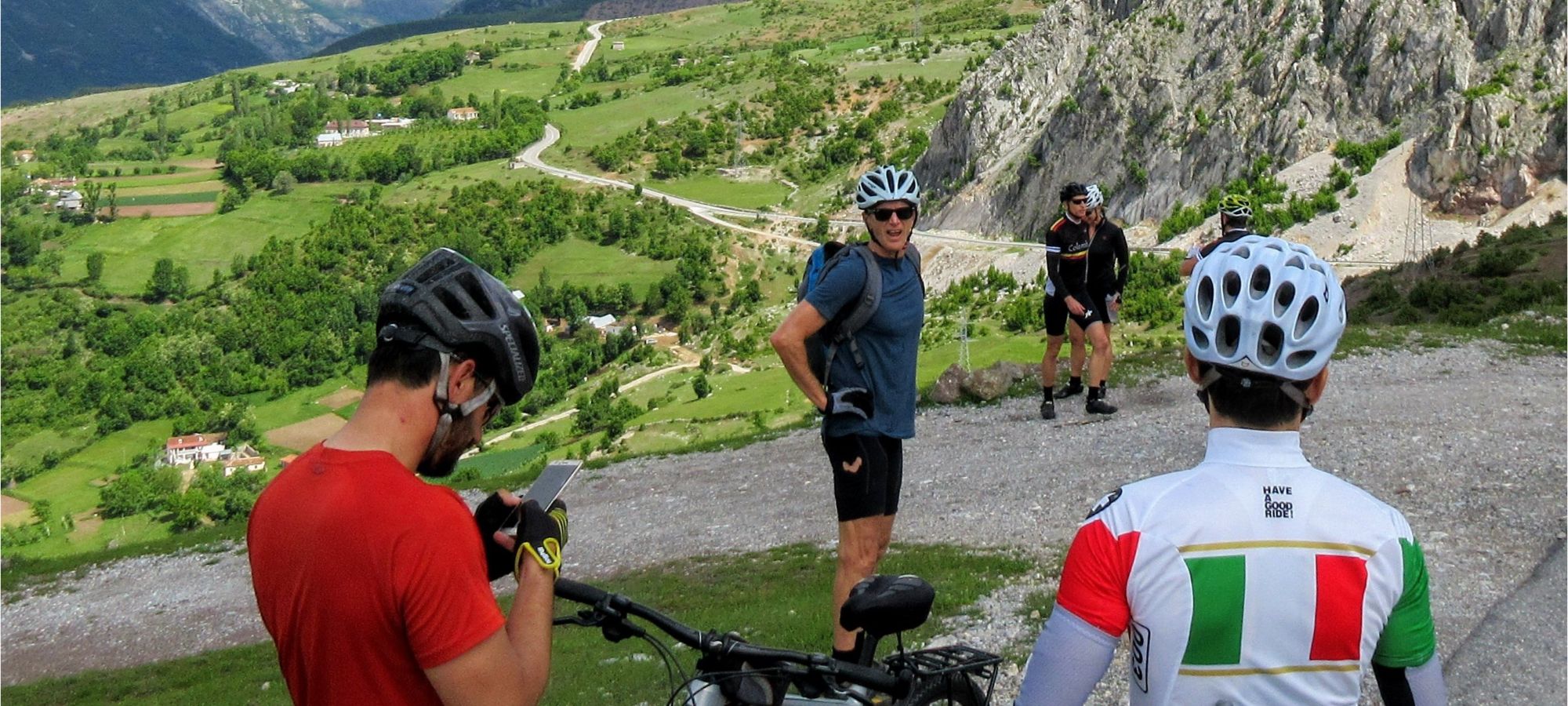
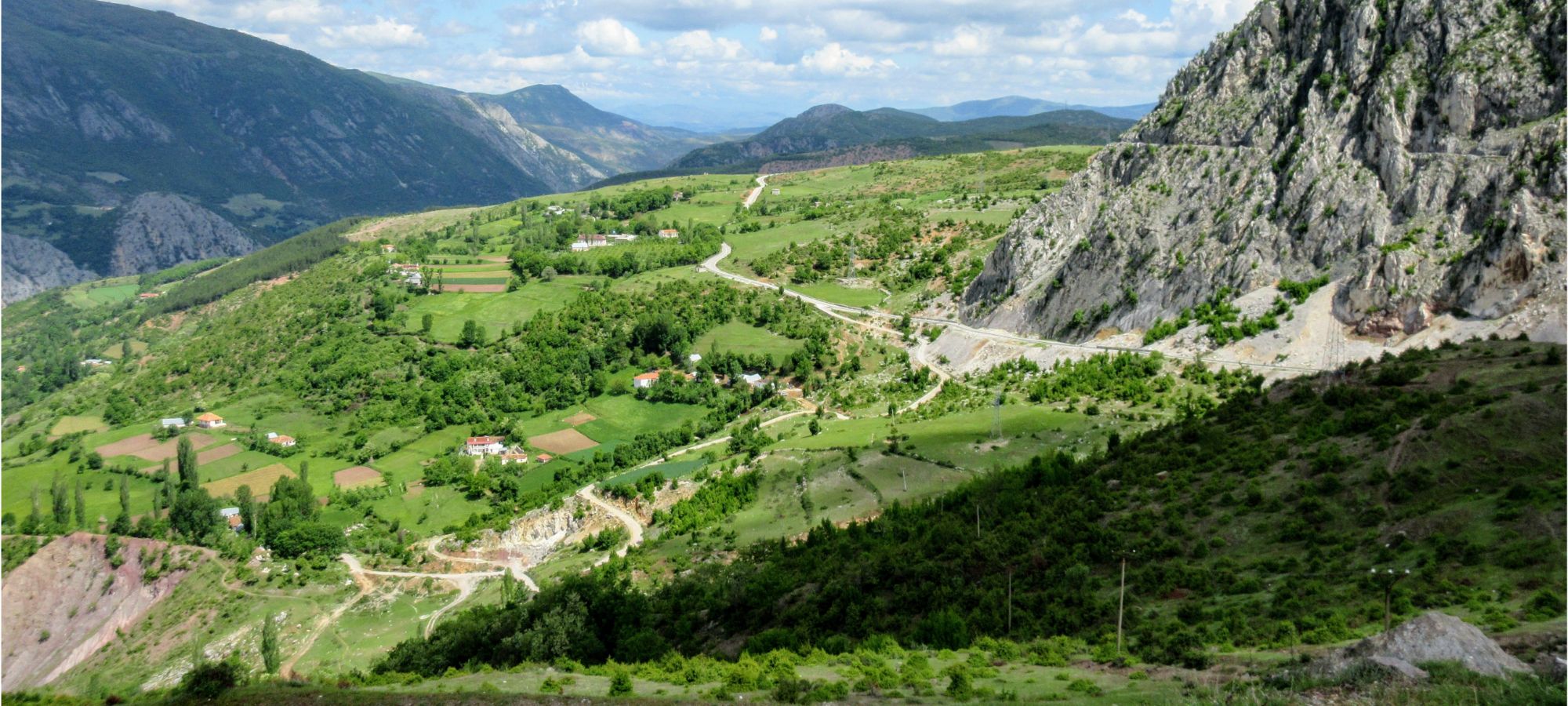
This North to South cycling journey reveals Albania at its most spectacular, from dramatic mountain landscapes and remote highland passes to the sun-washed shores of the Adriatic and Ionian seas. Riding through a country rich in history and natural beauty, the route combines challenging terrain with cultural discovery, warm local hospitality, and ever-changing scenery. Largely undiscovered by cyclists, Albania offers a rewarding and authentic adventure at the very moment its appeal is beginning to shine.
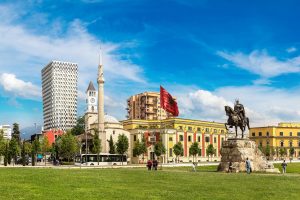
Founded in the 17th century by a feudal lord, Tirana began as a modest settlement centred around a mosque, a bakery and a hamam, or Turkish bath. It later became Albania’s capital and is now the country’s energetic political, cultural and social heart.
For almost 50 years, Albania was one of Europe’s most isolated nations under communist rule. Today, Tirana tells that complex story through its architecture, broad boulevards, public squares and colourful street art, where Ottoman, Italian and communist-era influences sit side by side.
A third of Albania’s population now lives in the capital, and with an average age of around 30, Tirana has a youthful, forward-looking feel. English and Italian are commonly spoken as second languages, and the compact city centre is easy to explore on foot.
Highlights include Skanderbeg Square, the 1789 Et’hem Bey Mosque, the 1830 Sahat-Kulla Clock Tower, the Puppet Theatre — once home to King Zog’s parliament — and the Peace Bell, made from spent cartridge shells as a reminder of Albania’s turbulent past. For cafés, restaurants and nightlife, head to Blloku, formerly the restricted district where communist leaders lived under close protection.
For a wider view of the city and surrounding landscape, take the cable car up Mount Dajti, where panoramic views stretch across Tirana and the mountains beyond.
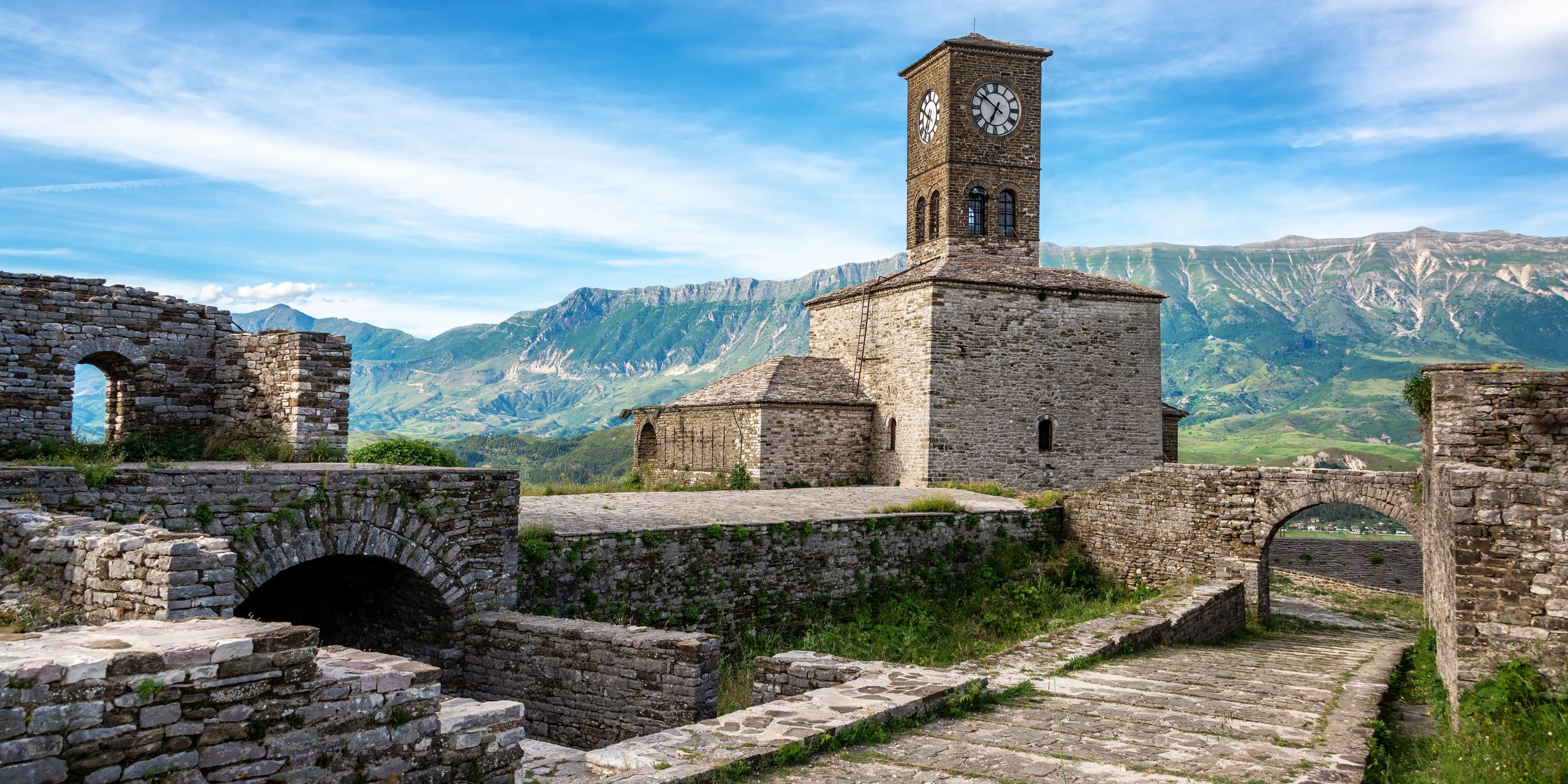
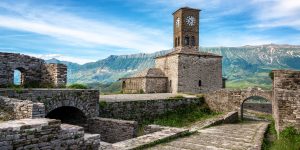
Historic Gjirokaster the ‘City of Stone’, is a well-preserved Ottoman town and one of Albania’s three UNESCO World Heritage sites. Built by farmers of a large estate, it is located between the Gjerë Mountains. Perched on the steep side of the Drino valley, overlooking a landscape framed by snow-capped mountains. With steep cobbled streets, the city comprises hundreds of Ottoman-style tower houses with distinctive stone roofs, wooden balconies and whitewashed stone walls. Gjirokastër is the birthplace of former Albanian communist leader Enver Hoxha and renowned writer Ismail Kadare.
Towering over the town is Gjirokastër Fortress a vast castle, the second largest in the Balkans. Within the castle is an armaments museum of mostly post-war era weapons, photographs. There are numerous other chambers, some in ruins, open for exploration. Underneath the castle is the recently discovered underground bunker built in the Cold War. There is an Artisan centre located nearby where you can buy many souvenirs and traditional crafts
Also in the city are the Seven Fountains, the Mechite Mosque Remains, and the Hamams public bath, with a distinctive cone shaped roof. The Meçite Hamam is one of 10 ancient public baths preserved in Albania. The fountains and the exterior of the Hamams have been recently restored.
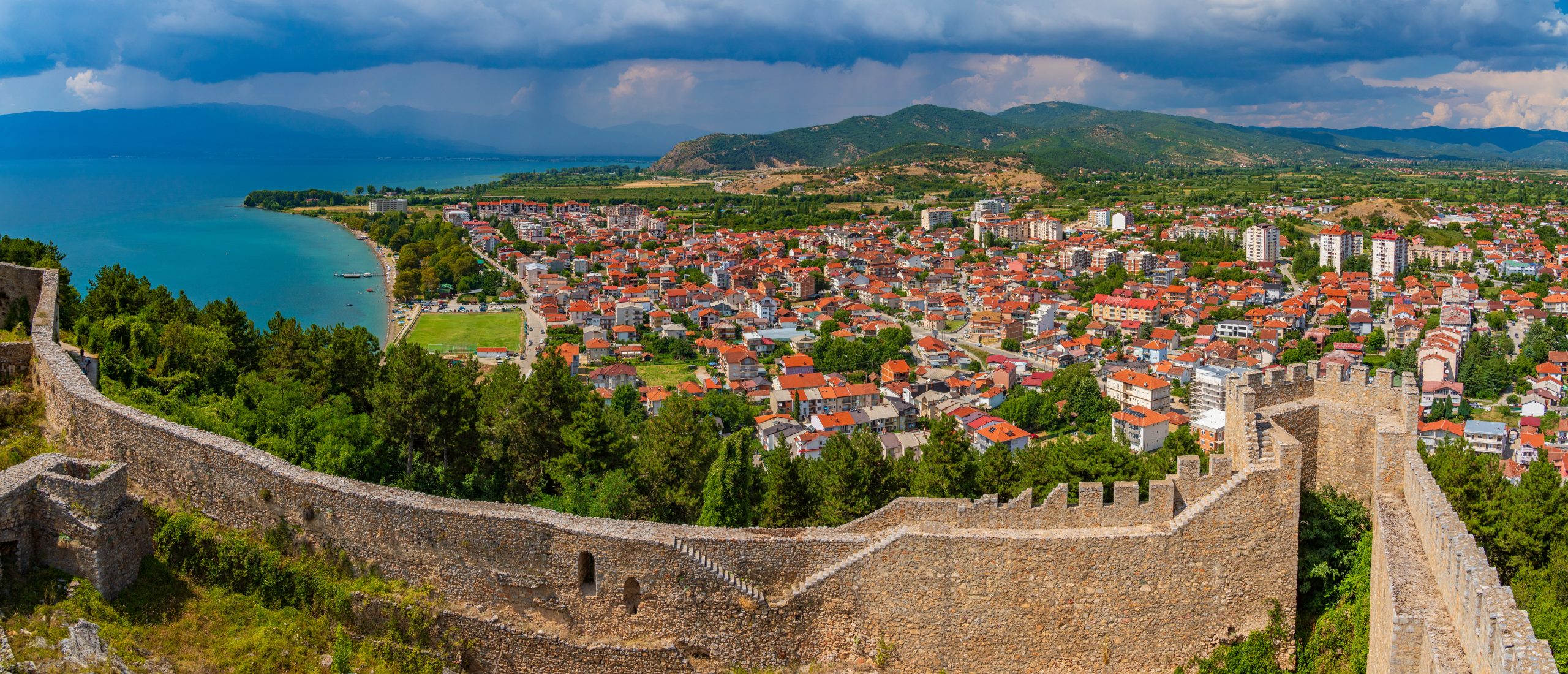
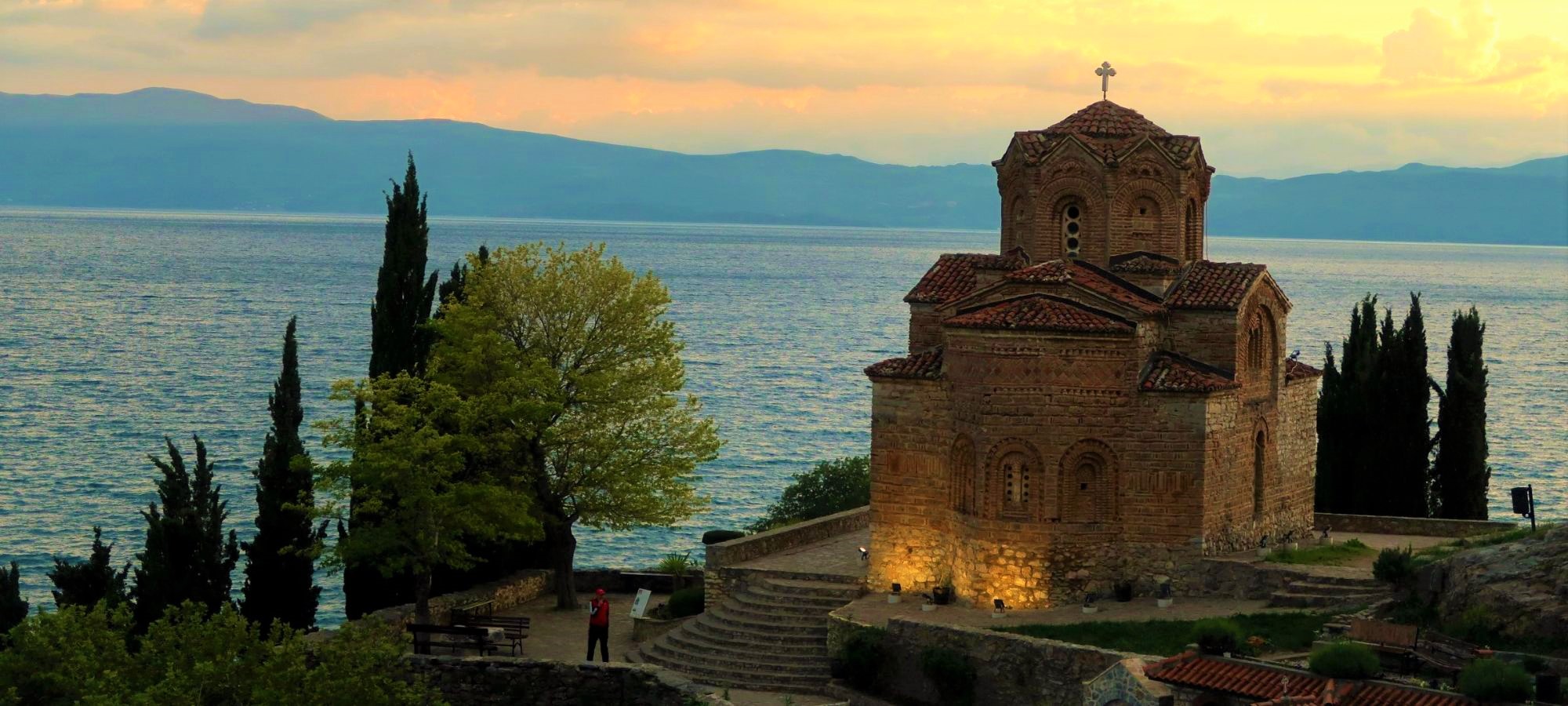
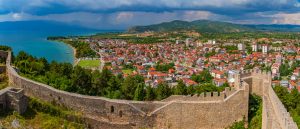
Ohrid is one of the oldest human settlements in all of Europe. The lake itself is over three million years old. Ohrid and Lake Ohrid are UNESCO Cultural and Natural World Heritage sites. There are opportunities to fish and boat or do water sports on the lake and several sandy beaches.Ohrid is sometimes referred to as a “Jerusalem of the Balkans”. Places of interest include a number of churches, (such as medieval St. Sofia with Byzantine fresco paintings), a monastery and an ancient theatre. The traditional bazaar runs along a single street down to the town square where there is a 1000-year-old tree and a pretty fountain. Ohrid Fortress is a large mediaeval castle, with massive walls and ramparts. With numerous cafés, bars and clubs Ohrid has a vibrant nightlife.
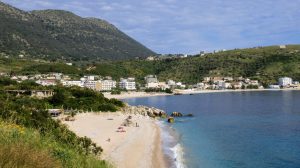
Sarandë
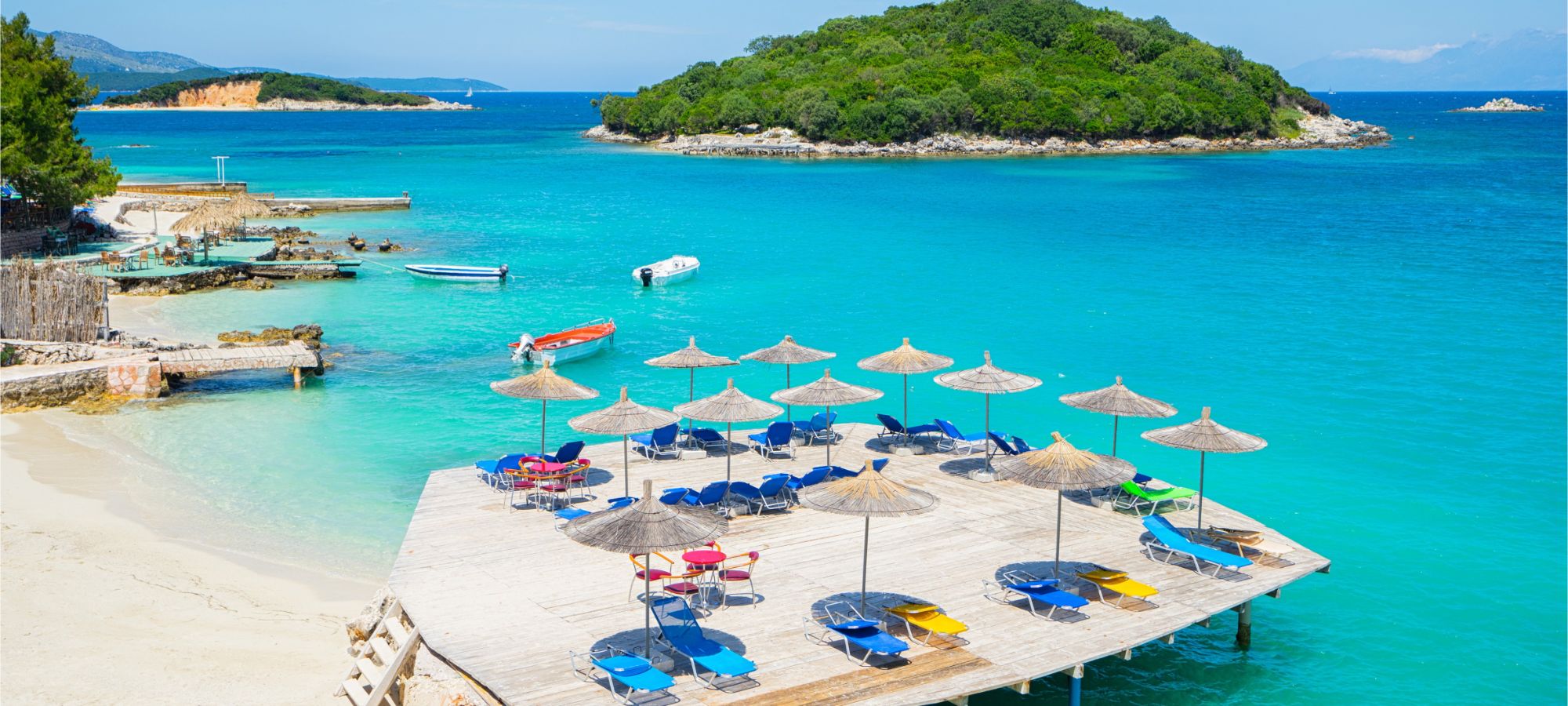
Sarande, Saranda or Sarandë in southern Albania is one of the key tourist destinations on the Albanian Riviera. It is situated on the Ionian Sea in the central Mediterranean about 14 km from Corfu. Overlooking Sarande is 16th C Lekursi Castle. There are excellent views of Corfu and the islands of Ksamil from the castle which was built because the vantage point was ideal for protecting the city from invaders who might have approached by sea.
Nearby are the remains of the ancient city of UNESCO World Heritage city Butrint. Butrint is one of several places in Albania which was closed to the general public during the Communist Era. The city was promoted as a tourist destination for foreigners to visit, but Albanian citizens were not allowed there due to fears that they would try to escape by swimming the short distance to Greece. Within Butrint are remains from most major empires of the area, including Greek, Roman, Byzantine, and Ottoman ruins. It includes a Greek amphitheatre (later remodelled by the Romans), a baptistery, a cathedral, the Lion’s Gate, and a museum.

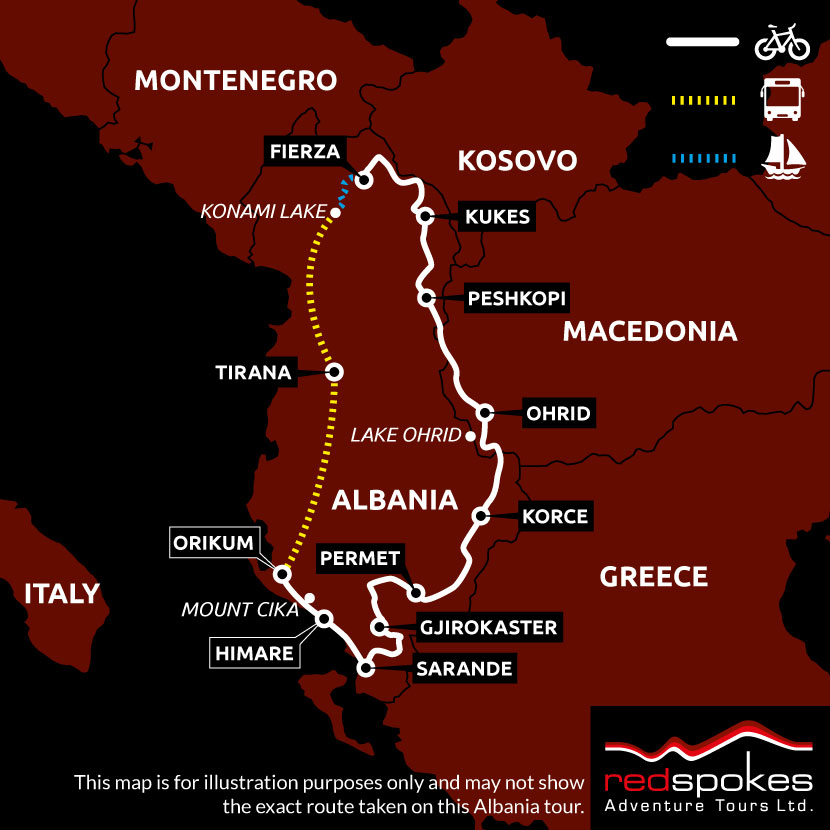
redspokes North to South Albania cycle tour begins in Tirana. You will be met on arrival and transferred to our joining hotel. Tirana’s small centre is easy to navigate. There are free walking tours if you would like to be guided around. Sites of interest include Skanderbeg Square’s 1789 Et’hem Bey Mosque, the 1830 Sahat-Kulla (Clock Tower), the puppet theatre, once home to King Zog’s puppet parliament and the Peace Bell made from old cartridge shells, remembering Tirana’s tempestuous history. There are many restaurants and bars in “The Block” (Blloku); the area where communist leaders once lived under strict protection. This evening we will have a group meeting and tour briefing.
Accommodation: Hotel (D)
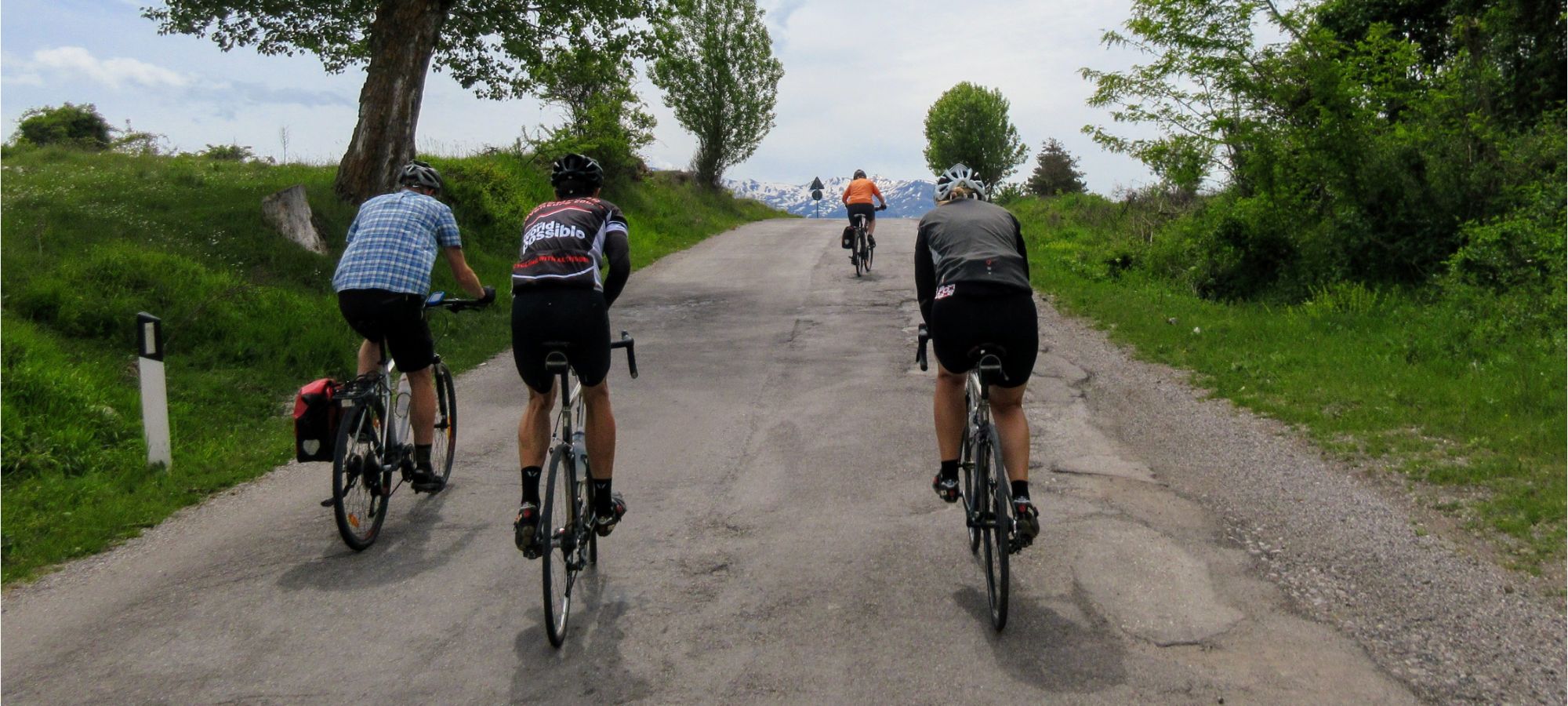
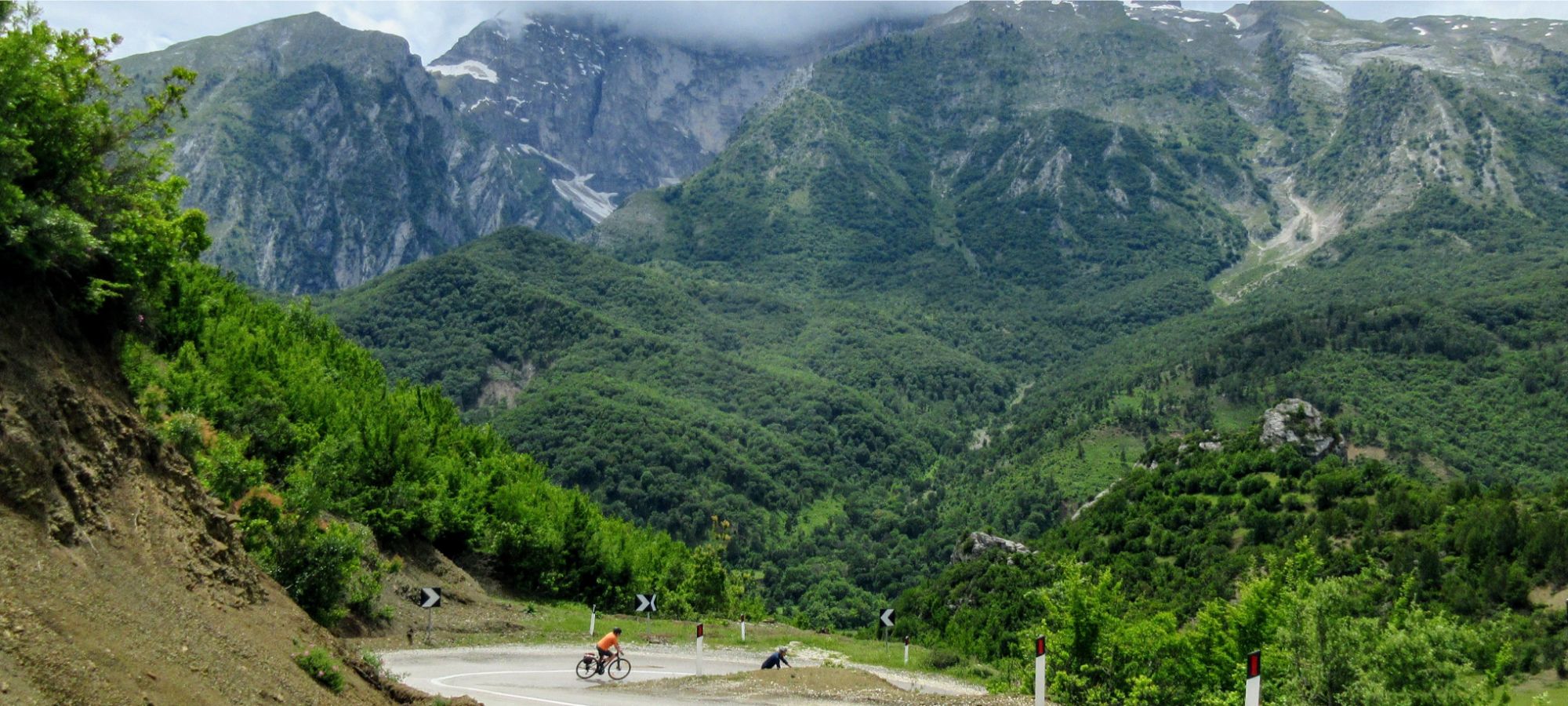
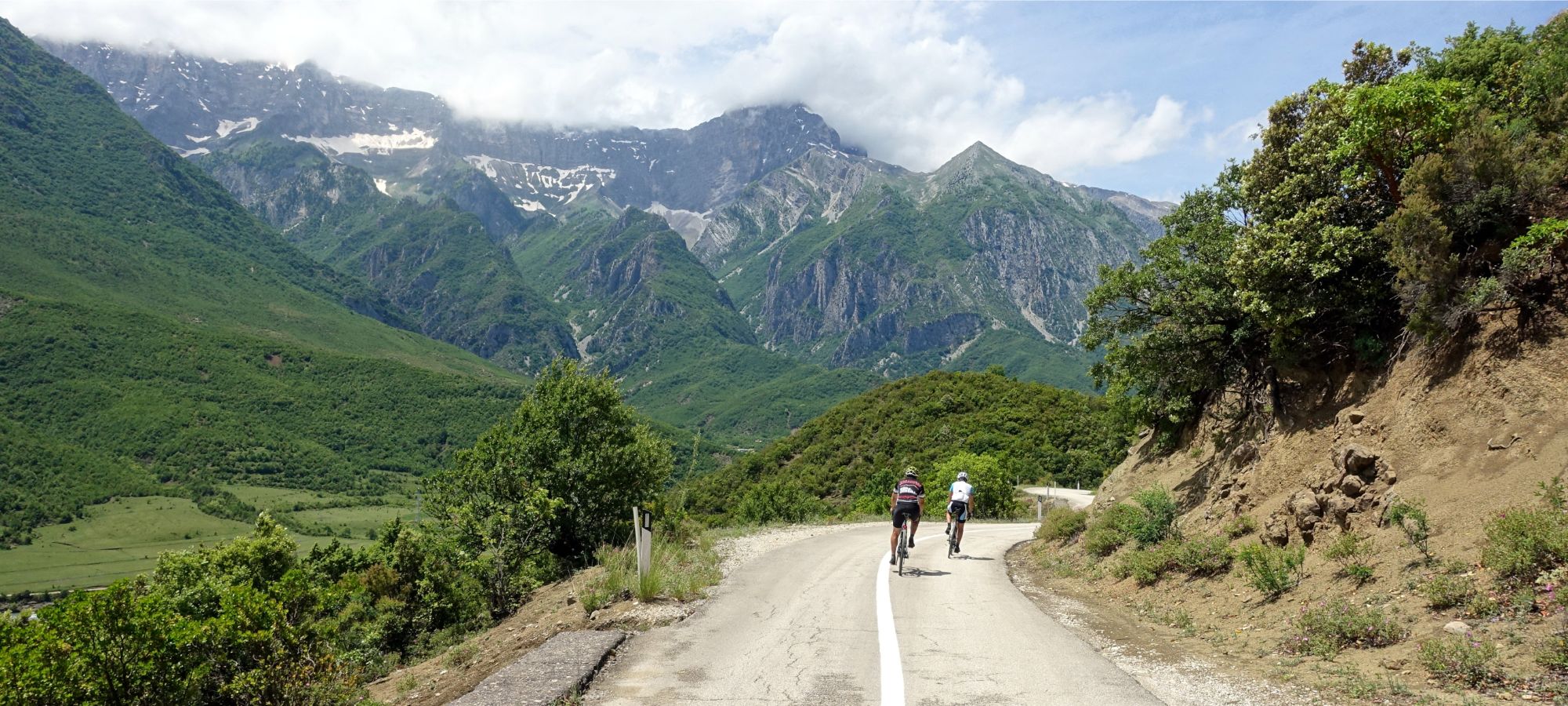
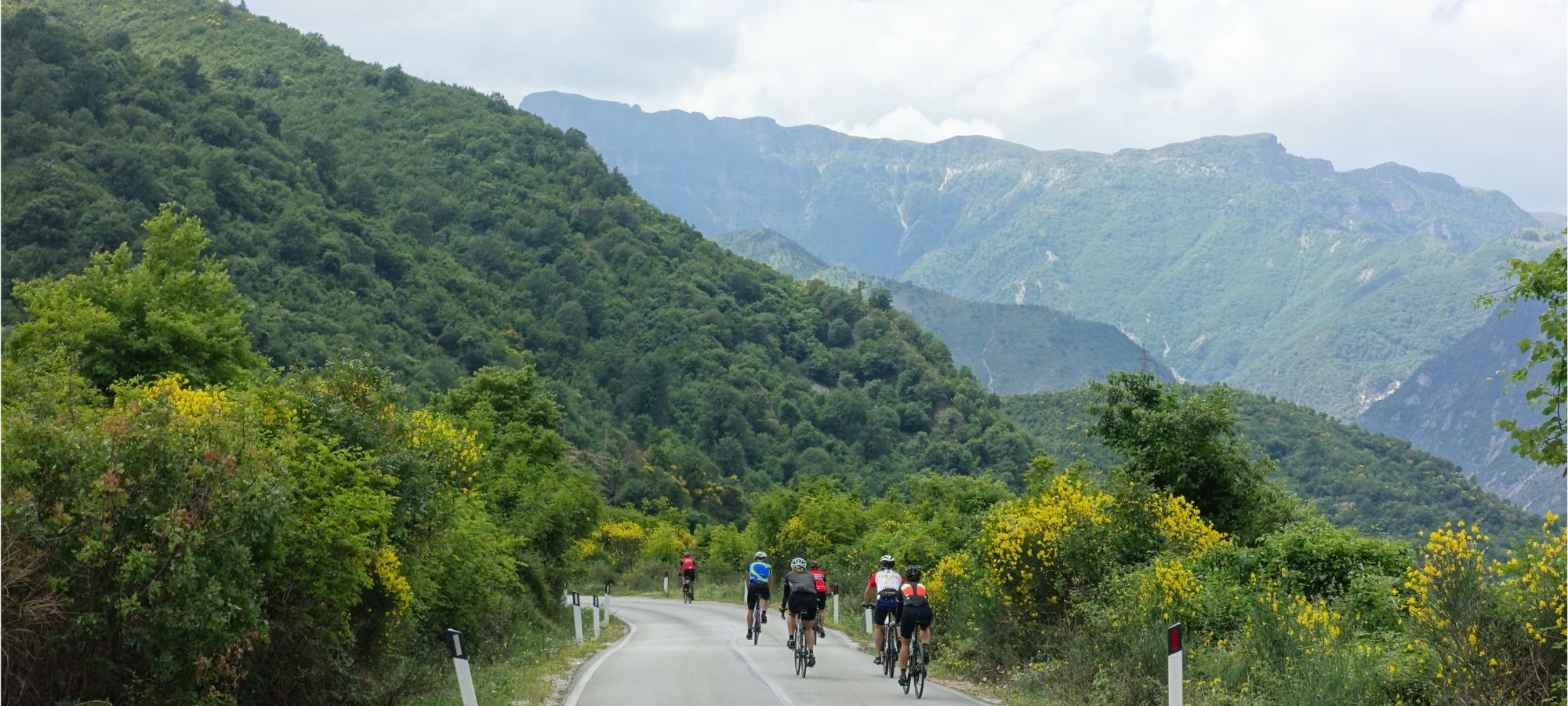
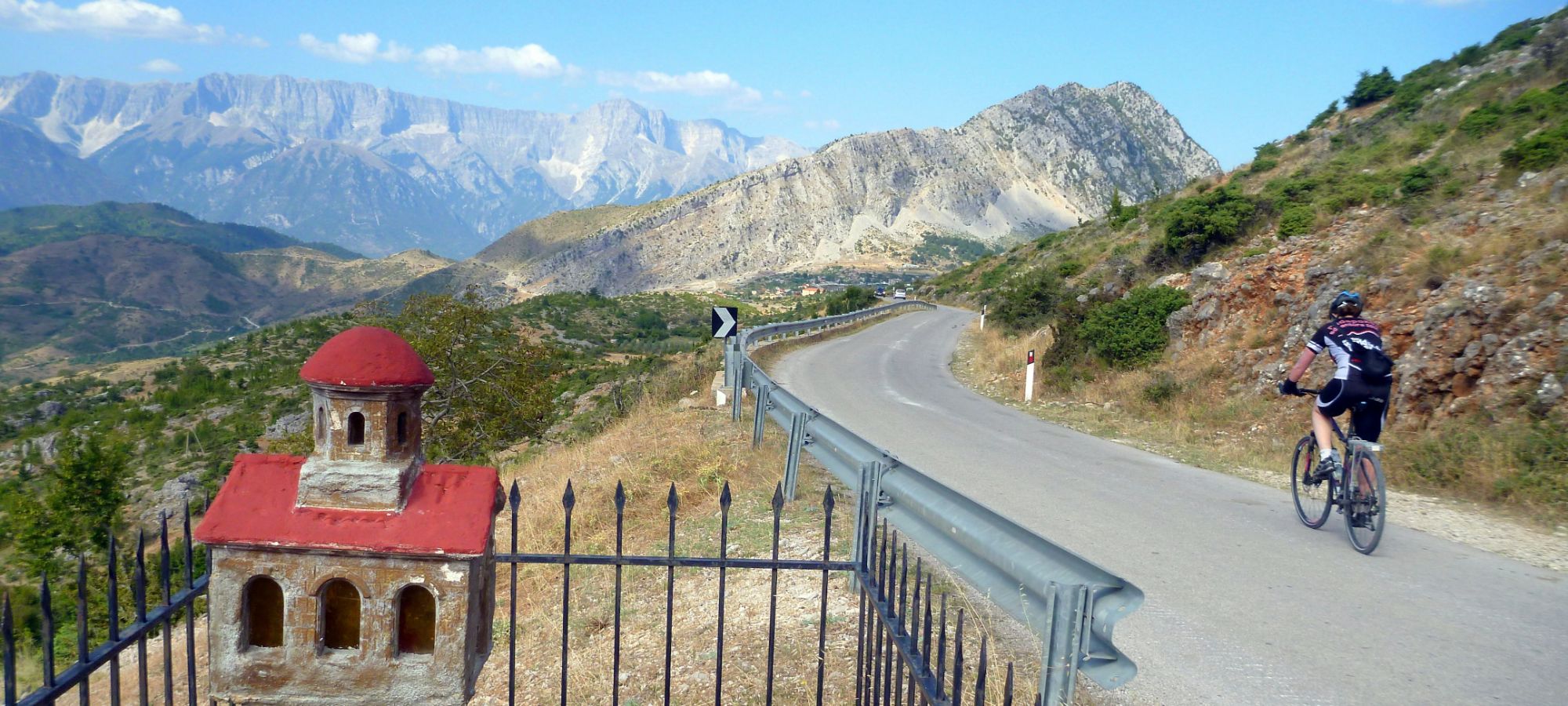
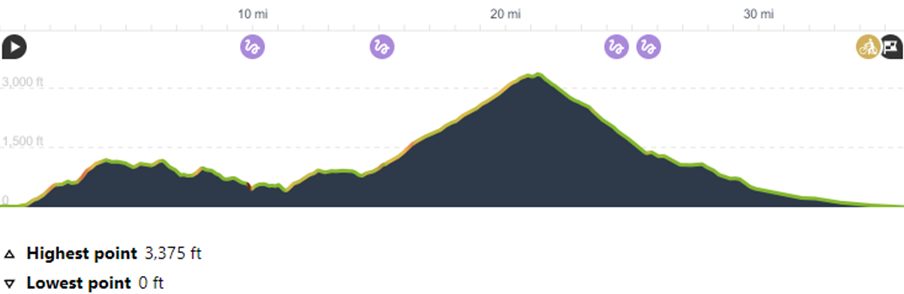
We depart Tirana this morning with an early vehicle transfer north to Vau Dejes. From here, we begin our cycling journey into the heart of Albania’s northern highlands. The route climbs gradually at first as we ride through remote landscapes with small villages scattered across the hills. Our destination is the mountain town of Pukë, a historic settlement once known for its role as a Roman stopover. The area is rich in natural beauty with pine forests and sweeping views over deep valleys and rugged terrain. The cooler mountain air offers a welcome relief as we settle in for the evening.
Cycling Distance: 54km (33 miles)
Total Climb: 1,255m (4,105Ft)
Total Descent: 860m (2,825ft)
Accommodation: Hotel (B,L,D)

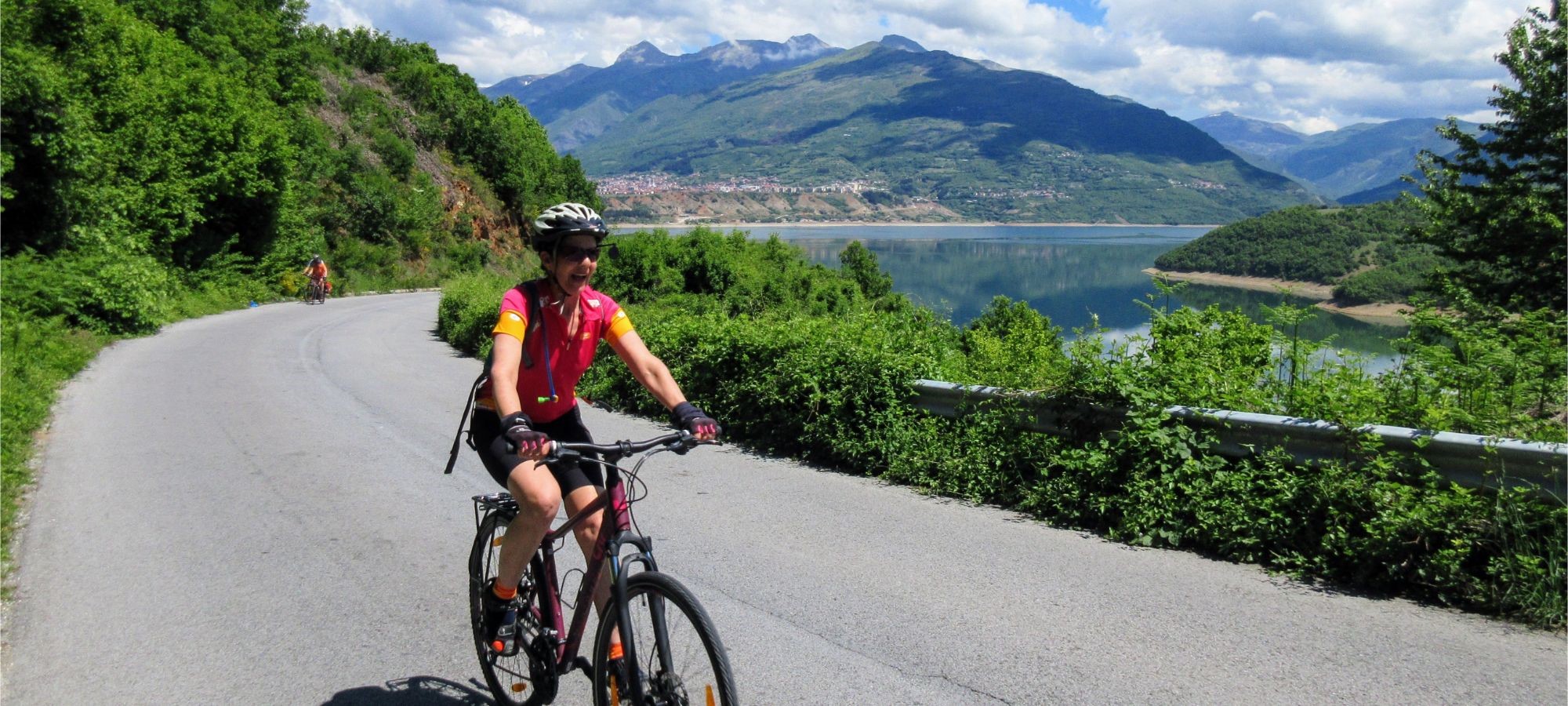
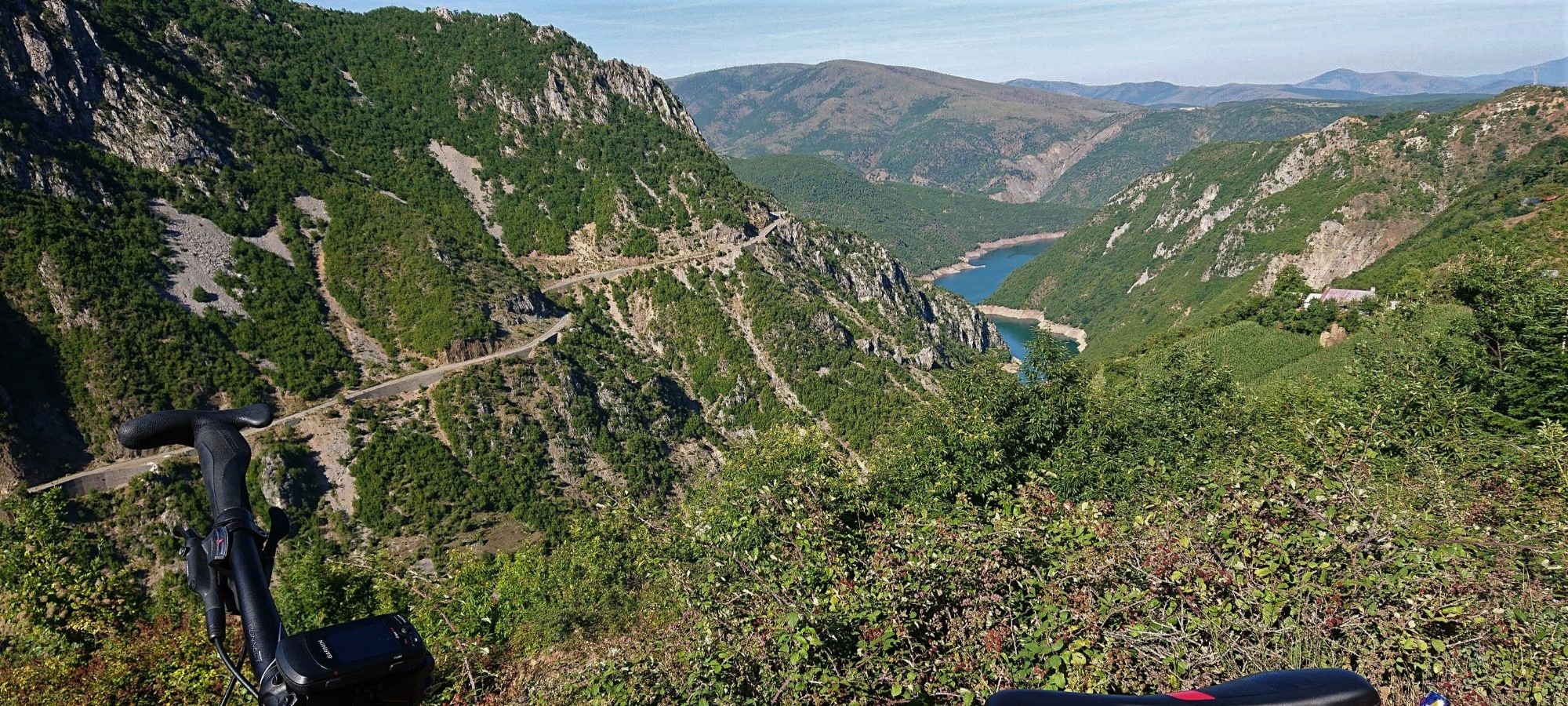
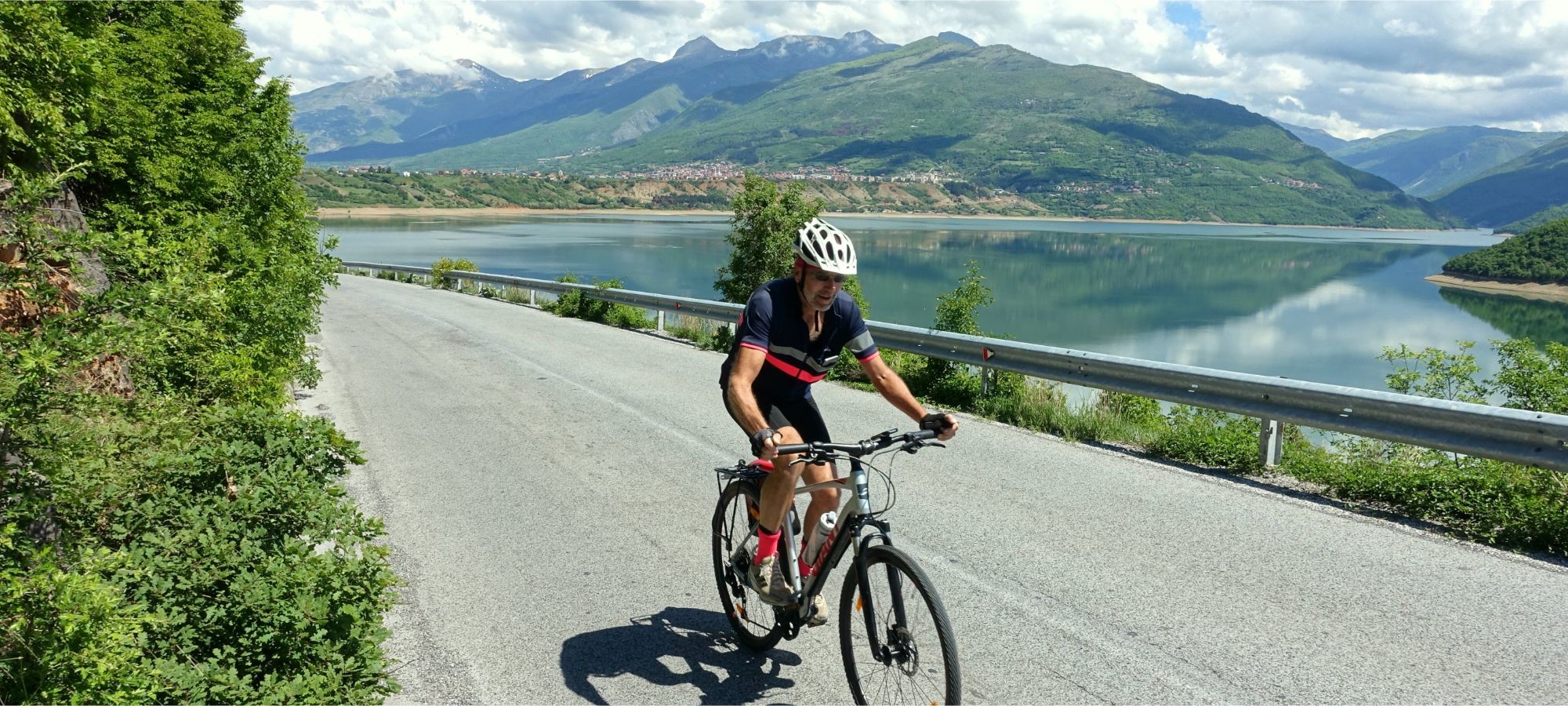
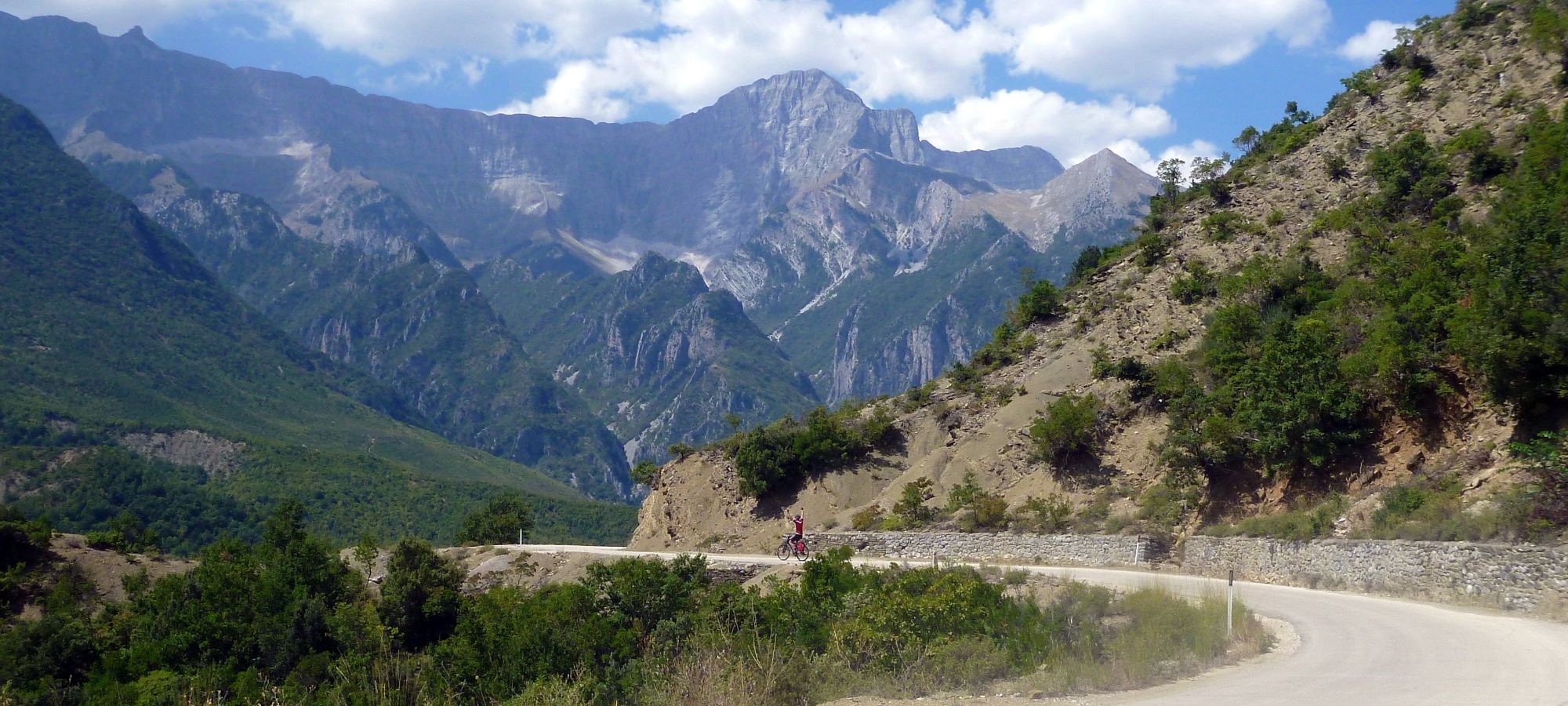
Today’s ride takes us through wild mountain scenery with stunning views over Lake Fierza. We cycle past remote villages and along quiet roads before reaching the Fierza dam. Beneath the lake lies the old town of Kukës, submerged during the dam’s construction in the 1970s. Our day ends in modern Kukës, a town recognized for its role in sheltering Kosovo refugees during the 1999 conflict.
Cycling Distance: 61km (38 miles)
Total Climb: 1,520m (4,995ft)
Total Descent: 1,480m (4,875ft)
Accommodation: Hotel (B,L,D)
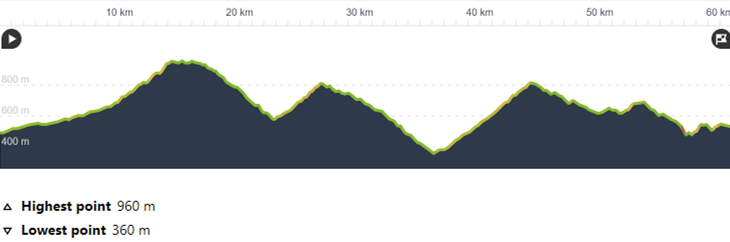
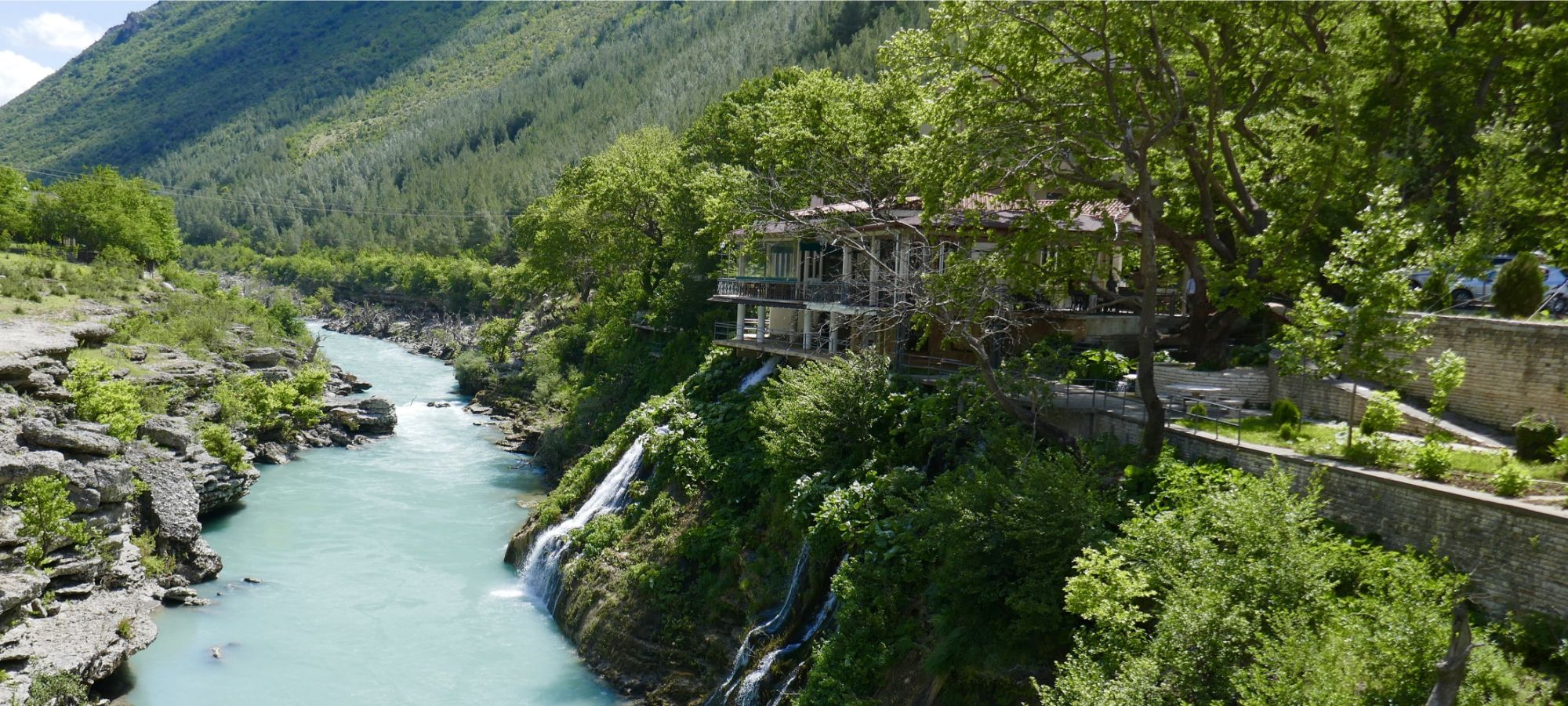
Our cycle tour continues today alongside the Valbona River through gorges and past cascading waterfalls. We begin the day cycling through woodland for about 20km. Our surroundings change with dramatic views for the next 20km, of the river far beneath us and mountain streams tumbling downhill. Fortified houses cling to the hillside on one side of the riverbank and dramatic white cliff tops loom above on the far side. We may catch sight of birds of prey. As we approach Peshkopi the countryside becomes more populated. This is apple farm territory and we ride past many orchards and waterfalls. Peshkopi has an interesting museum, an old quarter with a few surviving Ottoman houses and lovely mountain views. Just a short distance from the town centre are Llixhat (thermal springs) a popular destination for a therapeutic soak in the sulphurous spring waters.
Cycling Distance: 72km (45 miles)
Total Climb: 2,050m (6,726ft)
Total Descent: 1,710m (5,610ft)
Accommodation: Hotel (B,L,D)
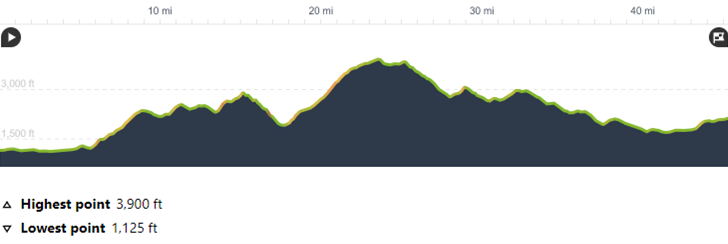
We cycle a short distance of a few km this morning before we cross the border into Macedonia and on to the beautiful UNESCO town of Ohrid. The road going from Peshkopi to Ohrid is very scenic and has little traffic consequently it is a pleasant cycle. It is said that Ohrid once had 365 churches, one for each day of the year. Ohrid was formerly known as Lichnidos (City of Light)
Cycling Distance: 91km (56 miles)
Total Climb: 925m (3,035ft)
Total Descent: 850m (2,789ft)
Accommodation: Hotel (B,L)
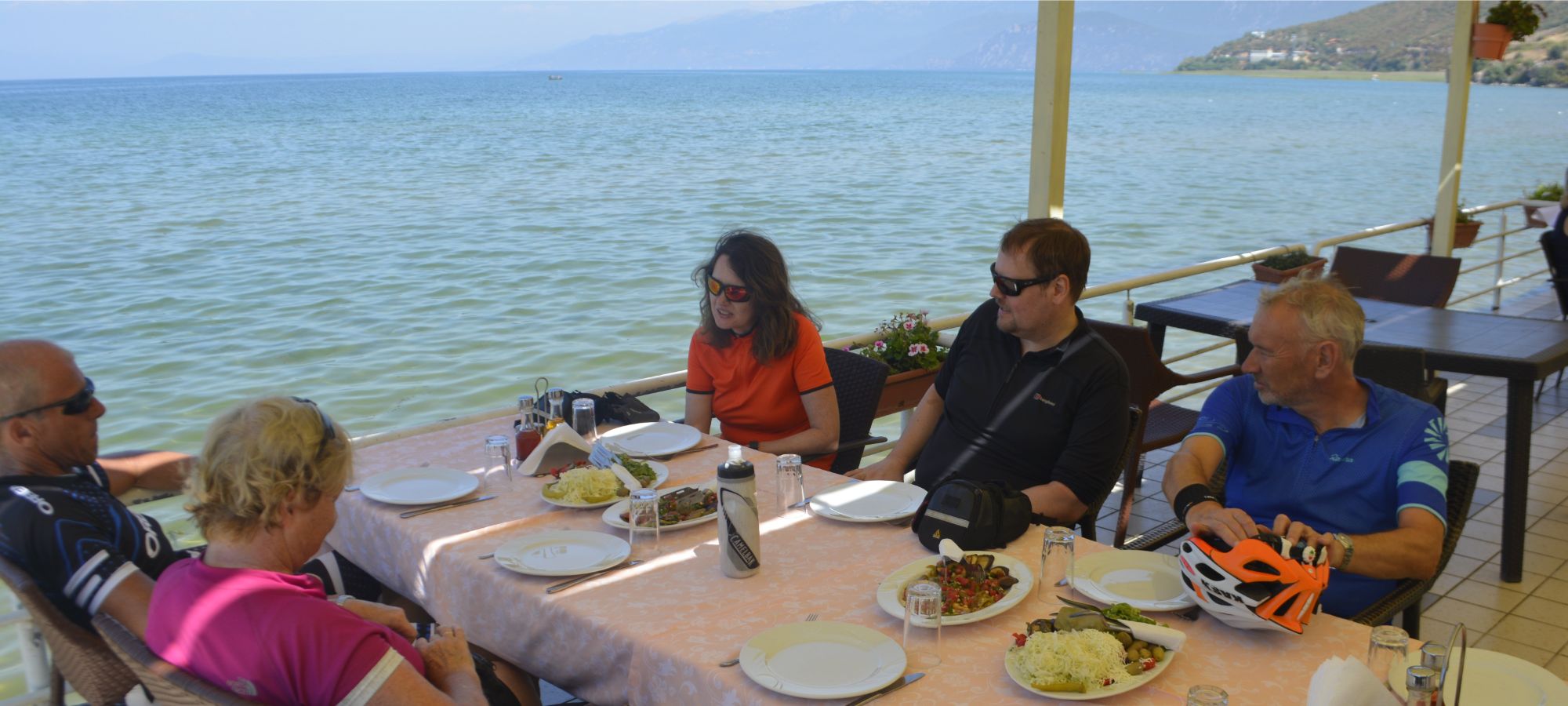
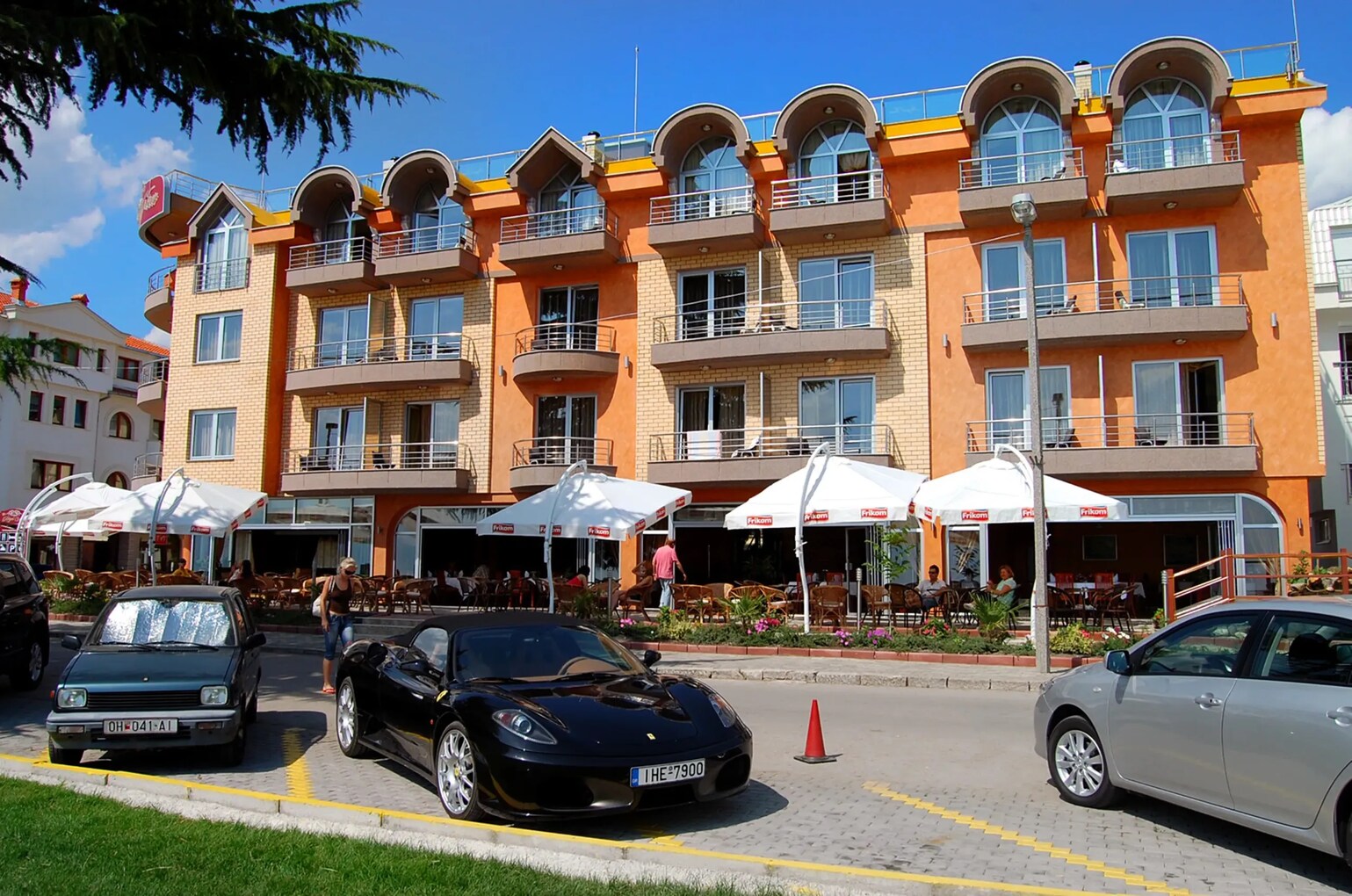
You have time today to discover Ohrid: Macedonia’s most popular tourist destination and a UNESCO world heritage site that combines history with outstanding natural beauty. Walk around the old town, visit Sveta Sophia Cathedral: Ohrid’s grandest church. Located in the old town is Samuil’s fortress; a medieval castle believed to rest on the site of a 4th Century BC fort. It overlooks the 300m deep, three million year old lake bordered and shared by Macedonia and Albania. Tonight, you can stop off in a bar or dine in a restaurant with lakeside views.
Accommodation: Hotel (B,D)
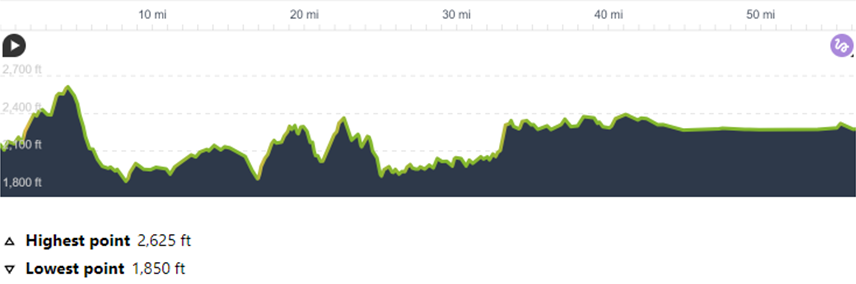
This morning we cycle out of Ohrid following the south-eastern side of the lake back into Albania. Tectonic Lake Ohrid is one of the deepest and oldest lakes in Europe. After about 12 km we begin a climb for a few km, once we’ve cycled over the hilltop we ride back down to the lakeside. We will cross the border back into Albania at Tushemisht. From here we follow wide, open road cutting a path through farmland cycling southwest to Korçë. We will pass abandoned gun bunkers built under the communist regime, which are a regular feature of the Albanian countryside. The route gently undulates for 20 km before we ride a final flat stretch into Korçë. Near to the Greek border Korçë is paved with cobblestone streets and many single-story villas. Korçë has Illyrian and Ottoman origins and is Albania’s cultural capital. The town has a traditional bazaar and several museums and galleries including a museum of medieval art.
Cycling Distance: 76.4km (47 miles)
Total Climb: 904m (2,965ft)
Total Descent: 714m (2,342ft)
Accommodation: Hotel (B,L,D)
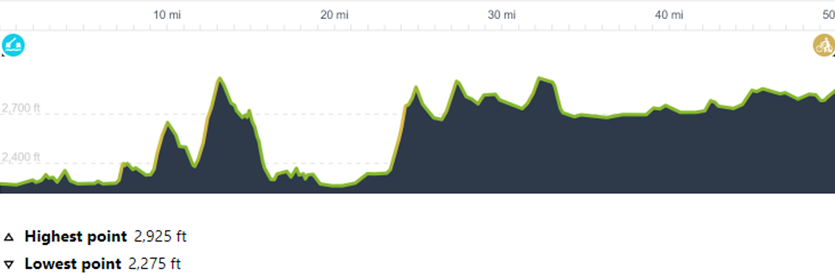
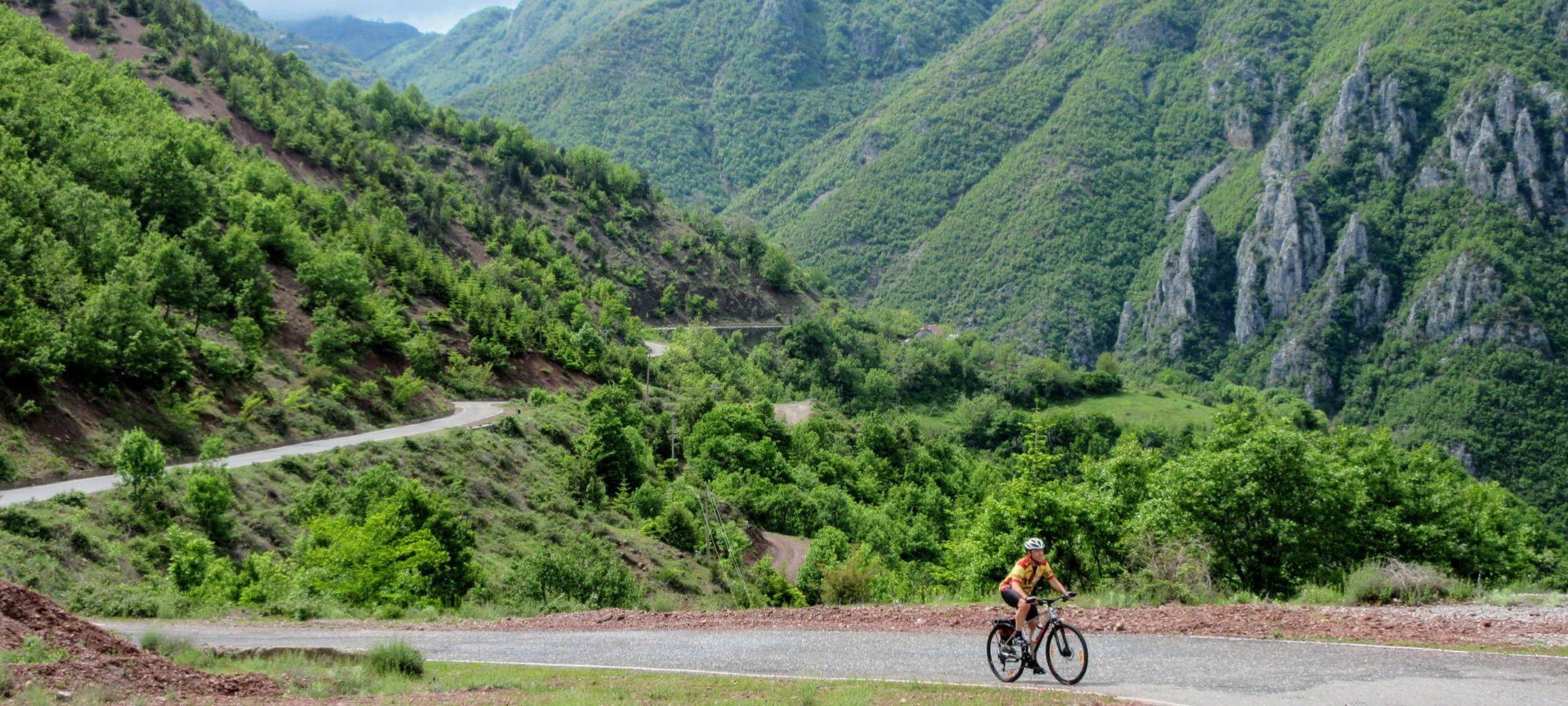
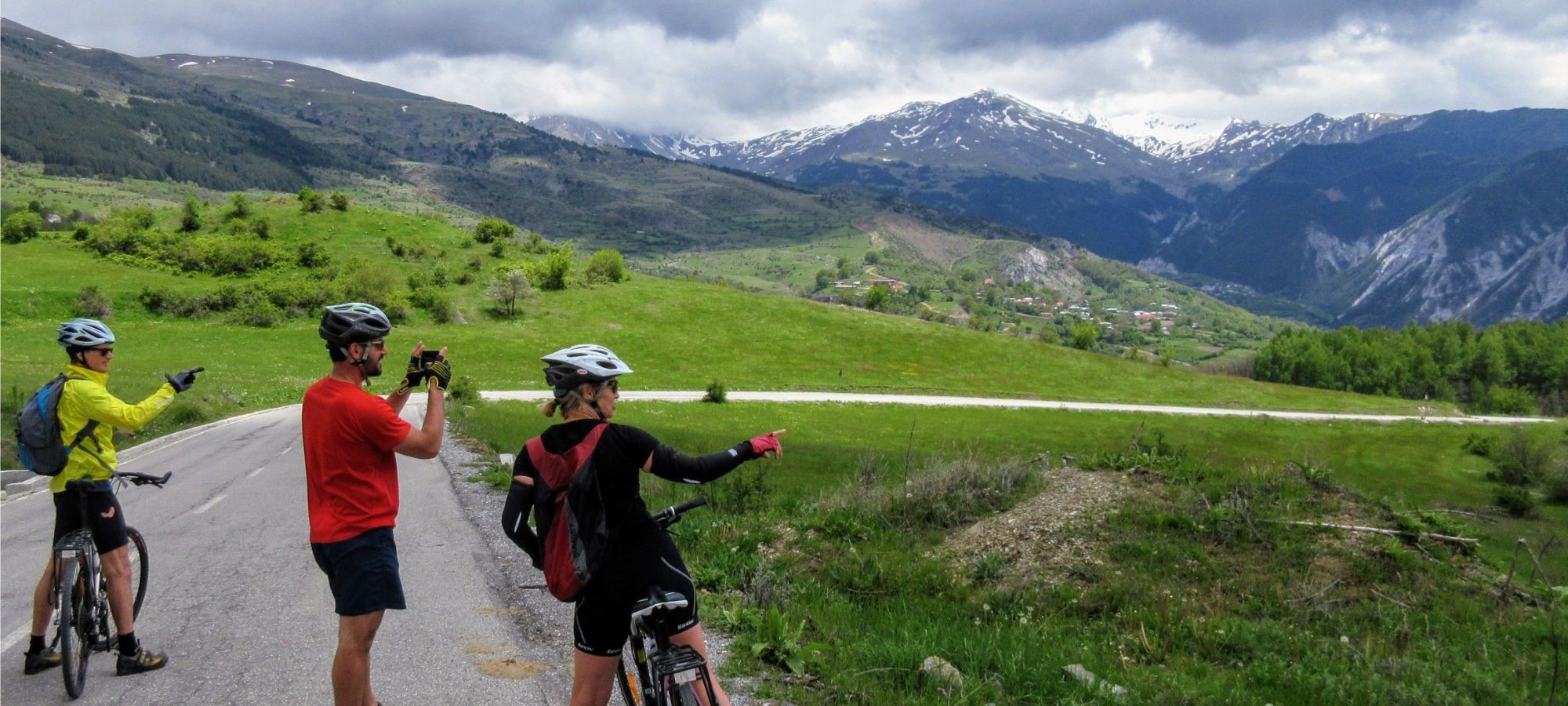
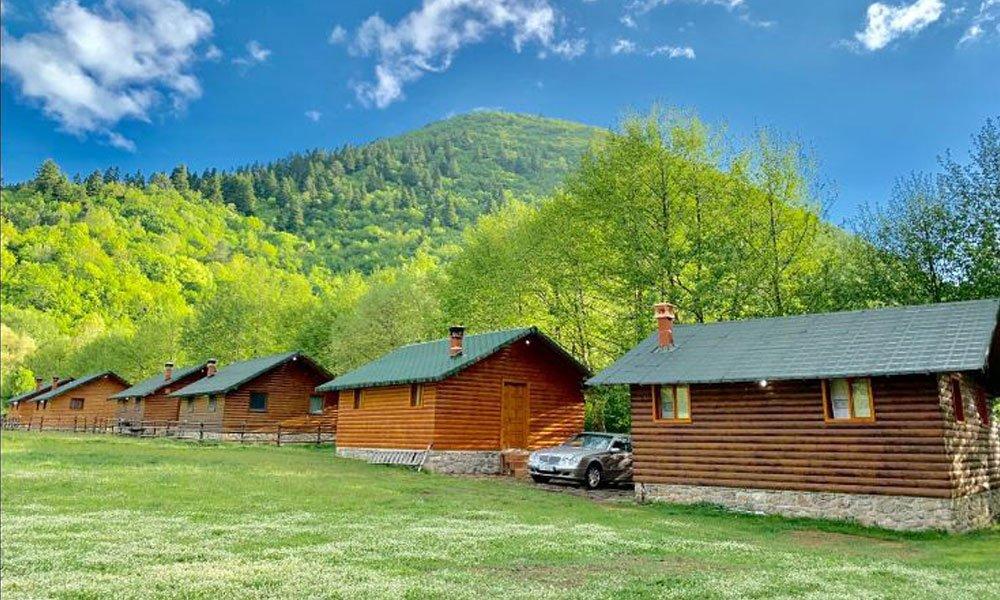
We cycle into the mountains today. The landscape changes from an agricultural collage of fields into rocky mountainside scattered with forget me nots and other wildflowers and the odd shepherd’s hut here and there. We ride up into the Gramoz Mountains, with a view of snow-capped peaks in the distance, cycling over the Bramash pass. We then head down into the valley beyond to reach the remote and beautiful Farma Sotira. Located on the edge of Tomorre Mountain National Park, our stop for the night is an organic farm hotel where we will sample the produce at dinner this evening.
Cycling Distance: 59km (37 miles)
Total Climb: 620m (2,025ft)
Total Descent: 1,290m (4,245ft)
Accommodation: Cabins (B,L,D)
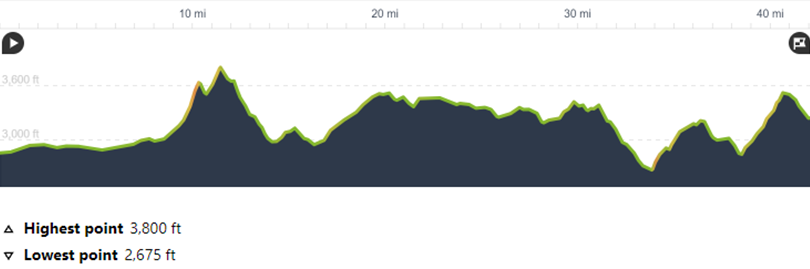
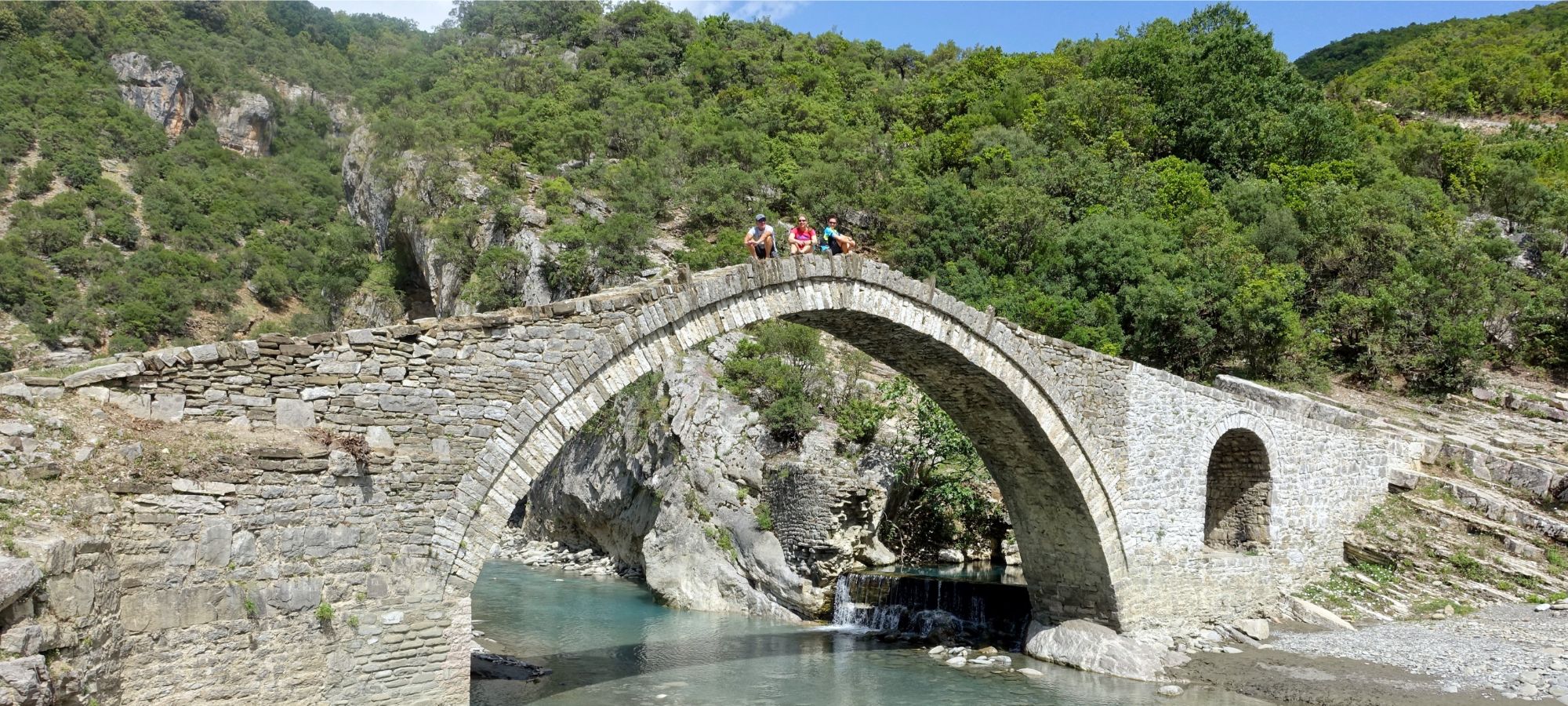
The day begins with an uphill cycle away from Farma Sotira through dramatic mountain scenery onto the verdant plateau. We then descend on a steep ravine road to the River Vjosa; the pathway, which was originally created by waterfalls, bends and curves dramatically down into wide open valley where animals graze. The Vjosa is one of Europe’s last existing wild rivers. Along its entire course, it is free flowing and in some areas the riverbed expands over more than 2 km. Sadly, the river is under threat from hydropower development although protest groups are campaigning for the area to be given national park status.
We continue cycling uphill on a tiny road cut into the mountainside up to Përmet perched on the cliff high above the river. The town is famed for its cuisine, especially sweets, ‘gliko’ (preserves), its wine and strong raki. Named the “city of roses” it is said to be the greenest and the cleanest town in Albania. Përmet is also famous for folk music.
Cycling Distance: 59km (37 miles)
Total Climb: 675m (2,215ft)
Total Descent: 1,425 (4,675ft)
Accommodation: Hotel (B,L,D)
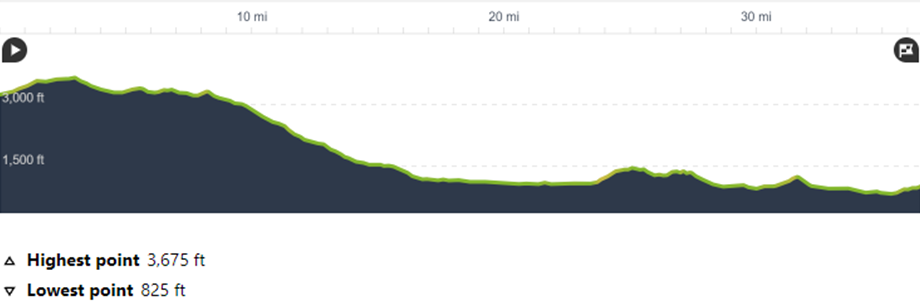
Today we continue cycling along Kelcyra valley through a scenery of peaks and gorges, cutting westward through a gap in the mountains. We reach a wide plain; high above us sits the majestic Gjirokaster (known as the Stone City because of the many roofs covered with flat stones). Gjirokaster is a beautifully preserved Ottoman town with steep cobbled streets; it was built by wealthy landowners. The town has UNESCO world heritage status. Gjirokaster Castle, at the heart of the town, dates all the way back to the 4th century. The fortress overlooks the plateau, and route along the river valley with an imposing presence. The town is the birthplace of Albania’s former communist head of state: Enver Hoxha.
Cycling Distance: 71.2km (38 miles)
Total Climb: 409m (1,341ft)
Total Descent: 454m (1,489ft)
Accommodation: Hotel (B,L,D)
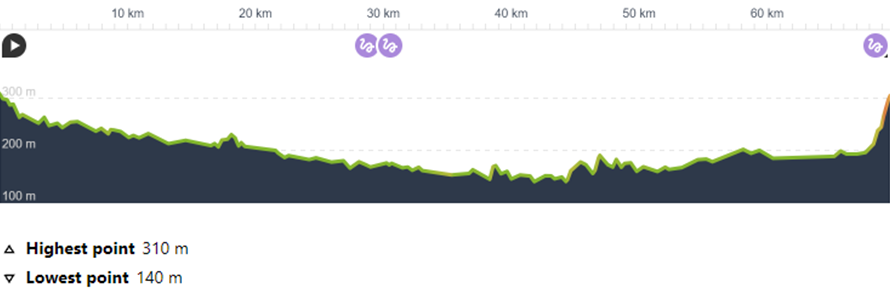
We head west today cycling up over a 700m pass in the mountains followed by a twisting descent down onto the coastal plain. We ride past villages, farms and roadside fruit vendors. There are more concrete bunkers dotted in the hillsides. Sarande is described as the gateway to southern Albania, nestled between the mountains and the Ionian coast. The city is close to the ancient remains of Butrint, another UNESCO World Heritage Site. Butrint is one of the county’s most important archaeological sites, tracing its origins back to the Greeks and the Romans. We will have a guided tour of the site.
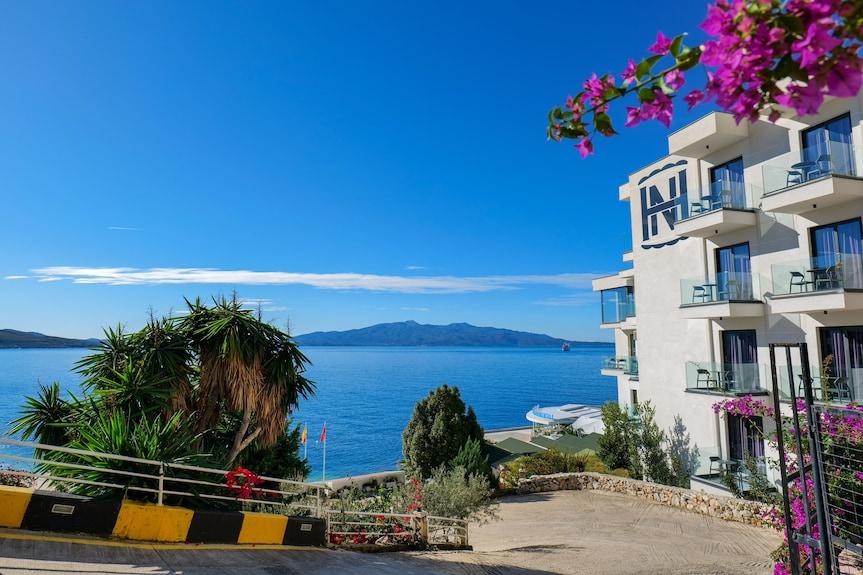
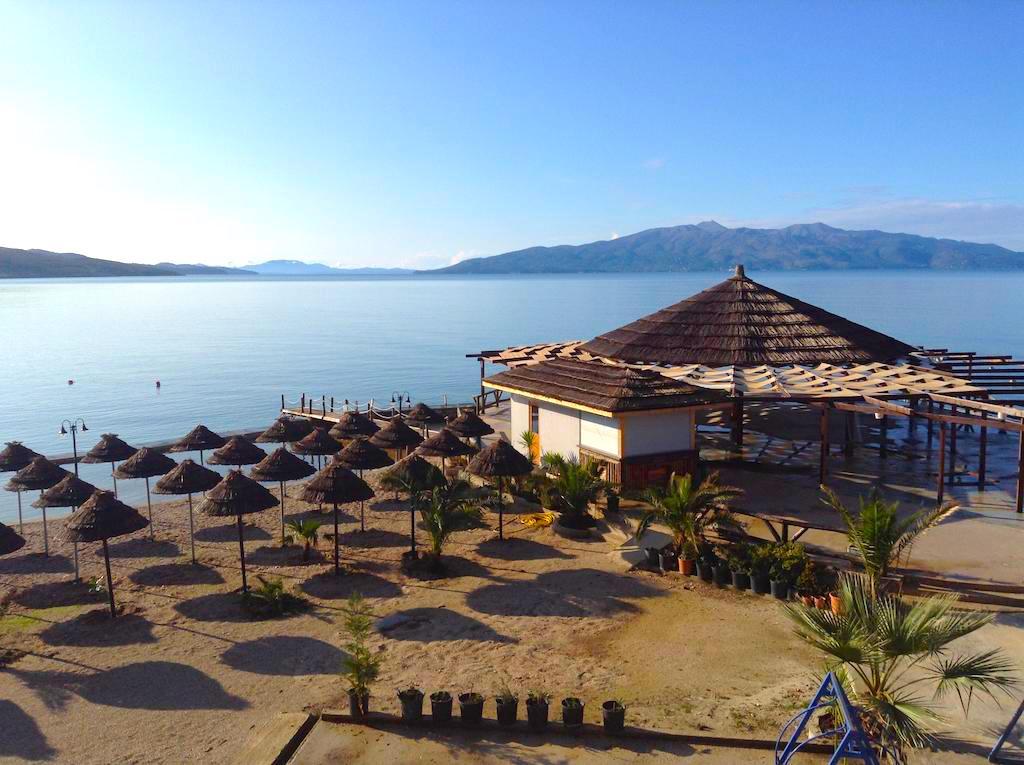
We can relax this evening and enjoy panoramic Mediterranean views in this lovely coastal resort.
Cycling Distance: 68km (43 miles)
Total Climb: 550m (1,805ft)
Total Descent: 1,090m (3,575ft)
Accommodation: Hotel (B,L)
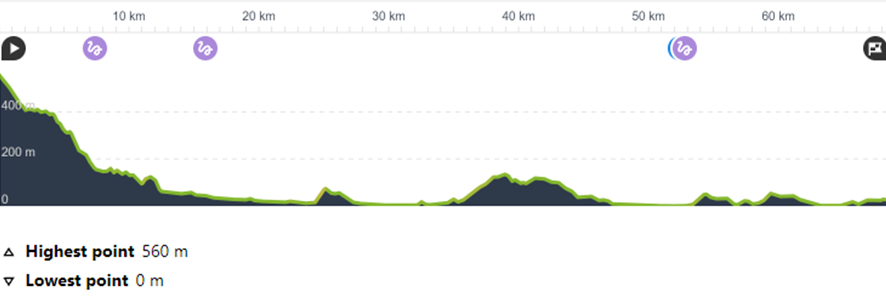
Our tour continues today as we follow the coastal route northward towards the resort of Himarë. The day begins with a steep climb, for the rest of the day we continue cycling a series of climbs and descents with mountains and of stunning sea views. Himarë is a popular beach side town stretching along white sanded shore line. Olive and citrus trees grow on terraced hills that reach down to the sea.
Cycling Distance: 52km (32 miles)
Total Climb: 1,075m (3,527ft)
Total Descent: 1,080m (3,543ft)
Accommodation: Hotel (B,L,D)
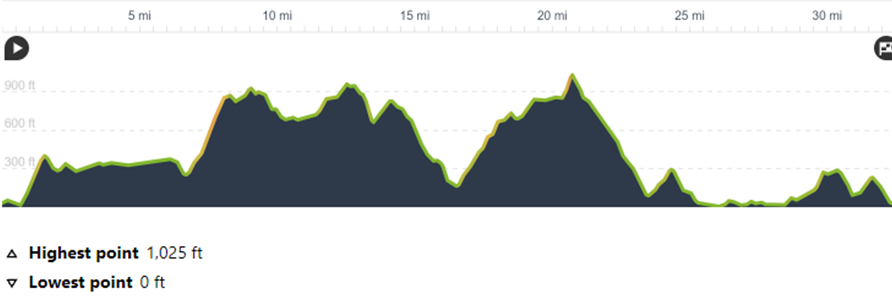
Our final day of cycling on the Albania North to South tour takes us to Orikum. We climb up to the famous Llogara Pass (Qafa e Llogarasë), a spectacular winding road, rising up to 1,043m with spectacular views of the Albanian Riviera and pine forested hillsides. This is the highest point on the main coastal road between Vlore and Sarande. Down over the pass we cycle one hairpin bend after another in the Dukatit Valley. Towards the end of today’s ride we re-join coastal road with views of gravel beaches and lovely clear blue seas. Late this afternoon we will transfer to Tirana and this evening we will celebrate the end of our Albanian cycling tour with a farewell meal.
Cycling Distance: 55.4km (34 miles)
Total Climb: 1,603m (5,259ft)
Total Descent: 1,574m (5,164ft)
Accommodation: Hotel (B,L,D)
The tour ends today and you will be transferred to Tirana Airport for your journey home.
Each tour requires a minimum number of participants to run
Tour status updates automatically as bookings are received
Do not book flights until the tour status is marked Guaranteed
Tour Status Definitions
Booking & Payments
A £350 deposit confirms your place on the tour
Deposits are refundable until the tour becomes Guaranteed
Final balance is due 56 days before the tour start date
By booking, you agree to our booking conditions (please read in full)
Small Group Note
For groups of fewer than four participants, the guide may lead from the support vehicle rather than cycling with the group, ensuring full logistical and guiding support.
Fully supported cycling holiday
Meal Key (used in the itinerary)
Tour Start
Tour End
Flights
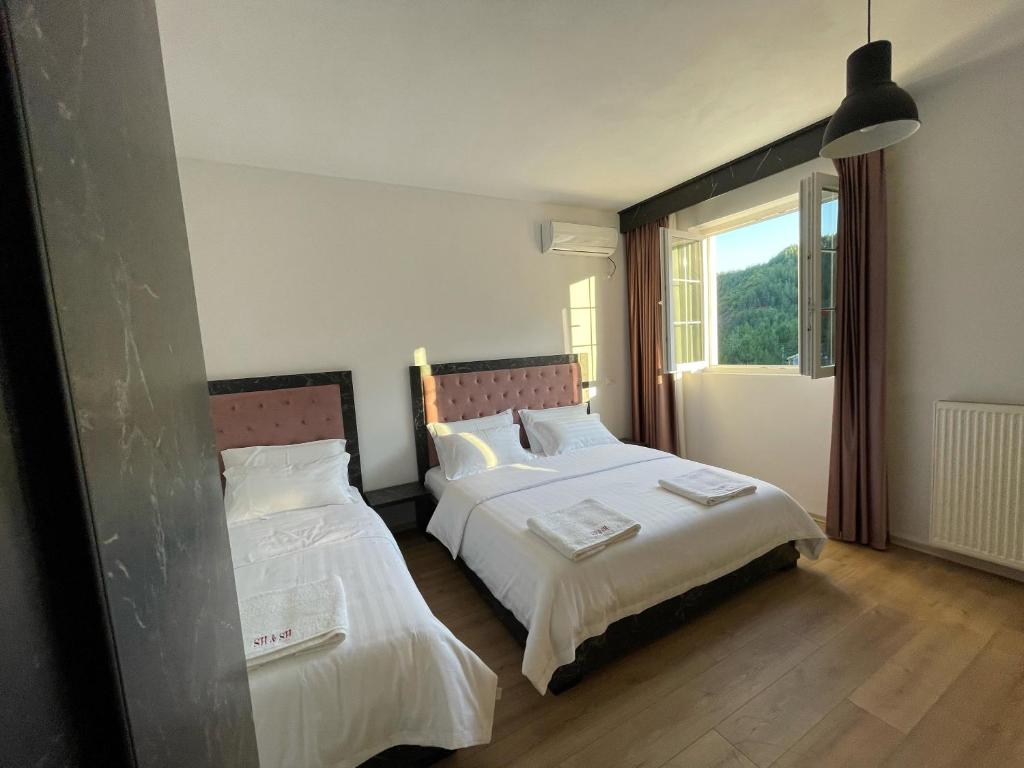
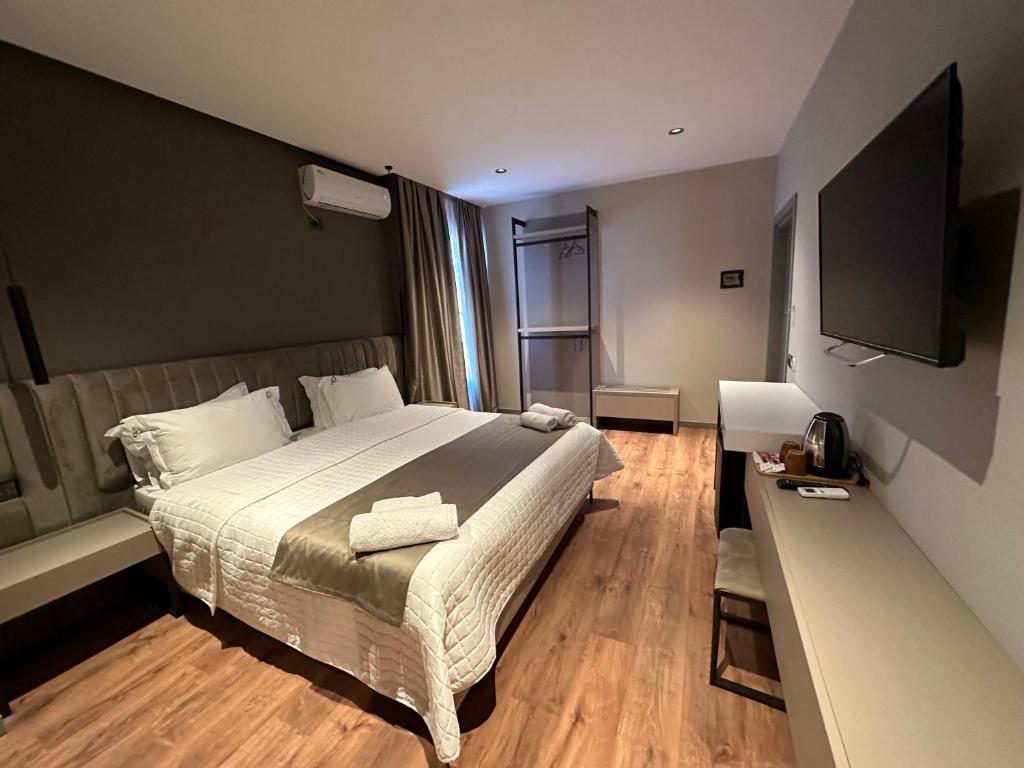
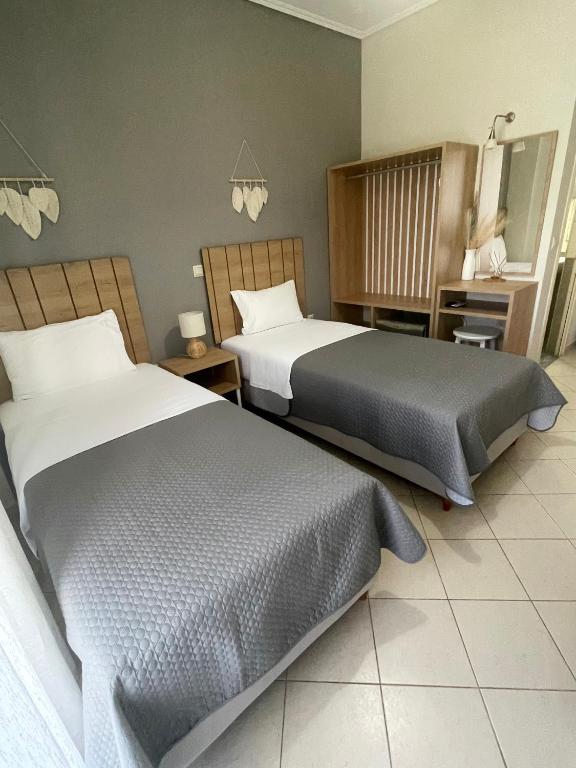
We choose accommodation based on comfort rather than luxury. Our prices are based on sharing a twin room. Should you wish to have a room to yourself there is a single supplement option on most of our tours.
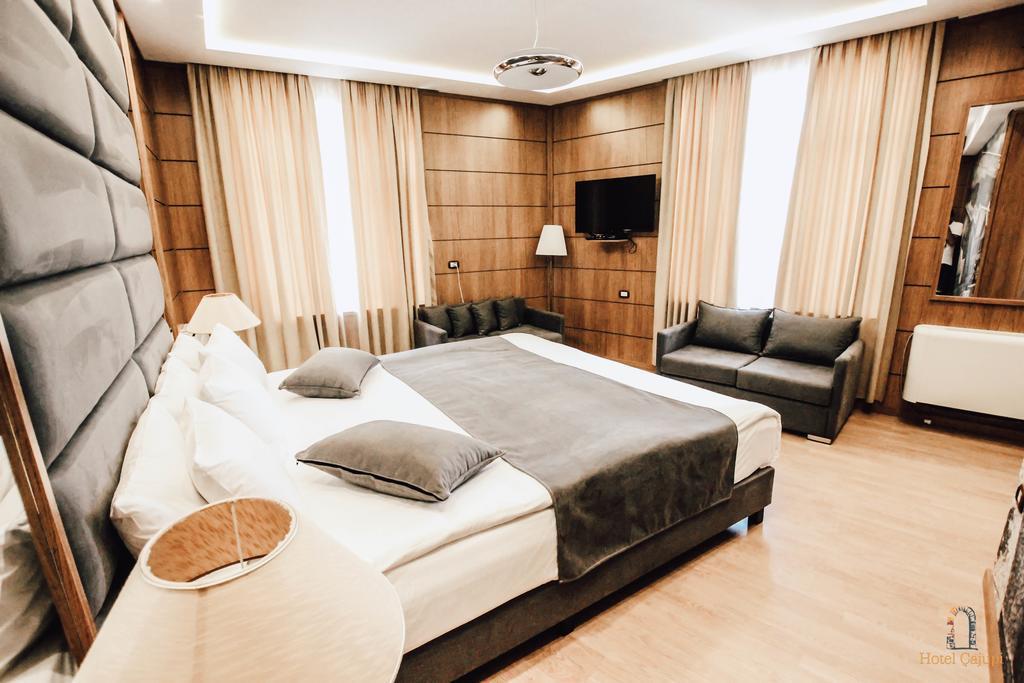
Most of the accommodation for this trip is in hotels although there is one night spent in a cabin on an organic farm where we will sample the produce at dinner that evening. Due to the layout of the cabins some of these have shared bathroom facilities. Hotels will have en-suite facilities and air conditioning.
Meals on Tour
Most meals are included in your tour price, except on rest days and a few other occasions.
Please check the itinerary for all meals provided.
Dietary Requirements
If you have any special dietary needs, please let us know at the time of booking.
We can cater for most diets, but advance notice is essential to ensure the best experience.
Taste of Albania
Albanian cuisine offers a delicious mix of Mediterranean flavours using fresh, local ingredients.
Expect hearty, traditional meals, often featuring lamb or goat.
Local Specialities:
Support Vehicle
On-Ride Support
Helmet Policy
For this tour we have Hybrid Giant Roam standard and e-bikes in a range of sizes and sizes.
What’s Included with Bike Hire
Customising Your Bike
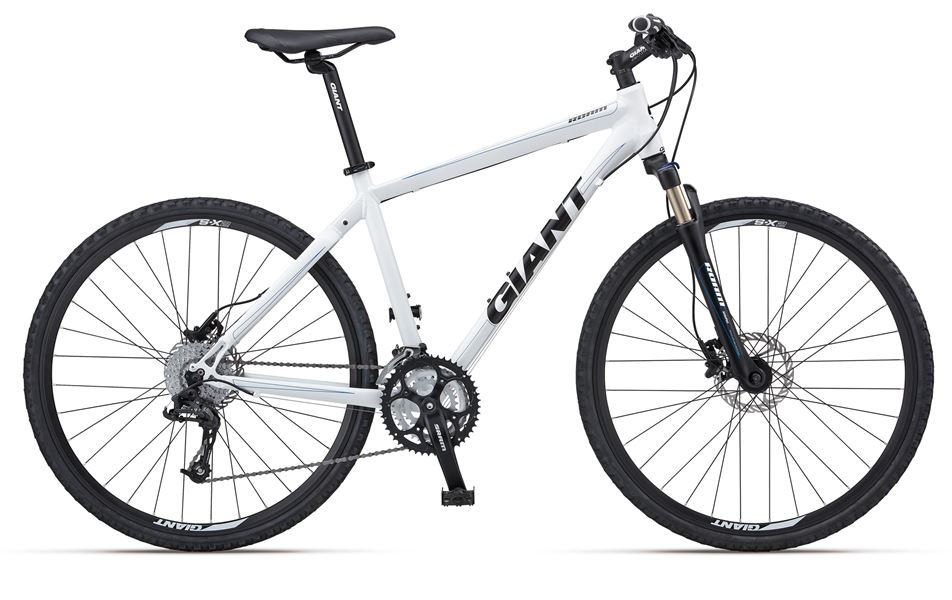
The Albania tour is suitable for most types of bikes – road, hybrid, gravel, or mountain – as long as they are robust and well-maintained.
Carbon wheels are not recommended due to rough terrain and the remoteness of the route in case of repair needed.
Pre-trip bike servicing
We strongly recommend having your bike fully serviced before travelling. Please make sure:
What to bring
We recommend packing the following essential items:
Travelling with your bike
Your bike will need to be packed within your luggage allowance. A bike packed in a cardboard box typically weighs between 15–20 kg, and some airlines may charge excess baggage fees.
If you would prefer not to travel with your own bike, bike hire is available — simply request this when booking.
Currency
The local currency in Albania is the Albanian Lek (ALL). It is a closed currency and only available when you arrive in the country. You will need Lek for all purchases—foreign currencies are not accepted.
ATMs are widely available but may charge withdrawal fees
We recommend bringing:
Where to Exchange
Spending Money
Tipping
Travel Insurance
Mandatory for all participants and must cover:
Health & Vaccinations
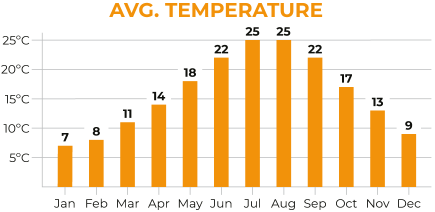
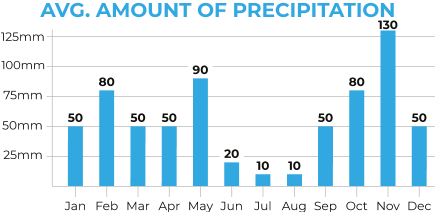
Albania has a perfect Mediterranean climate with long hot summers and mild wet winters. Temperatures do vary between the coastal lowlands and the highlands but are predominately pleasant all year round.
Staying Hydrated on Hot Rides – 6 Tips for Cyclists
As a cycling company, we know how important proper hydration is—especially when you’re out riding in hot conditions. Below are some general hydration tips that riders find helpful for staying fuelled and feeling strong on the bike.
Please note: We are not medical professionals and this information should not replace advice from a qualified healthcare provider. Each cyclist is different, so if you have specific health concerns or conditions, it is always best to consult your doctor and adhere to their advice.
1. Prioritize Gut Health
Why it matters: A healthy gut boosts absorption of water and nutrients.
How to do it: Feed your microbiome with probiotics (yogurt, kefir, sauerkraut) and prebiotics (garlic, onions, bananas) to keep digestion and hydration strong.
2. Time Your Hydration
Why it matters: When you drink can matter as much as how much.
How to do it: Start the day with a big glass of water—add lemon or a pinch of sea salt for an extra boost.
3. Hydrate Beyond Water
Why it matters: Water isn’t the only way to stay hydrated.
How to do it: Include coconut water, bone broth, or other nutrient-rich drinks to hydrate and replace electrolytes—especially during long rides or after heavy sweating.
4. Don’t Forget the Minerals
Why it matters: Minerals like sodium, calcium, and magnesium help retain water.
How to do it: Eat mineral-rich foods such as salted nuts, seeds, and dairy—or take a quality mineral supplement if needed.
5. Absorb Water Better
Why it matters: Drinking water too fast can flush out nutrients and reduce absorption.
How to do it: Sip steadily throughout the day. Add a pinch of sea salt to your bottle and eat water-rich foods like watermelon, cucumbers, and pineapple.
6. Keep Your Electrolytes in Check
Why it matters: Electrolytes regulate fluid balance, nerve function, and muscle contractions.
How to do it: Eat potassium- and magnesium-rich foods like bananas, avocados, and leafy greens. Add electrolyte tablets or sea salt to your water after intense sweat sessions.
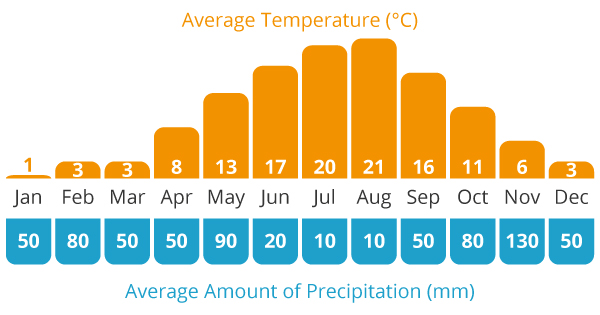
Your packing list may vary depending on personal preference and seasonal weather. This guide is a general outline to help you prepare—please tailor it to your needs. A reminder that June, July and August can be very warm in Albania.
Essential Cycling Gear
Clothing
Accessories
Personal First Aid Kit
(Our guides carry a group kit, but we recommend bringing your preferences)
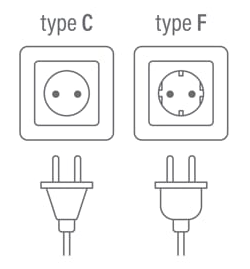
Electricity in Albania runs at 230 volts with a frequency of 50hz. Plug and socket types C (two round pins) and F (two round pins) – 230V, 50Hz
The Republic of Albania – Capital: Tirana
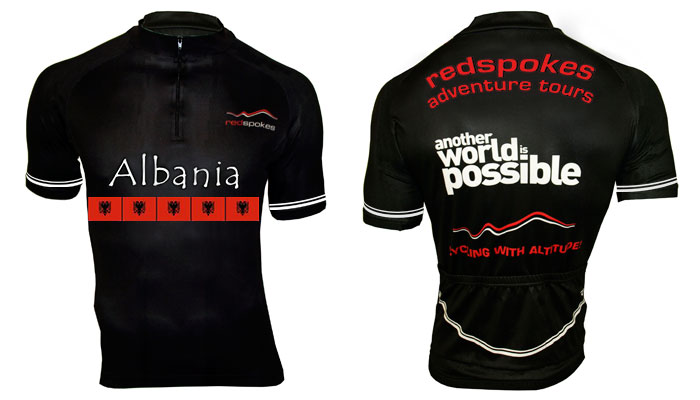
Our professional redspokes cycle tops are designed for both comfort and performance:
Perfect for your tour and beyond, these tops combine function with the redspokes style.

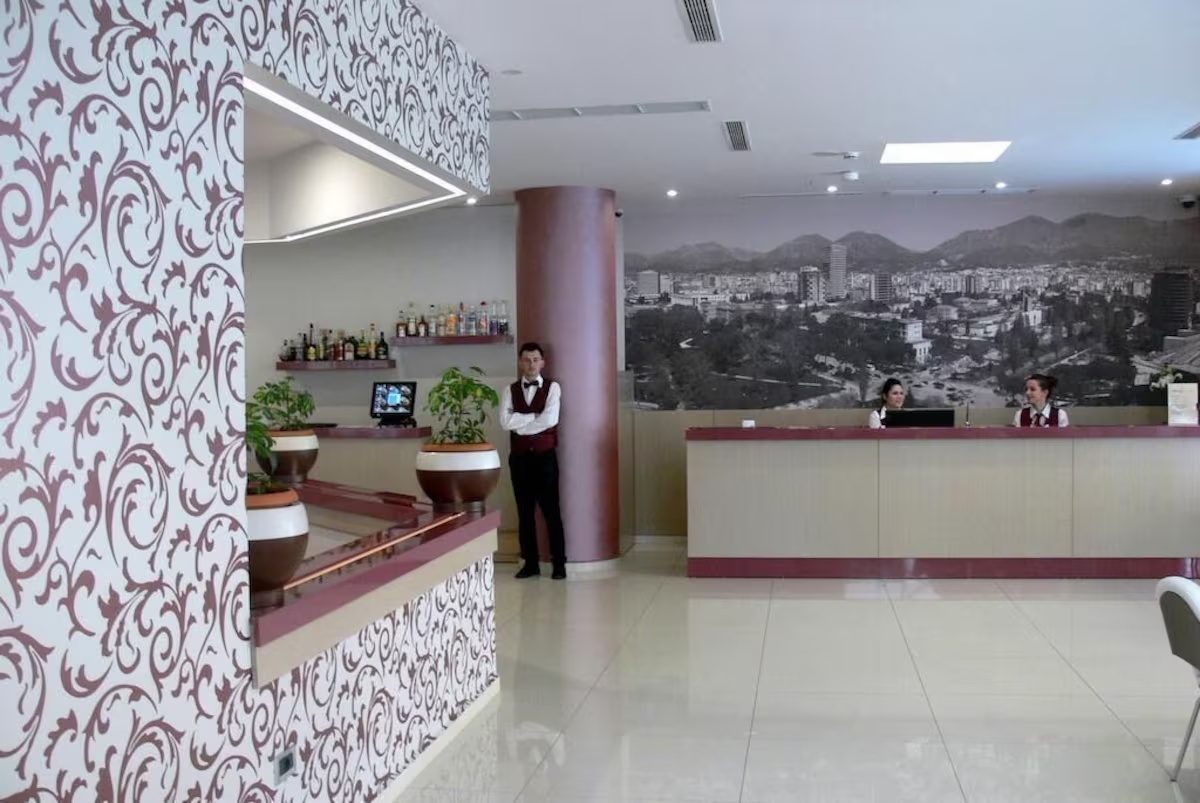
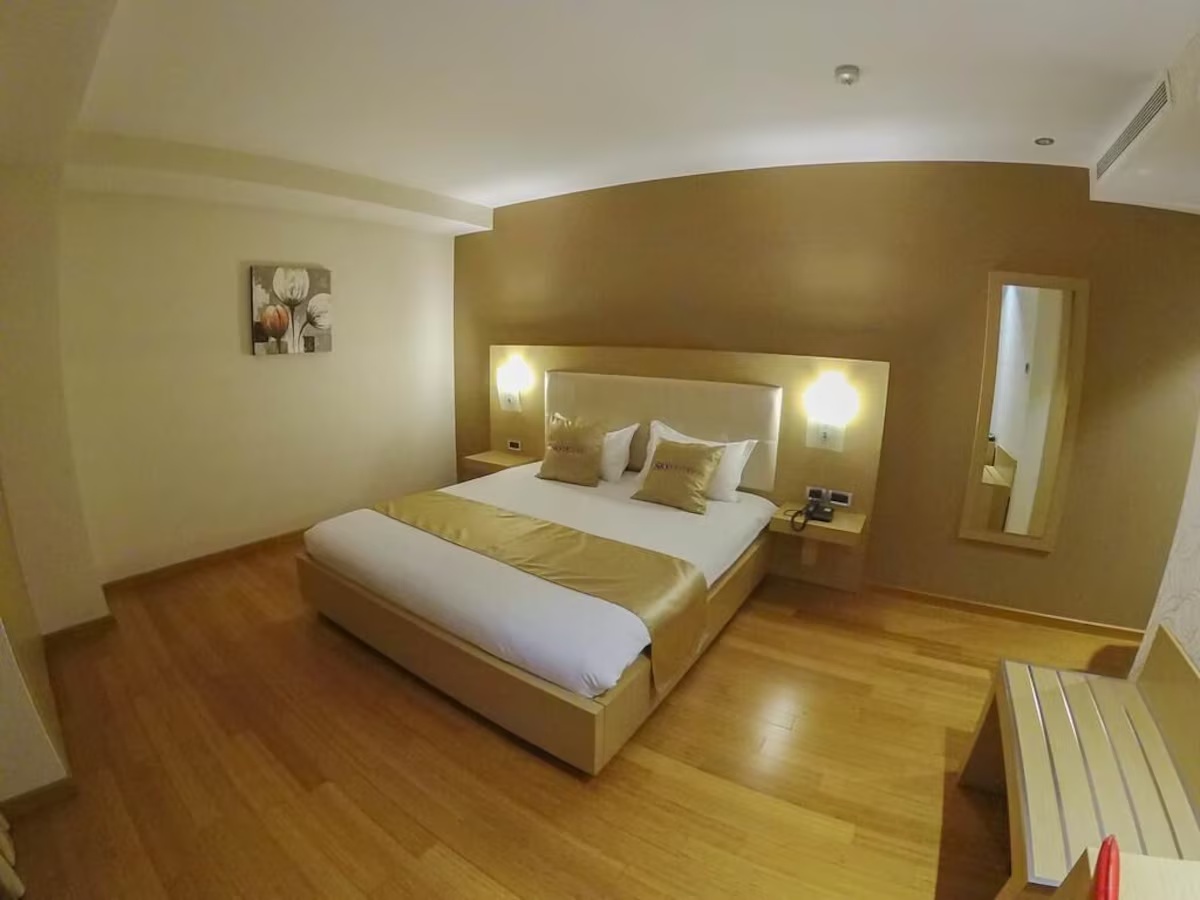
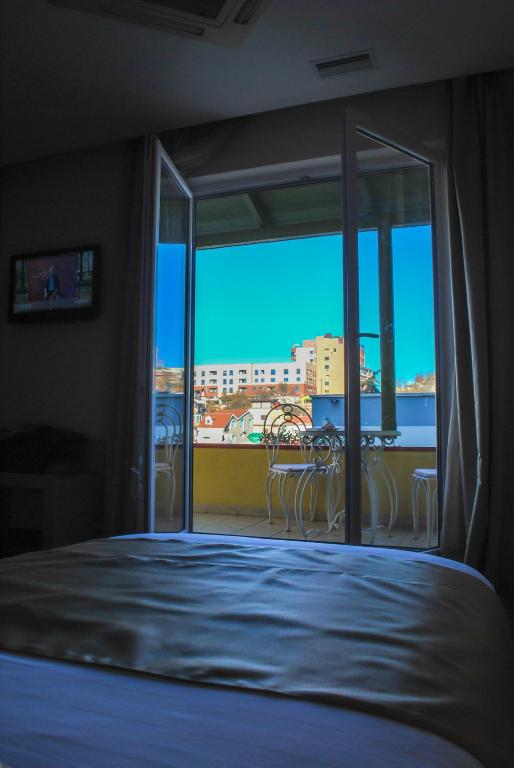
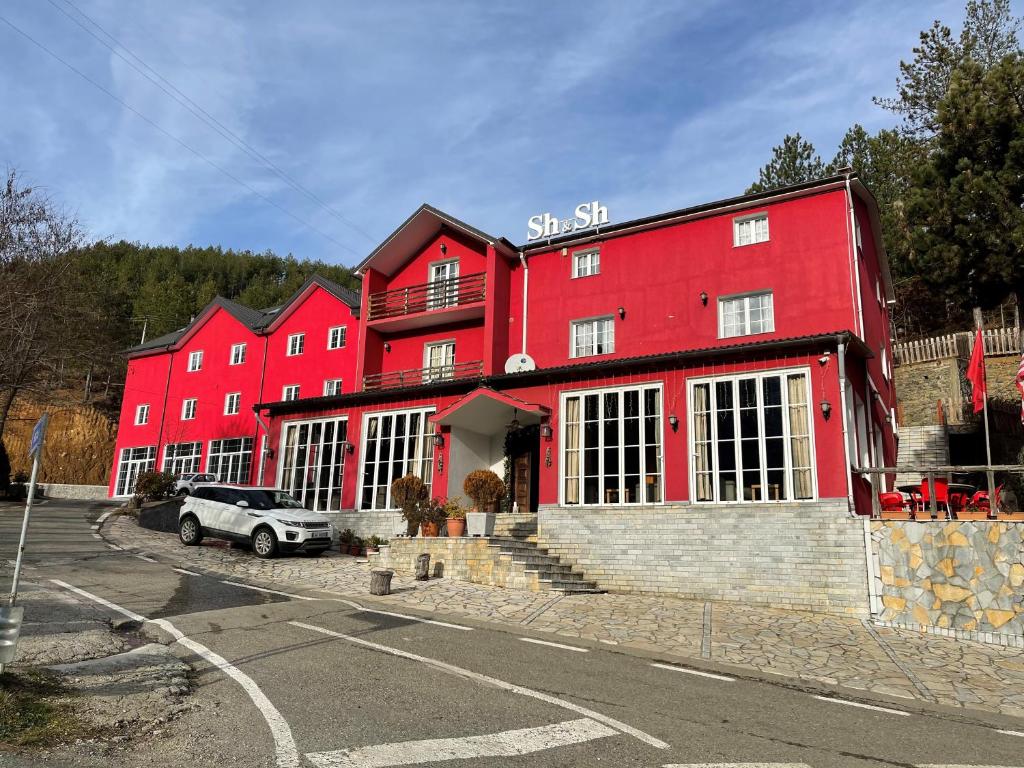
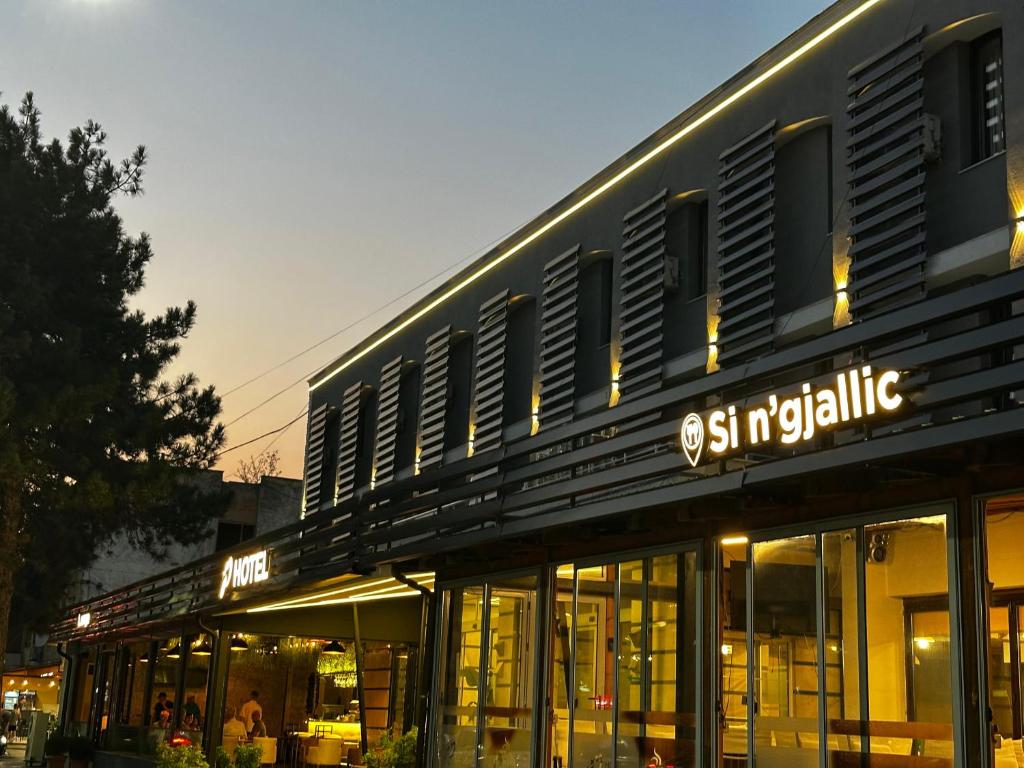
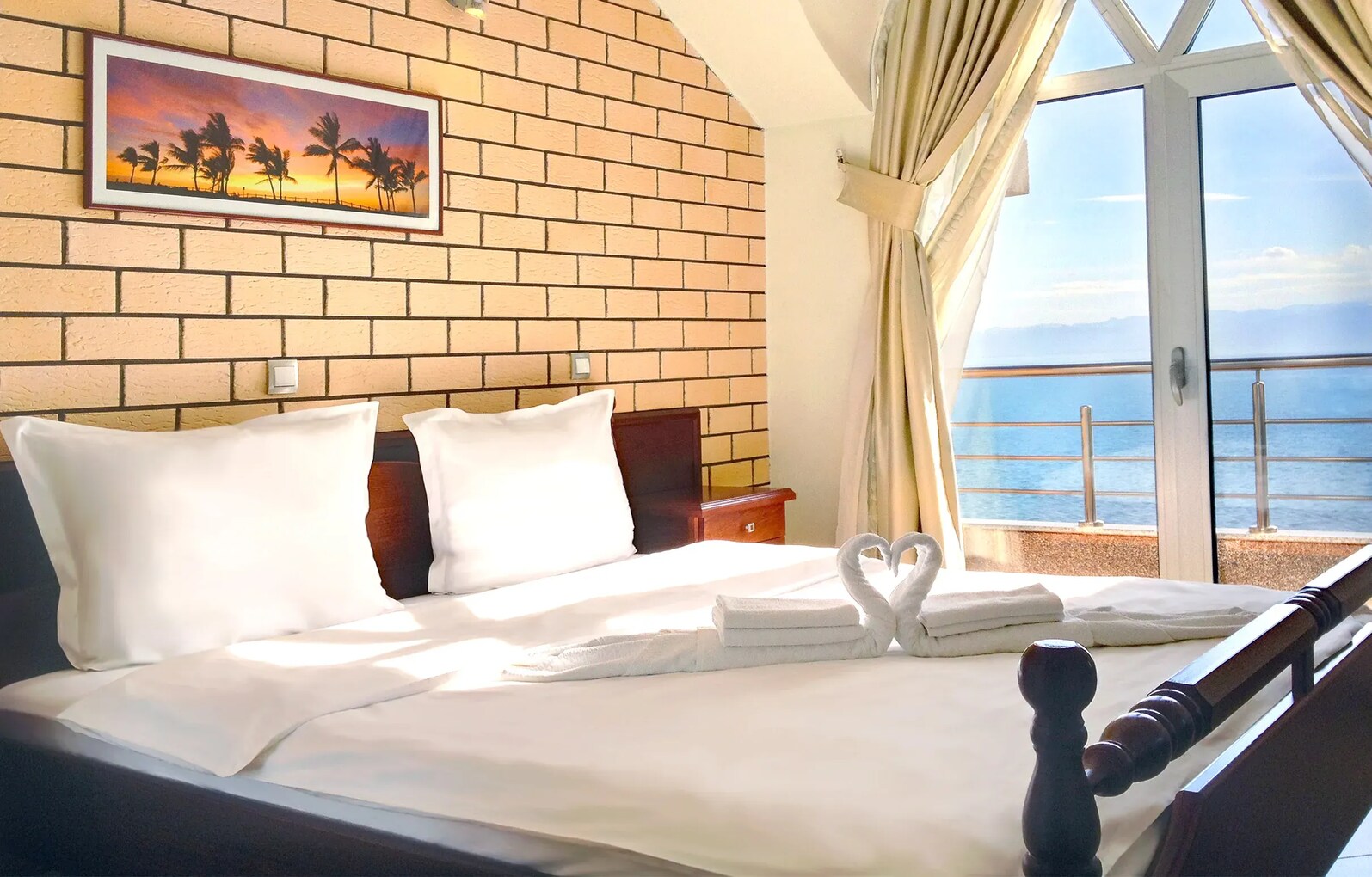
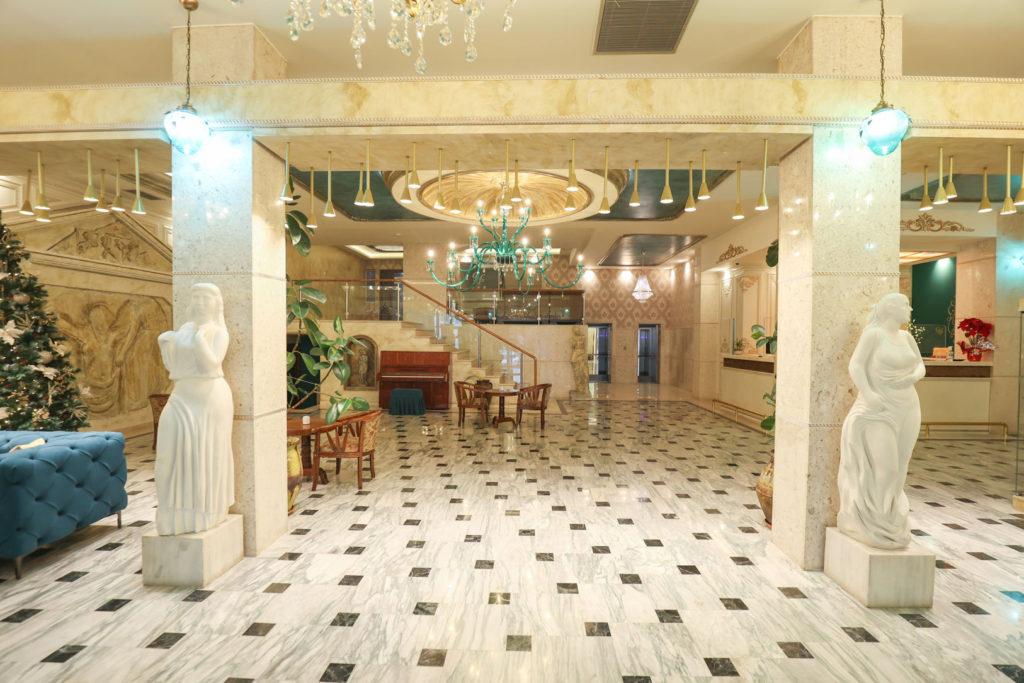
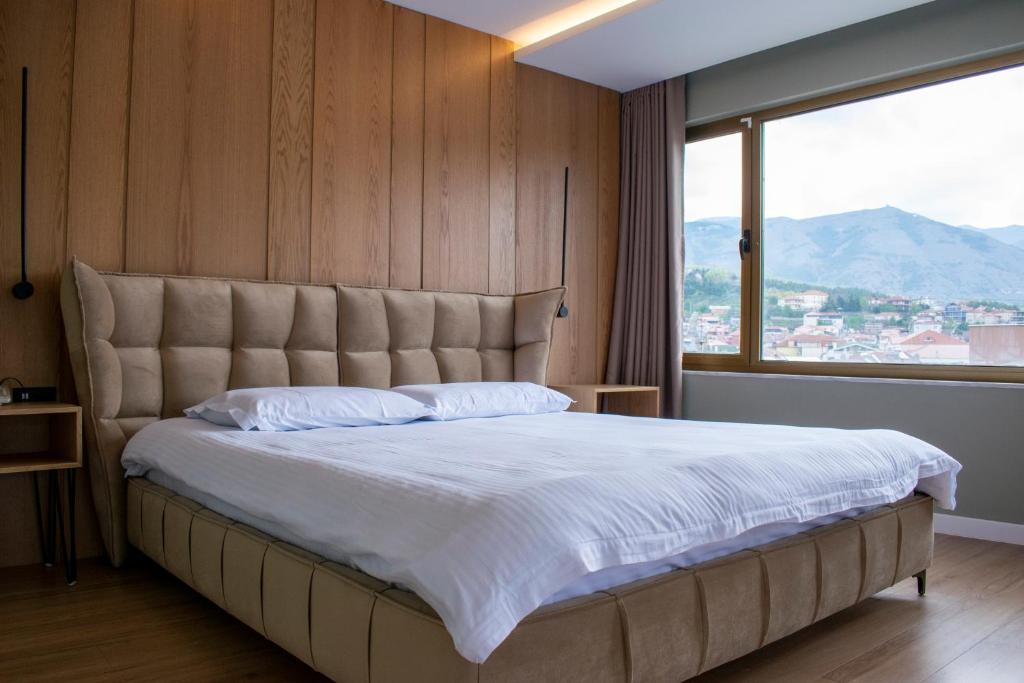
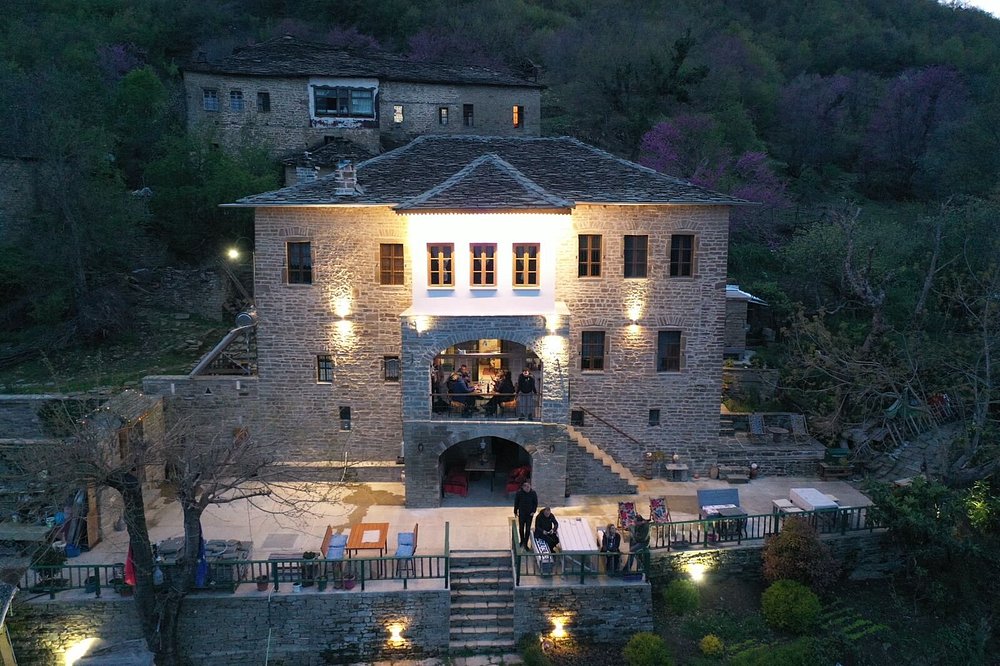
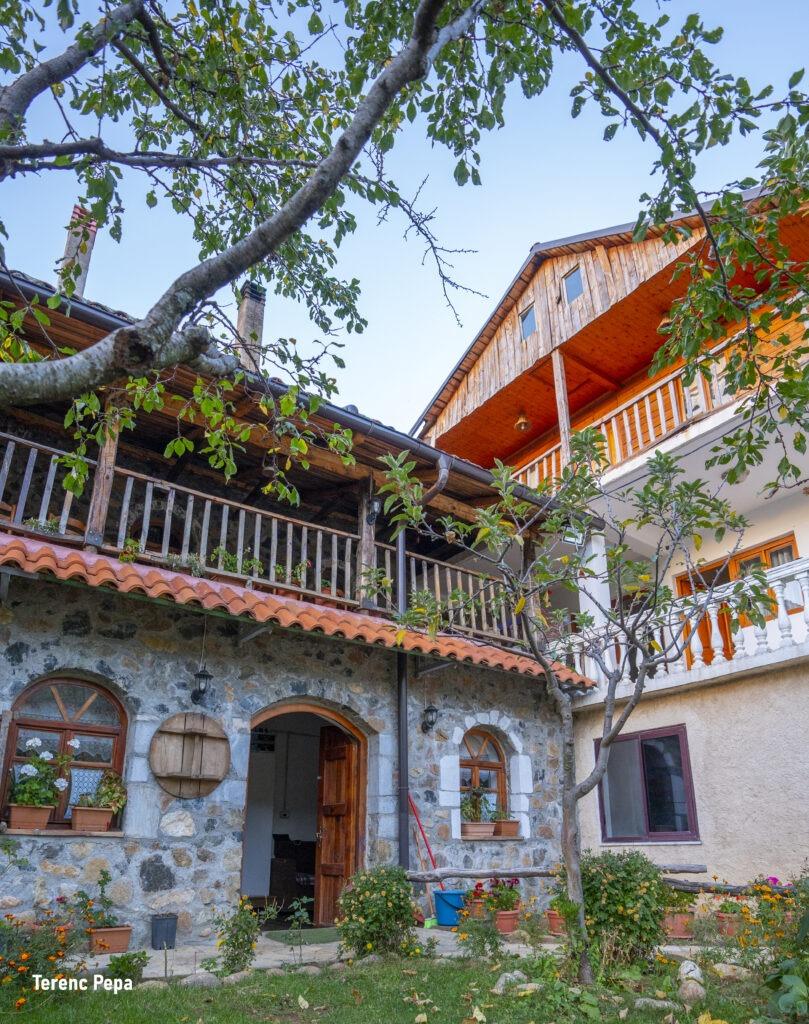
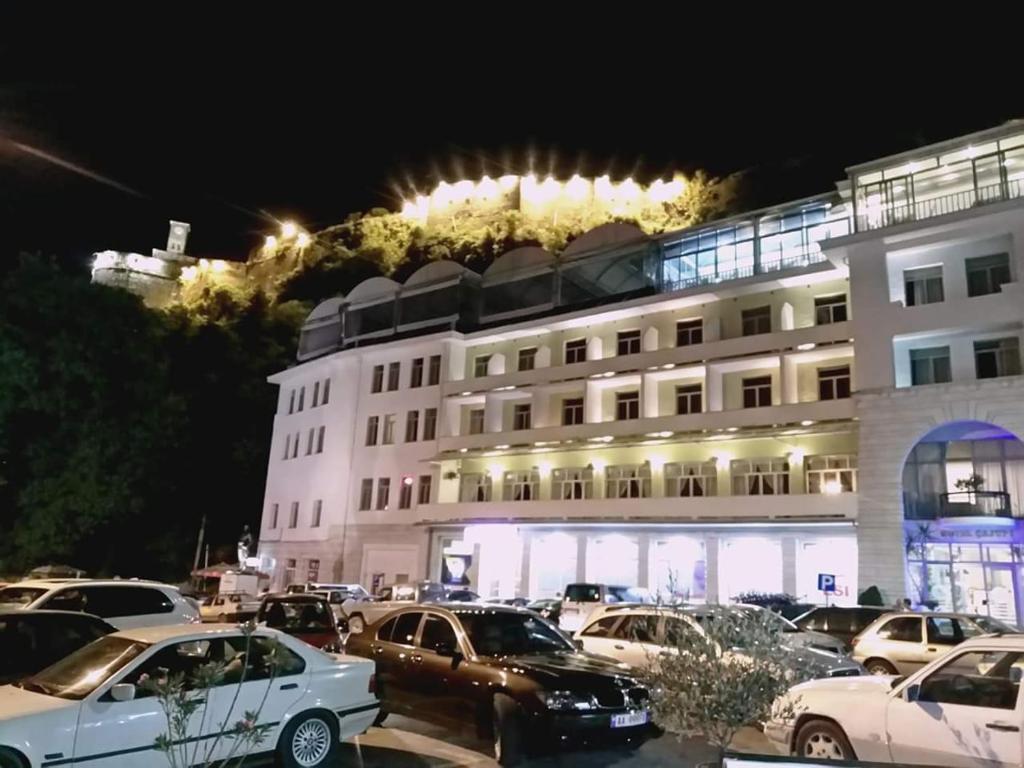
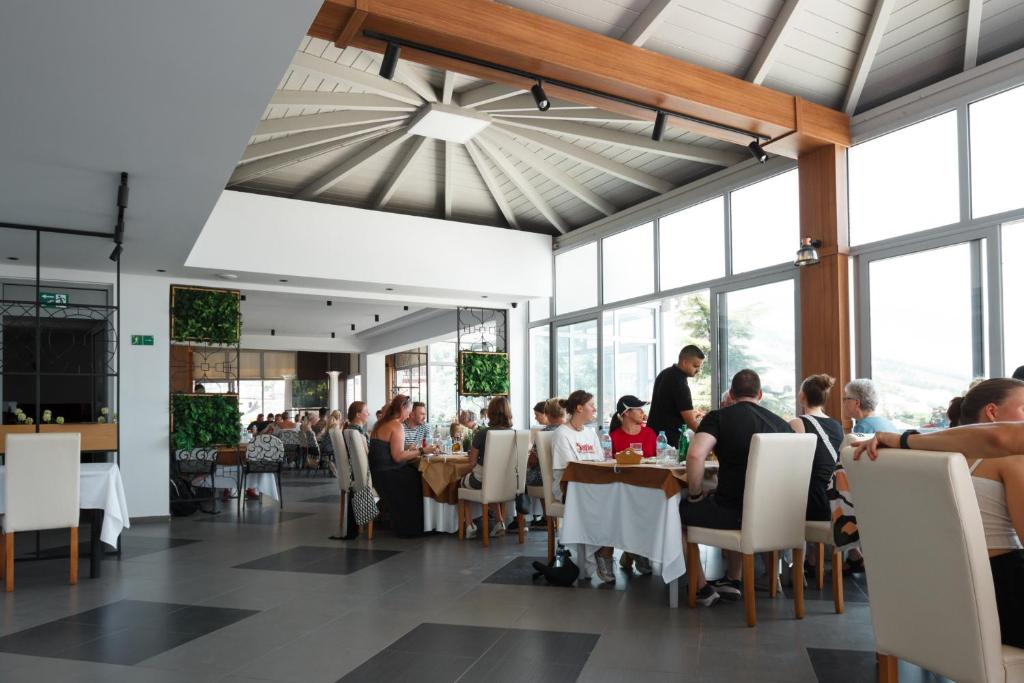
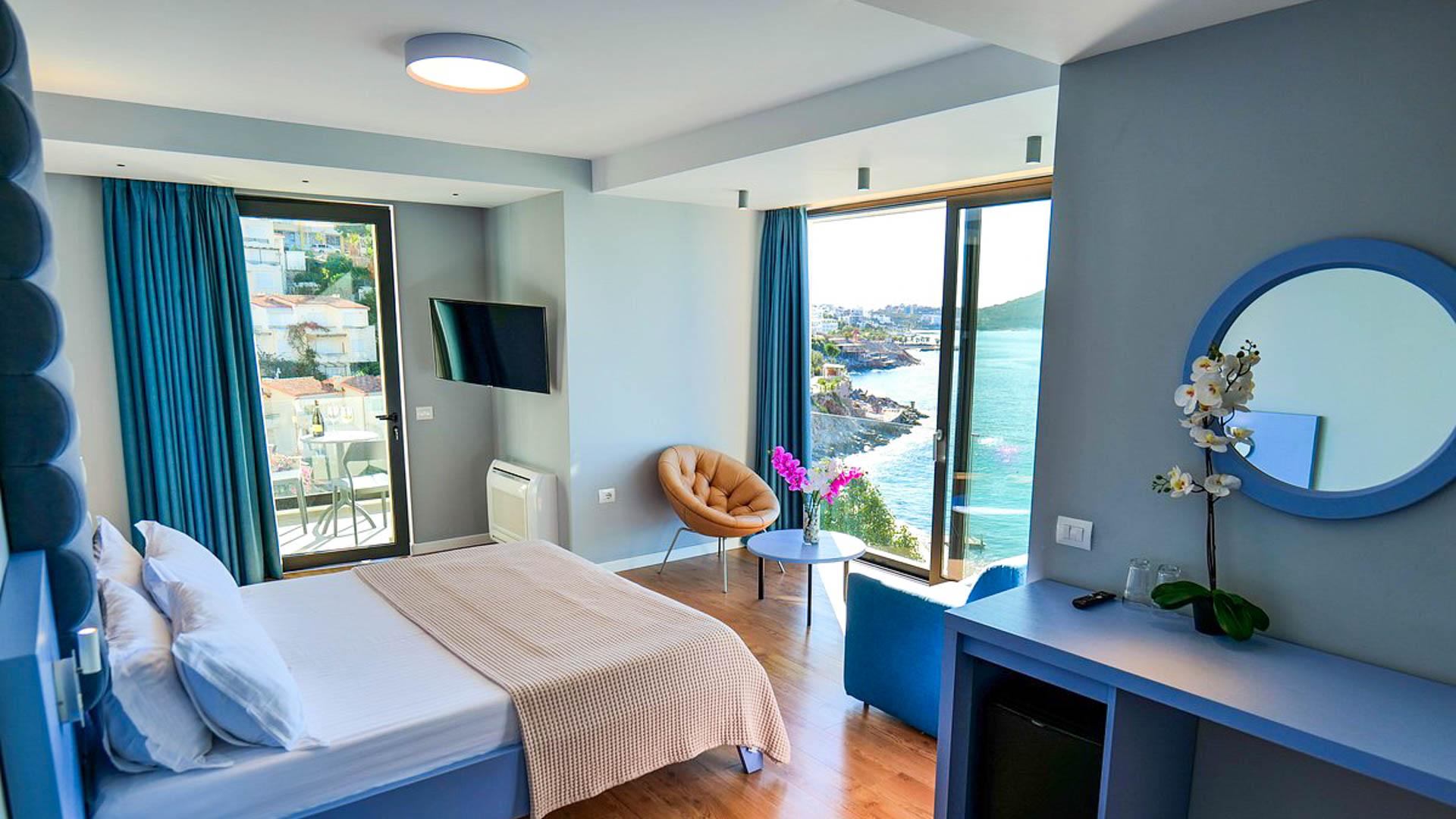
This tour uses a dependable mix of mid-range hotels throughout, with one memorable night in wooden cabins at the mountain farm of Farma Sotira. The itinerary features a combination of modern city hotels, simple rural hotels, lakeside stays and heritage-rich guesthouses, all offering private rooms, hot showers and welcoming Albanian hospitality.
We begin in Tirana at a centrally located hotel, then move through a series of clean, comfortable hotels in Pukë, Kukës, Peshkopi and Korçë. As we travel south, overnights reflect the changing landscape: rustic cabins at Farma Sotira, traditional hotels in Përmet and Gjirokaster, and scenic coastal accommodation in Sarandë and Himarë. All properties are chosen for their character, comfort, and proximity to each day’s ride.
Across 13 nights, the tour includes:
Expect:
Here is what our customers have to say about our ‘Albania North to South’ Cycling holiday.
 Directly from the customer
 Albania North to South
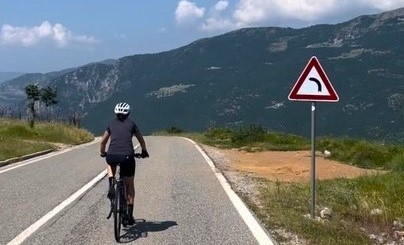
I had an amazing time cycling through the diverse landscape of Albania with a fantastic group of people. The food was outstanding and the guides shared their wealth of knowledge and were always at hand to provide water and a helping hand. Will be back for another Redspokes cycling challenge.
 Directly from the customer
Albania North to South
Directly from the customer
Albania North to South
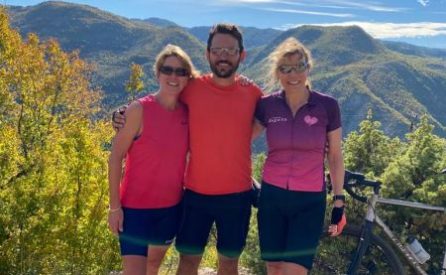
Another memorable Red Spokes trip. This time to Albania. Lots of fun and laughs with some lovely people, a few of which we’ve met on RS tours before and have now formed a firm friendship. Albania is a beautiful country, with spectacular scenery which is constantly changing.
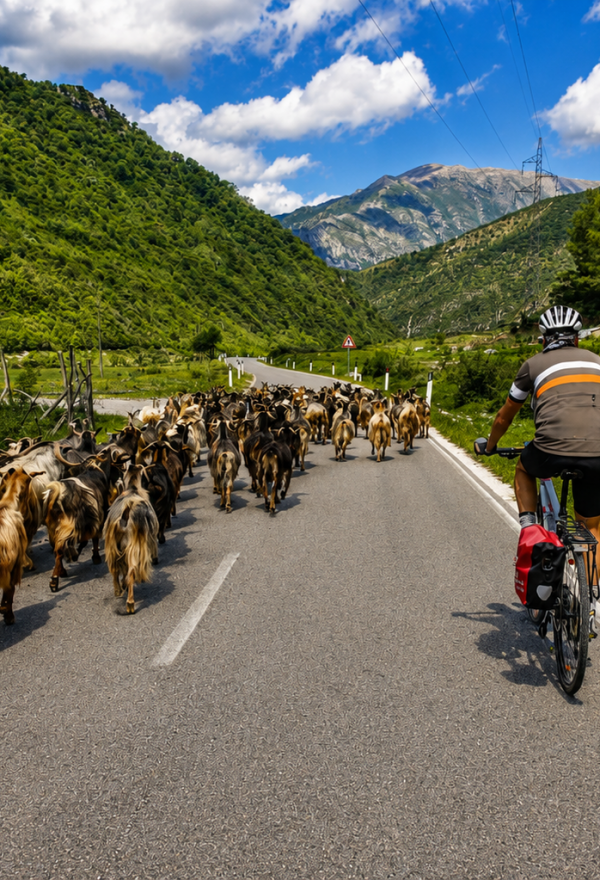
On the whole quiet country roads, with a bit of everything from steep ascents and descents to soft (and not so soft) undulating hills.
Arjan our guide and Rimi our driver could not do enough for us. They never stopped even during meal times, attending to our every need. I enjoyed Arjans sense of humor, his professionalism and organizational skills leaves one in no doubt that you’re in safe hands.
Joanna Reaves, Edinburgh Scotland-446x275.jpg) Directly from the customer
Albania North to South
Directly from the customer
Albania North to South
Arjan and Tani are among the best guides and support we have ever experienced. They greatly helped our understanding of Albania and its history, and ensured every one of us had a deeply satisfying time.
In addition to spectacular riding, the tour packed an amazing amount of cultural experiences into the days. We were thoroughly immersed in Albania, and are certain the country will do well based on the strong, warm-hearted people there. They really know how to cook! Best food ever.
Steve & Kathy Riegel, Rochester, NY, USA-343x275.jpg) Directly from the customer
Albania North to South
Directly from the customer
Albania North to South
As experienced cycle tourists, but having never been on an organised group tour , would we do another group tour? – would we use redspokes? -would we recommend Albania? The short answer to all is yes , we would.
We came away with very positive feelings about it all. We are already considering another tour with redspokes next year . We may have been fortunate in that the group was populated with like minded, interesting and capable people and the Guide and driver were first class. The accommodation was better than expected with plenty of idiosyncrasies- this is Albania afterall. They added to the fun rather than caused real inconvenience. The food was a revelation – plentiful , fresh and tasty with a local bias as hoped. Arjan and Tuani ( sp?) were great ambassadors for their country.
Albania itself was different but not as alien as we may have anticipated and we never felt threatened or particularly uncomfortable and had a thoroughly enjoyable experience that we are keen to repeat.
Clare & Mark Elsegood, Glossop, UK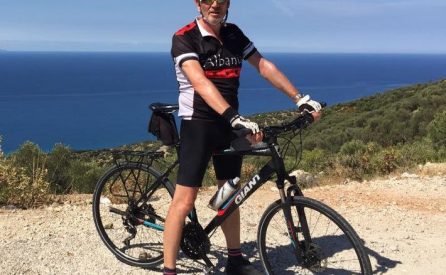 Directly from the customer
Albania North to South
Directly from the customer
Albania North to South
Another great redspokes trip. I didn’t know what to expect from post communist Albania. I was pleasantly surprised. A beautiful, lively, modern and very friendly country. Our guides Aryan and Juli did a great job looking after us in a friendly amusing and professional manner. redspokes rate it 6/10 more like 7/10. The scenery is varied ranging from stunning mountains to vivid blue seas. Excellent food and good local beers to rehydrate you at the end of the day.
Kevin Thomasson, Poole, England, UK-446x275.jpg) Directly from the customer
Albania North to South
Directly from the customer
Albania North to South
By hiring an ebike I was able to complete a tour that I wouldn’t have been able to contemplate without. Albania is a cyclist’s dream, quiet roads with good tarmac, big climbs and high mountains all around, From day one scenery was varied and spectacular. The tour combines comfortable accommodation with fantastic food, especially if you like cheese! It was extremely well organised and run by one of the best guide and driver teams around.
Robert Harrison, Weymouth, England, UK-446x275.jpeg) Directly from the customer
Albania North to South
Directly from the customer
Albania North to South
Arjan was wonderful! Near the top of a 10k climb, at about 12% near the top, he was singing to us as we rode! He was a wellspring of local knowledge and history. My only question about the food is, how did I actually GAIN weight? Seriously, it was fresh, fabulous, and plentiful!
I can’t say enough about the support. Tony (sp?) was a tremendous help. Many of us brought our own bikes, which he always kept cleaned, maintained, and safe throughout the trip. My bike arrived home in better shape than when I left! Thank You!
Eric Tofflemire, California, United States-446x275.jpg) Directly from the customer
Directly from the customer
 Albania North to South
The best way of getting to know a country. Perfect! You can cover so many different places in a speed that allows you to experience the local atmosphere in a unique way. Guides and staff were great making the trip goes smooth. Beautiful landscape, impressive mountains. The food was so fresh and surprising in the best way. Absolutely recommend this trip and redspokes.
Fernanda Strang, San Paulo, Brazil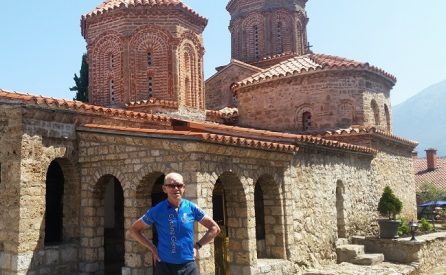 Directly from the customer
Albania North to South
Directly from the customer
Albania North to South
I’ve been on a good number of cycle tours and this one was right up there with the best. Albania is a fascinating mix of the traditional and the modern with history a plenty and scenery to die for. The people were so friendly and the occasional drivers that passed, so courteous. Our guide, Aryan was excellent working tirelessly to show us the best that Albania has to offer. My advice is to go there soon before too many other people discover this gem.
Phillip Stapleton, Bognor Regis, England, UK.jpg) Directly from the customer
Albania North to South
Directly from the customer
Albania North to South
This is a fantastic trip around a fascinating and beautiful country. The mountains are impressive, the coastline stuning and the people very friendly and helpfull. Our guide and driver were an excellent team and very good amassadors for Albania.
Linda Hoff, Malmo, Sweden.jpg) Directly from the customer
Albania North to South
Directly from the customer
Albania North to South
Our 4th redspokes tour and one of the best! The landscapes were positively gorgeous – dramatic mountains, brilliant lakes and rivers, colourful wildflowers, lush farmlands and jaw dropping coastlines. The first few days through the Albanian Alps were challenging, but a highlight of our trip and also the rest day at Ohrid was perfectly timed. The food was fresh, tasty, and plentiful at every meal. Our guide Arjan was fun, lively and had deep knowledge of the area and the road conditions. Albania’s recent communist history and older Ottoman/Roman influences were fascinating.
We highly recommend this trip!
Becky & John Layton, San Francisco, USA.jpg) Directly from the customer
Albania North to South
Directly from the customer
Albania North to South
How best to sum up my experience in just a few words? Flawless organisation and support throughout; fabulous Albanian hospitality, food and accommodation; a glimpse of a country yet to be “infested” by our takeaway culture – not one McDonalds or Starbucks in sight; fabulous snow-capped mountains and fields full of poppies; and a chance to learn all about the culture and history of this land and its people.
I was a month short of 70 when I did the trip and worried about a slightly dodgy knee. No need to have been too concerned, not least because of the friendly and supportive group with whom I rode. If I can make it so can you. Go soon before it gets too busy.
Andrew Wiggans, Rochdale, England, UK_1.jpg) Directly from the customer
Albania North to South
Directly from the customer
Albania North to South
A unique combination of great cycling, great accommodation and amazing food the best of any tour I have been on !
Arjan’s passion for his country shone through by providing great insight into Albania’s dark past.. Both he and Juli worked tirelessly to ensure we had a fantastic trip. Highly recommend.
Michael Litchfield, Emerald, Australia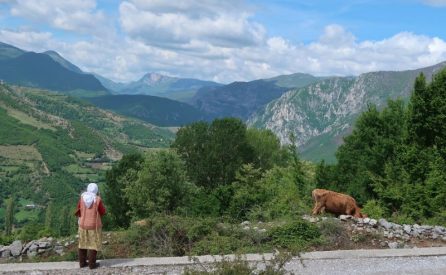 Directly from the customer
Albania North to South
Directly from the customer
Albania North to South
Absolutely superb trip and my eyes were really opened to this stunning country. I took a lot of convincing to travel here, but I’m so glad I did make the effort. Friendly people, great food, great cycling on safe roads and a good standard of hotel all around. Put this country on your bucket list before it becomes discovered properly by the tourists.
Michael Heath, Nuneaton, England, UK.jpg) Directly from the customer
Albania North to South
Directly from the customer
Albania North to South
This was a great trip with thoughtful support from our guides Arjan and Julian. Albania is wonderful place to cycle. The mountains are remote and beautiful, the people incredibly friendly and the history and heritage fascinating.
Greg Challis, Sheffield, England, UK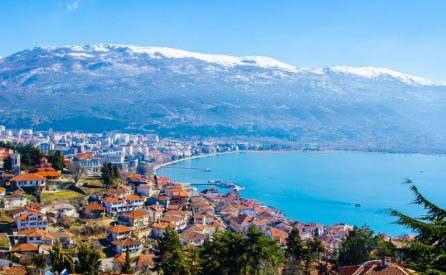 Directly from the customer
Albania North to South
Directly from the customer
Albania North to South
Another excellent redpsokes tour which I would highly recommend. Albania is an great destination & a great way to see the countryside. Some preparation is needed beforehand for this tour as the initial part in the North is in the mountains & along with the terrific climb on the last day cycling, it is challenging but well worth it.
Kieran Kelleher, Kanturk, Ireland.jpg) Directly from the customer
Albania North to South
Directly from the customer
Albania North to South
Can you think of a better way to meet a bunch of random people from anywhere in the world? This ride showed the great mountainous expanse of Albania, the contrasts within the country itself, and how far the country has advanced since the end of communism.
Our guide Arjan was every passionate about his country and was never hesitant to share his views and information. Our support man Elvis was outstanding. Nothing was too much effort for him, and he was always there offering you water, a banana, packet of nuts, or chocolate bar whenever you were in need – it was like you were holding a sign with your order on it. Happy pedalling!
Joanne & Simon Belton, Matamata, New Zealand.JPG) Directly from the customer
Albania North to South
Directly from the customer
Albania North to South
I felt a bit out of range when I first arrived on this tour as the average participant age was higher than mine. However I had a lot of fun on this tour!!!! The cycling part was excellent. Really well organised and a paradise for cyclists.
Arjan was helpful to guide us and give us information on the country. July went above his duties to make sure everybody was having a good time. A fantastic experience overall :)
Karine, London, England, UK.jpeg) Directly from the customer
Albania North to South
Directly from the customer
Albania North to South
An amazing cycling trip with breathtaking views in the mountains and along the beautiful coast road. All the accommodation and food was to a high standard and the guides worked tirelessly to keep the everything running like clockwork.
Donal Burke, New York, USA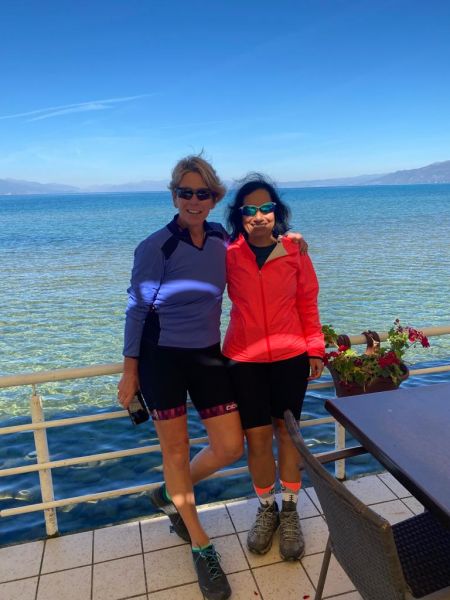 Directly from the customer
Albania North to South
Directly from the customer
Albania North to South
This was my sixth Redspokes trip and Albania didn’t let me down. The Alps are incredibly beautiful and the North to South tour gave us a great overview of the country. Our guide Arjan (who is exceptionally proud of his country!) and support driver Rimi worked so hard and could not have been more helpful & good-humoured. Safety on the roads was paramount with constant reminders to cycle on the right. Local drivers were, on the whole respectful of us. The bikes were maintained very well; constantly being checked & any problems tweaked straight away. The accommodation was generally of a good standard and the restaurants and food chosen well (lots of salads, roasted veg & feta cheese – but cold chips seem to be a thing!).
We loved spending our day off in Ohrid, Macedonia where some of us swam in the tectonic lake as our hotel was right on the water. This is definitely a part of the world I would like to revisit before it becomes too westernised, although I would return in June or September when it is slightly warmer. The one disappointment was the amount of litter scattered everywhere. The cycling was often challenging & deserved the 7/10 grading on difficulty. However, we like this level of tour & will be returning for more!
Ros Lawson, Edinburgh Scotland.jpg) Directly from the customer
Albania North to South
Directly from the customer
Albania North to South
Both guides are proud of their country and keen to show us everything. They were tremendous fun. We stayed in fanatastic places ranging from downtown Las Vagas, to super cool luxury and a farm stay cabin. All beach hotels were actually by the beach, perfect for a swim. The food was really superb and so healthy. Excellent Macedonian wine. Albania was well above my expectations I did almost everything I could but left without eating a goats head, so I will have to go back!
Bruce Irving, Norwich, England, UK.jpg) Directly from the customer
Albania North to South
Directly from the customer
Albania North to South
We really enjoyed the Albania tour with its challenging climbs and exhilarating descents. The guides love of their own country was inspiring. They could not do enough for us. The route and scenery were outstanding. The accommodation was all of a very good standard, allowing us to recover in comfort from each day’s efforts. We would highly recommend this trip.
Steve & Anne, Harrogate, England, UK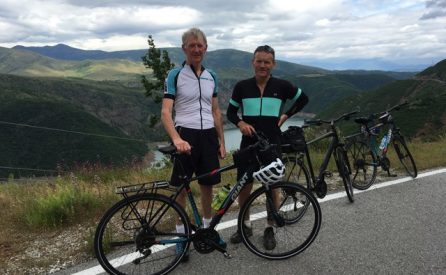 Directly from the customer
Albania North to South
Directly from the customer
Albania North to South
Albania: great holiday and people, excellent food and guide!
Malcolm Thoms, Fife, Scotland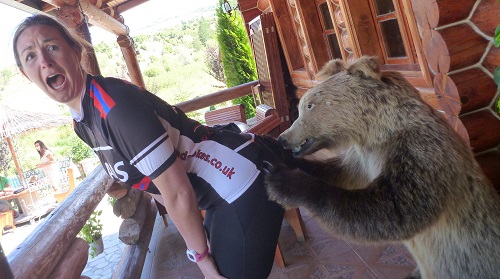 Directly from the customer
Albania North to South
Directly from the customer
Albania North to South
Had another great redspokes holiday – thank you!
Claire Waddington, Crawley, Australia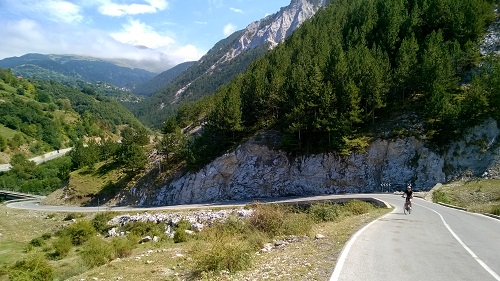 Directly from the customer
Albania North to South
Directly from the customer
Albania North to South
A thoroughly enjoyable and well organised trip, with great company, excellent food, and brilliant guides Arjan and Juli. This is another great trip in the redspokes itinerary.
Bryan Crosland, Swansea, Wales
.JPG) Directly from the customer
Albania North to South
Directly from the customer
Albania North to South
I was expecting a post-communist underdeveloped country but discovered that Albania is an outward-looking and very welcoming place with good infrastructure, fabulous mountain scenery and few tourists.
George Porter, Waverley, NSW, Australia.JPG) Directly from the customer
Albania North to South
Directly from the customer
Albania North to South
Great trip exploring a new country. A nice mix of hard cycling with some easier days and some great swimming opportunities to relax
Sarah & jerry, Edinburgh, ScotlandHere are a selection of photos for our ‘Albania North to South’ Cycling holiday.